11/18/2025: Harbor seal escapes attack by orcas, beaver-built ponds attract pollinators, spiders build giant decoys to trick enemies, ocean bacteria break down plastics and more.
Welcome to the fifth weekly compilation of newsworthy biodiversity and sustainability news!
Scroll down to read about:
Biodiversity:
- Harbor seal escapes attack by orcas by jumping into boat
- Bird flu decimates the world’s largest population of southern elephant seals
- Discovery of a whale never before seen alive in the wild
- Beaver-built ponds attract pollinators
- Spiders build large doppelgängers to trick enemies
- Wolf fishes crab traps out of water to eat the bait
Pesticides and plastic pollution:
- California farms applied millions of pounds of PFAS-containing pesticides to crops
- Bacteria that can break down plastic discovered in the ocean
Agriculture:
- Rotational cropping found to outperform continuous monoculture
I hope you enjoy the stories. If any particularly resonate with you, please leave a comment or share other recent stories you think others would find interesting.
Biodiversity
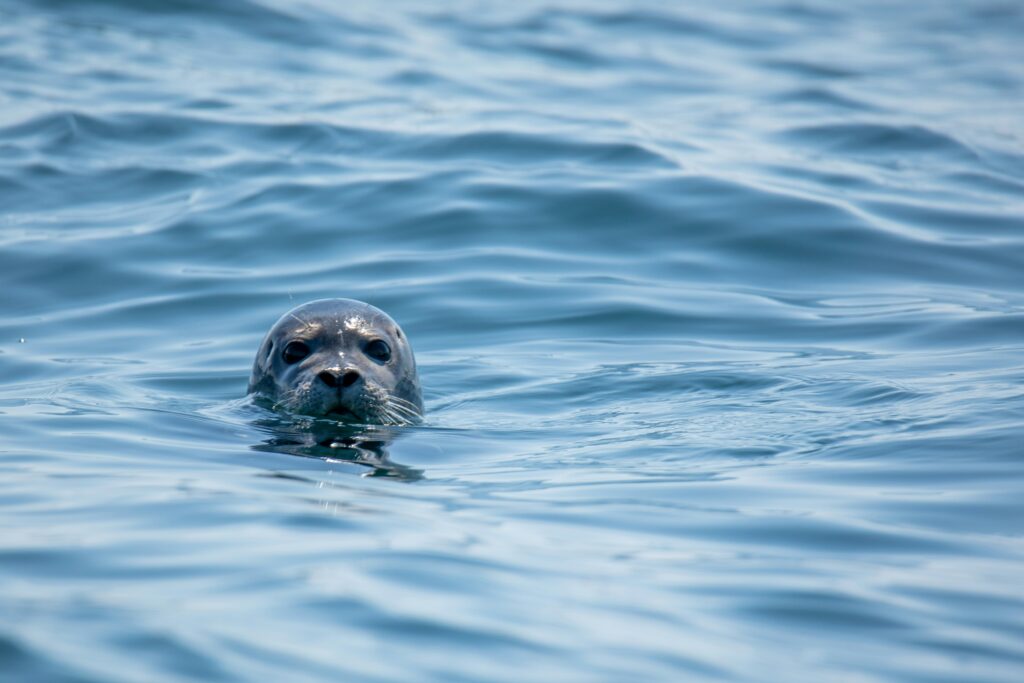
The first story is not your typical “biodiversity science” tale, but rather a dramatic account of a harbor seal escaping a pod of killer whales (also known as orcas) by climbing onto the boat of an amateur photographer.
Cedar Attanasio reports for the Associated Press, describing an exciting scene with the seal “flying through the air above the scrum of orcas frothing in the water.”
There’s also a video showing the seal as it gets on the boat, falls off at one point, but manages to climb back to safety. The orcas attempted to knock the seal off the boat at first, but gave up after a while.
“I’m definitely Team Orca, all day, every day. But once that seal was on the boat, I kind of turned (into) Team Seal,” [the photographer] said in an interview with The Associated Press on Thursday.
In more serious news, Emily Anthes reports for the New York Times about the bird flu decimating the world’s largest population of southern elephant seals on the remote island of South Georgia, with the number of breeding females falling by nearly half.
“It painted a starker picture than I was expecting,” said Connor Bamford, a marine ecologist at the British Antarctic Survey who led the study, which was published in the journal Communications Biology on Thursday.
If all of the South Georgia seal colonies suffered similar losses, it could mean that more than 50,000 females disappeared from the breeding population, the scientists reported.
While southern elephant seals were considered stable, this decline could endanger that status, Bamford said. As Anthes writes:
Marine mammals, including seals and sea lions, have been hit especially hard by the virus. In late 2023, H5N1 devastated the southern elephant seal population in the Valdes Peninsula in Argentina, killing an estimated 17,400 pups — more than 95 percent of the newborn seals.

Staying with the marine mammal theme, Fanni Szakál reports for the Guardian about last year’s discovery of a species of whale that had never been seen alive in the wildbefore.
Researchers had been looking for a ginkgo-toothed beaked whale for five years when their search finally paid off along the coast of Baja California. As Szakál writes,
“I can’t even describe the feeling because it was something that we had worked towards for so long,” says Elizabeth Henderson, a researcher at the US military’s Naval Information Warfare Center and lead author of the resulting paper published inMarine Mammal Science, who was also there that day. “Everybody on the boat was cheering because we had it, we finally had it.”
To find the secretive animals, the researchers found that high-tech equipment was essential.
The ship towed an array of hydrophones to listen to underwater sounds, and had an observation deck with high-powered binoculars capable of spotting whales hundreds of metres away.
When it comes to finding beaked whales, such hi-tech aids are an absolute necessity. There are 24 known species, but apart from a few, very little is known about them.
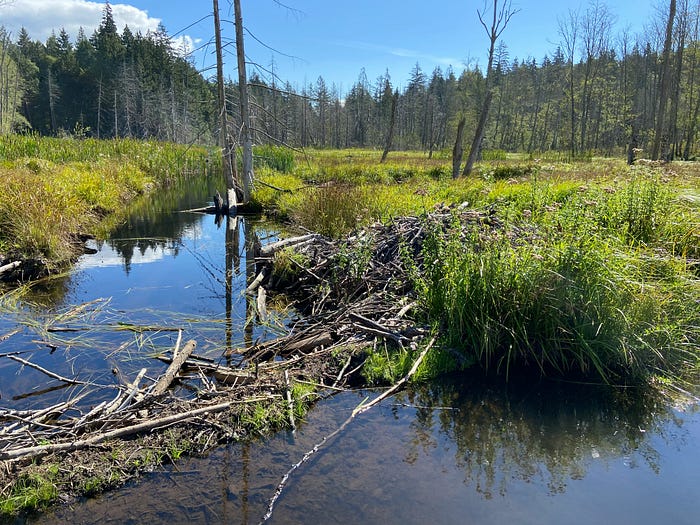
Beavers are known as what biologists call “keystone species” because of their significant impact on the environment. They cut down trees to build dams, flood wetlands and create habitats important for other animals and plants. And it turns out the wetlands they create also help pollinators.
Sanjana Gajbhiye reports for Earth.com about a recent study in Scotland that found that beaver-built wetlands support more flowering plants, which in turn support more pollinating insects. And these ponds performed better than those created by people.
As Gajbhiye writes:
Beaver wetlands had 29 percent more hoverfly species, 119 percent more individual hoverflies, and 45 percent more butterflies. Human ponds, though still valuable, couldn’t compete.
Patrick Cook, the study’s lead author, said that most funding still goes to human pond creation.
“Currently, in the United Kingdom, most agri-environment subsidy schemes support human pond creation, with little financial incentive for landowners to accommodate beaver wetlands — despite the potential boost in pollination services,” noted Cook.
“This position needs to change if we are to benefit from the buzz, flutter and hum of pollinators that beaver wetlands promote.”
I’ve always been fascinated by spiders — albeit preferably from a distance — and a recent study reveals an astonishingly crafty strategy some spiders use to trick predators: building huge doppelgängers of themselves.
Stephanie Edwards reports for Discover:
“They don’t just decorate their webs — they meticulously arrange detritus, prey carcasses and silk into a structure that’s not only larger than their own body, but clearly resembles the silhouette of a bigger, menacing spider,” explained lead author George Olah, from the Australian National University, in a press release.
Biologists have long known that orb-weaving spiders create complex silk designs placed in their webs. But the purpose of those designs was unknown.
When a potential predator approached the web with the large decoy, the spiders shook their abdomen, causing life-like vibrations in the decoy.
As Edwards writes,
This study is the first scientific record of spiders arranging debris to mimic a larger spider, and is evidence of a complex visual defense that challenges assumptions about the limits of spider intelligence and adaptation.
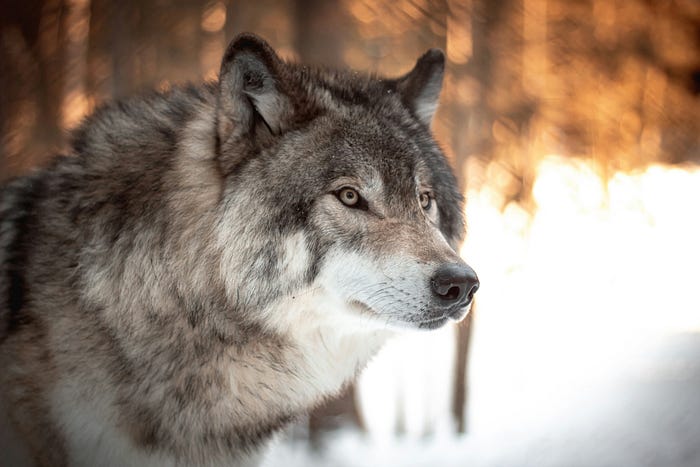
Spiders aren’t the only ones surprising us with their intelligence and adaptability. Lesley Evans Ogden reports for the New York Times about a wolf in British Columbia that stole crab traps to eat the bait.
Researchers had set the traps, in deep water and out of sight, to contain the invasive European green crab, but the traps were repeatedly broken into. The biologists suspected otters or minks, but when they set up a remote camera, they were surprised to discover that a wolf was the culprit. As Evans Ogden writes:
In the footage, the wild canid swims to the shallows from deep water, towing the red and white buoy attached to the trap from her jaws. She then backs toward shore while raising the rope to the water’s surface. After dropping the buoy and shaking herself partly dry, she returns to the water, gathers another length of rope and pulls again. On a third pull, the trap rises into water shallow enough for her to grasp the trap itself.
Then, tearing through the netting to reach the orange bait cup, she carries it up the beach, places it upright on the pebbles, licks out the sea lion strips, checks for scraps, gobbles them down and then nonchalantly trots off.
You can watch a video of the wolf here (located about halfway down in the article).
According to the researchers, this is the first known instance of tool use by a wolf.
Pesticides and plastic pollution
First, the not-so-good news: Tom Perkins reports for the Guardian about an analysis of government data that shows that farms in California applied an average of 2.5 million lbs per year of pesticides with PFAS — also called “forever chemicals” because of their longevity in the environment — on cropland between 2018 and 2023.
Crops affected included almonds, pistachios, wine grapes, alfalfa and tomatoes, reported the Environmental Working Group, which produced the report.
As Perkins writes:
The review’s findings reveal an “obvious problem”, said Bernadette Del Chiaro, senior vice-president of California for EWG.
“We know of every pound of forever chemicals presents a risk of contamination of our food, water and soil, so it doesn’t make sense to deliberately be spraying these on California’s food,” Del Chiaro said
PFAS are linked to serious health issues, including cancer, immune disorders, decreased fertility, increased cholesterol and increased risk of obesity, according to the Environmental Protection Agency.
Perkins reports that:
Advocates began sounding the alarm over Pfas in pesticides in 2023. The Biden EPA attempted to discredit the author of one study that identified Pfas in pesticides, and the agency appeared to have lied about whether some of the chemicals are in pesticides. Under Donald Trump, the EPA has increasedthe number of Pfas proposed for use in pesticides.
At least 60% of active ingredients approved for use in common pesticides at the federal level over the last 10 years fit the most widely accepted definition of Pfas, a 2023 analysis of EPA data found.
In more hopeful news, Warren Cornwall reports in Anthropocene Magazine that scientists have discovered bacteria in the ocean that can break down polyethylene terephthalate (PET), a common type of plastic used in water bottles.
It is known since at least 2016 that some bacteria have learned to break down PET, and scientists have genetically engineered microorganisms that can do that.
But, as Cornwall writes:
Natural evolution might have a jump on human ingenuity. Since the ocean is home to a staggering number of microorganisms ( one estimate puts it at more than 100 octillion), it’s also an ideal evolutionary laboratory.
Duarte and a group of fellow scientists went scouting for genetic markers of PET-degrading bacteria in 415 water samples pulled from ocean waters around the world during two expeditions. They found genetic sequences associated with production of a PETase in more than 75% of the samples, the scientists reported earlier this year in The ISME Journal, a publication of the International Society for Microbial Ecology.
While it’s promising that bacteria are adapting to break down plastics, it isn’t a cure-all for our overwhelming plastic problem. As Cornwall writes:
That doesn’t mean it’s an easy solution for dealing with all the plastics we pour into the ocean, Duarte cautioned. “By the time plastics reach the deep sea, the risks to marine life and human consumers have already been inflicted.”

Agriculture
Phys.org reports on a new study that found rotating crops increased yields, improved nutrition and increased farmer revenues. The huge study compared the practice of rotating crops on the same farm fields with continuous monocultures on six continents from 1980 to 2024.
The differences were surprising — on average, total yields increased by 20%, total energy by 24%, protein content by 14% and farm revenue by 20%.
As Phys.org writes:
Although crop rotation is practiced widely in Europe, notably for the control of crop pests, diseases and invasive weeds, monocultures still dominate in Africa and Southern Asia. Elsewhere, continuous monocultures can still be popular, particularly soybean monocultures in regions such as South America where market demand for this agricultural staple is strong.
The study found that simply rotating corn and soybeans can increase yield significantly compared with a continuous soybean monoculture, as did including a sorghum — corn rotation in Africa compared with a continuous corn monoculture.
That’s it for this week. I hope you found the articles interesting, drop a note in the comments if you’d like to see more on a particular topic in the future!
If you enjoyed this article, check out Nature Signals, my newsletter on Substack!