Looking back on a year of covering nature and conservation – and so much more to come!
It’s hard to believe it’s already been a year since I started my blog!
A year ago, I couldn’t have imagined that writing about conservation and the biodiversity crisis would interest more than 400 of you enough to subscribe to get my (mostly) weekly posts straight to your inboxes.
But here we are, and I have to admit I get a little emotional thinking about that.
So I wanted to take this opportunity to introduce myself more fully and tell you about all the plans I have for the next year! I’m so excited to have you on board, and a special thank you to those of you who support me with a paid subscription! I wouldn’t be able to do this without you.
But first, a little about myself.
To tell the truth, I tend to not talk about myself that much – I’d much rather focus on cool critters, spread the word about why biodiversity is important and what we can all do to support nature. But it’s past time that I tell you why I switched to science writing and environmental journalism and started this blog and newsletter in the first place!
If you’d like to get new posts sent directly to your inbox every week, subscribe to my newsletter via Substack:
What led me here
I grew up in Vienna, Austria, but from the beginning my world spanned both Europe and North America – with a U.S. dad and German mom, I grew up bilingual and we traveled regularly to visit family on the East Coast.
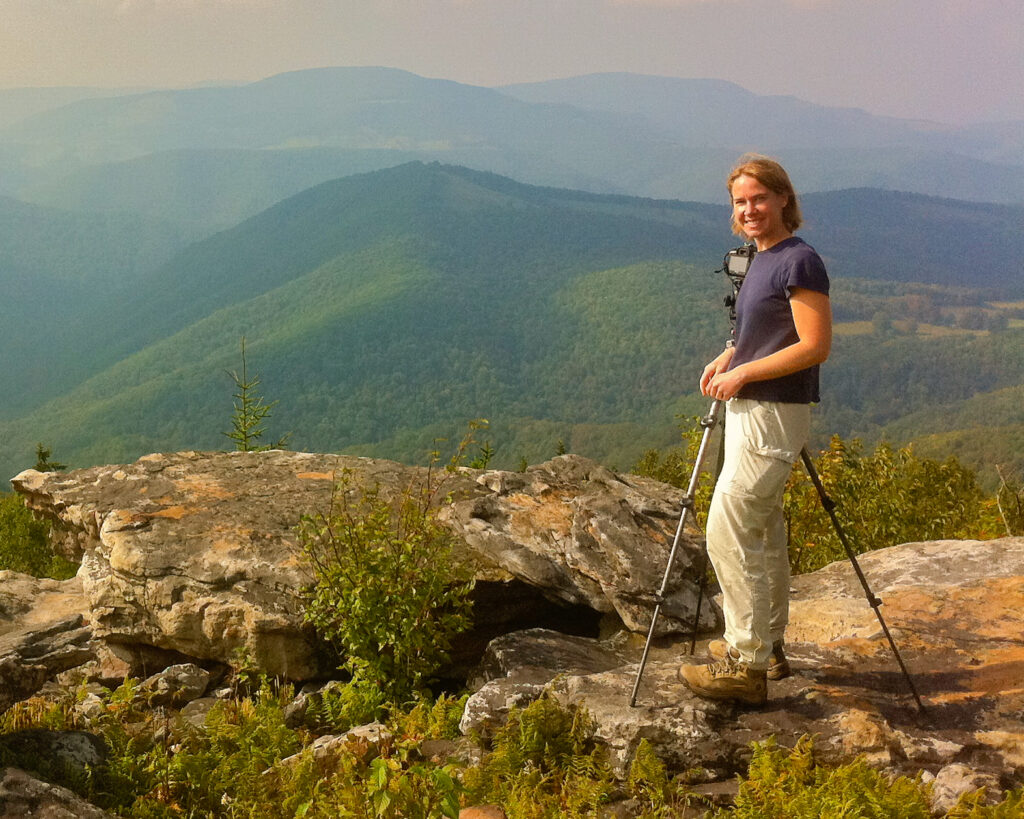
We also spent a lot of time hiking in the Alps and national parks throughout the States, and I guess that’s where my love of nature first took hold. I remember as a kid watching a park ranger program and thinking that would be the coolest job in the world!
I’m glad nobody told me back then that girls weren’t supposed to be good at science or math (or maybe they did and I just didn’t listen. That happened a lot), and I loved both. I was also drawn to history and languages. And the arts – if there’s an ideal place to grow up to be surrounded by world-class music, architecture, art and culture, Vienna has got to be it.
I attended Austrian public schools through eighth grade and then switched to an international school when I entered high school.
That was another formative experience – going to school with kids from so many countries, cultures and religions quickly taught me that a person’s individual personality matters more than their heritage when it comes to forming friendships. My circle of close friends was a diverse mix of nationalities and religions. And we had a lot of fun together!
When it came time to choose a college and major, science won out over the humanities. For a while I was torn between studying archaeology and ecology, but in the end the lure of spending time outside, watching wildlife, won out.
Thus started more than 20 years studying ecology in Maine, then fisheries and wildlife in grad school in Michigan and working in conservation – for the Minnesota Department of Natural Resources and environmental nonprofits like The Nature Conservancy and The Conservation Fund. I also moved around a lot, living in West Virginia, Minnesota, North Dakota and Michigan.
Initially, I worked in natural resources management and stewardship, including restoring prairies and surveying rare animals. Favorite jobs included following Blanding’s turtles with telemetry and prescribed burning!
I then completed watershed assessments, did GIS spatial analyses and finally moved into land protection, where I worked with landowners to buy land for nature preserves or place conservation easements on private properties to limit development.
As much as I loved working directly in conservation, over the years I dreamed about combining my love of writing and science. But it never felt like the right time. I also greatly enjoyed working with my colleagues and I felt a deep sense of personal satisfaction working for a cause I intensely believe in.
As my career progressed, I worked in the field less and less, instead managing contracts and teams. One day I realized that explaining conservation to the public had become my favorite part of the job. And that’s when it clicked for me. It was time for a change.
After the pandemic, I moved back to Michigan and moved in with my long-time partner. When I realized that I was also within driving distance of one of the best environmental journalism programs in the country, I decided to take the plunge. In mid-life, I quit my job and enrolled to earn my M.A. in journalism.
It was one of the best decisions of my life.
I finally feel like my career is combining my main interests – science, writing and art. I love researching, fact-checking and translating complex scientific concepts and explaining them to readers. The photography skills I’ve cultivated for many years as a hobby now complement my reporting.
Because of my hands-on experience with fieldwork, I can also provide the larger context that I have found is often missing in mainstream reporting about the environment.
And that’s the experience I want to bring to this newsletter.
Where Nature Signals is headed
I’ve been thinking a lot lately about where Nature Signals has been and where I want it to head.
As I looked back over my posts, I was actually surprised by how many topics I have covered:
- Butterfly and bee conservation;
- The biodiversity crisis (but why we’re actually not in a “sixth extinction” event after all and why that matters);
- How climate change affects animals;
- How pollution from PFAS and pesticides affects sea otters, fish and our health;
- How too many deer can devastate forests;
- How FSC certification benefits wildlife;
- How zoos are saving baby turtles;
- The energy transition
- And more!
What became apparent pretty quickly is that each article, by necessity, only covers a relatively narrow topic, often based on a study. That’s unavoidable.
My goal moving forward is to be strategic about articles building upon each other to form a more complete picture of the current state of biodiversity and conservation. That way, I hope that my website will become a resource for people to explore related articles that together provide deeper insights into what’s going on.
Just as important, I also write about what people can do to support biodiversity – at the end of most essays I have been including a section called “what you can do.” Moving forward, I’ll expand on that and will potentially dedicate occasional entire essays on sustainability.
What are you most interested in? I’d love to hear from you! Is there something you’d like me to focus on? Do you have any ideas on how to improve this blog? Leave a comment below or send me a message via the “Contact” tab!
A word on fact-checking and essay schedules
I work hard to fact-check everything I write, which can take a while. It’s depressingly common that some oft-repeated “fact” that gets quoted in social media and sometimes even in news stories turns out to be unsupported by data when I try to look it up.
My promise to you is that I will always do my best to only list facts and data that I have personally verified. Mistakes will inevitably creep in, I’m only human. But when they happen, I will correct them as soon as I’m aware of them and will ‘fess up.
Verifying facts takes time and effort, something that many social influencers and some newsrooms aren’t willing to invest in, unfortunately. That also means that if I find a post needs extra time so I can hunt down a slippery fact, I prefer to hold it back rather than publish something that’s incomplete or I’m not sure is correct.
Overall, however, I will continue a weekly post schedule, with a podcast a few days later (I’ve been trying to combine the written post and podcast but have found it unsustainable given the extra work the podcast takes, especially when I’m including interviews with experts).
A note on AI
I also promise you that I will never use AI for drafting, writing or revising essays – I enjoy the craft of writing too much and am, after all, trying to improve. That won’t happen if I outsource any part of that process.
I do, however, experiment with AI to brainstorm headline ideas and draft summaries for podcast show notes (I’m not convinced it saves much time though, since I end up revising quite a bit). I also put my final draft through a grammar check, which often helps find silly typos.
I need your support!
Writing about nature and conservation can’t happen without your support – this blog is not yet earning a living wage.
If you have read this far and enjoy reading Nature Signals, please help spread the word by sharing it with your friends and family or subscribing.
All essays are free for everyone to read, and subscribing is free. But if you can afford it, please consider a paid subscription or a one-time donation to help me continue researching, talking to experts and writing!
Or: