Sea otters survived centuries of hunting, but scientists now warn that persistent PFAS pollution could threaten one of the Pacific coast’s most important marine mammals.
I was disheartened to read about a recent study that found that every sea otter examined by biologists along the coast of British Columbia was contaminated by toxic PFAS chemicals. The closer the otters were to urban areas, the higher their PFAS levels.
Losing this charismatic species would have cascading effects throughout the coastal ecosystem, causing economic losses to nearby communities due to damaging effects on fisheries, carbon sequestration and ecotourism.
That’s because sea otters, while cute and charismatic, are also key “ecosystem engineers” that help sustain kelp forests along the Pacific Coast.
The contamination by PFAS – also called per- and polyfluoroalkyl substances or “forever chemicals” – could further weaken the already struggling otters. PFAS have been shown to cause numerous health issues in people and wildlife, including cancer, insulin resistance, high cholesterol and decreased vaccine response.
If you’d like to get new posts sent directly to your inbox every week, subscribe to my newsletter via Substack:
Why should we care about sea otters?
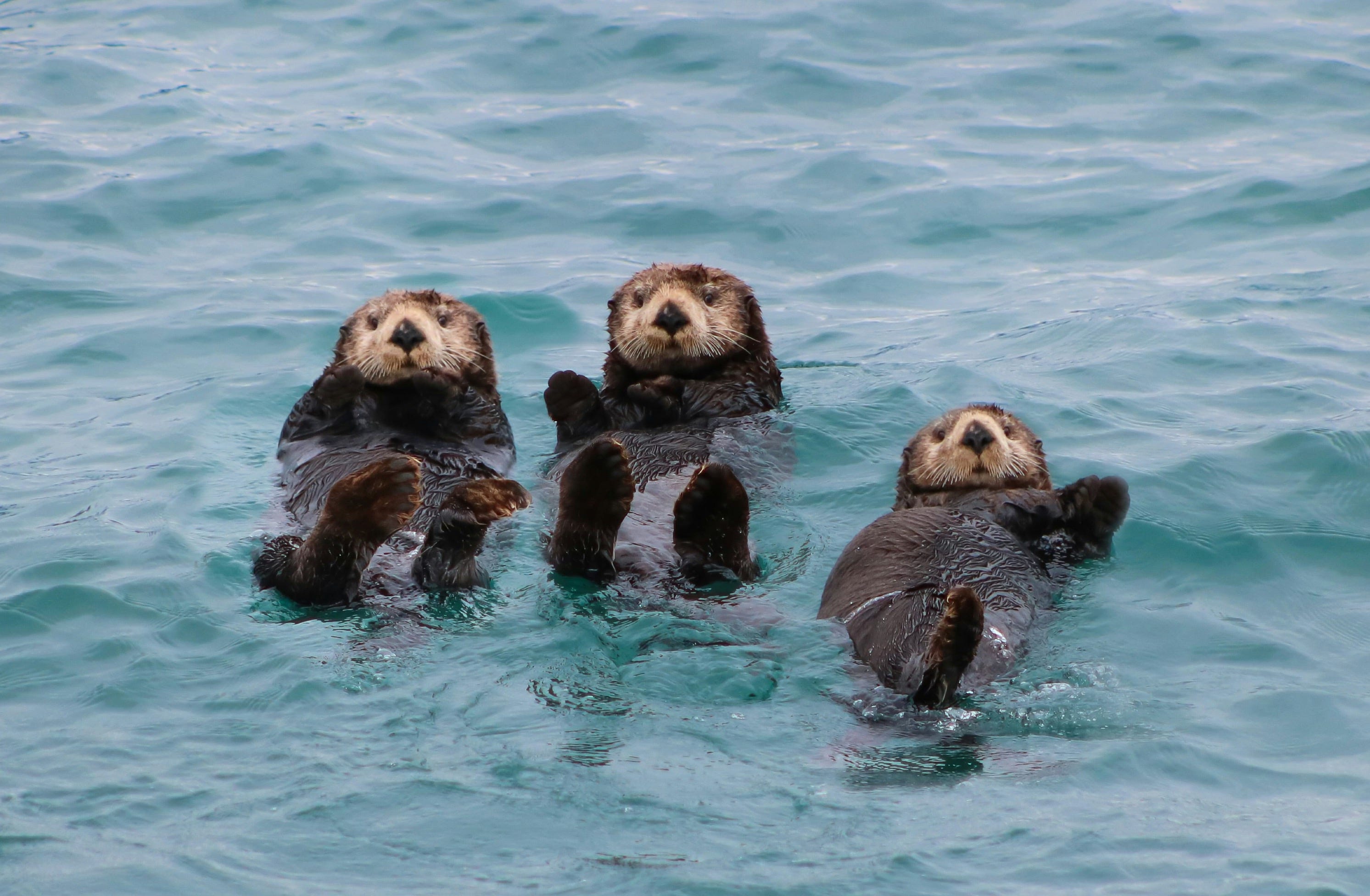
Besides being what biologists call a “keystone species” – that is, a species that plays an especially important role in an ecosystem – sea otters are incredibly charismatic.
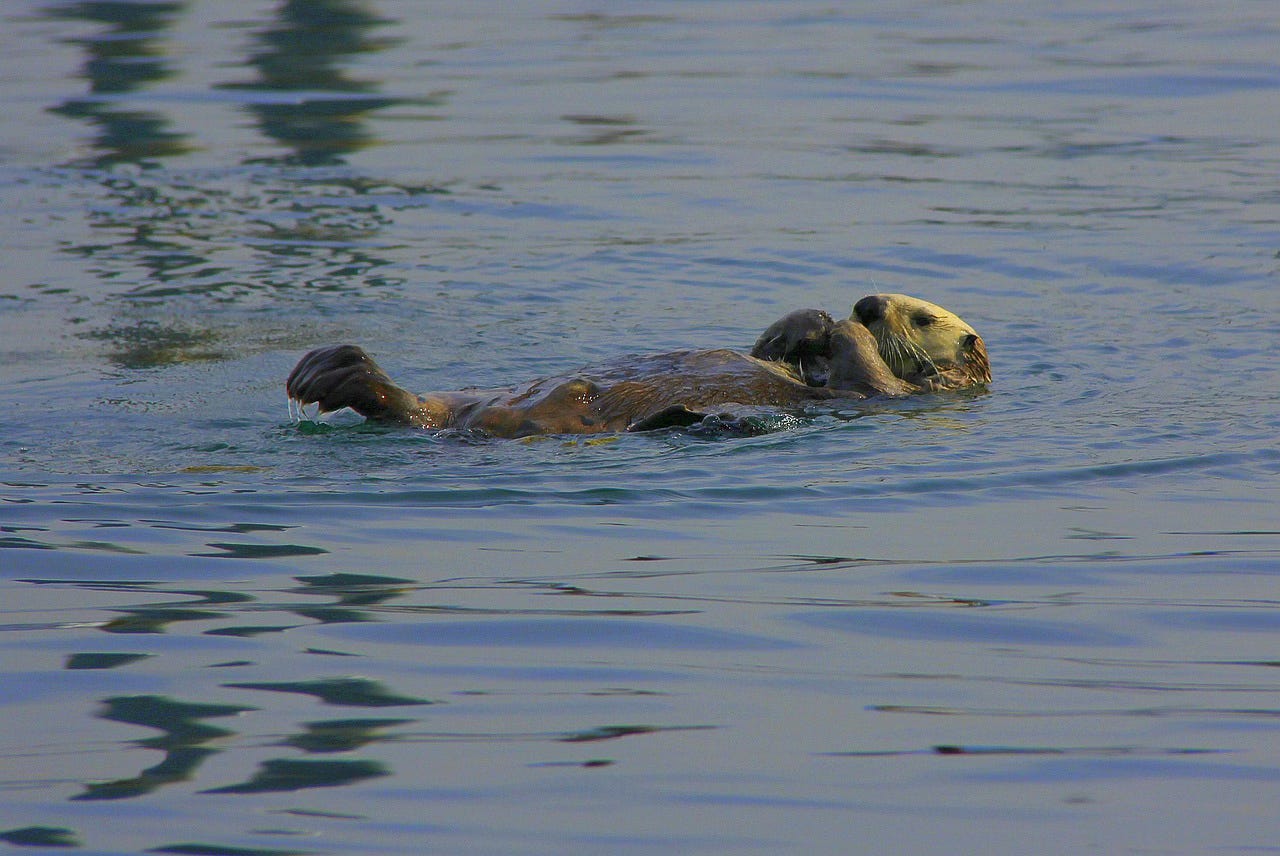
It’s hard to resist their charms – otters are adorable and cuddly-looking, and they’re very social, holding hands as they float in rafts with sometimes dozens of other otters.
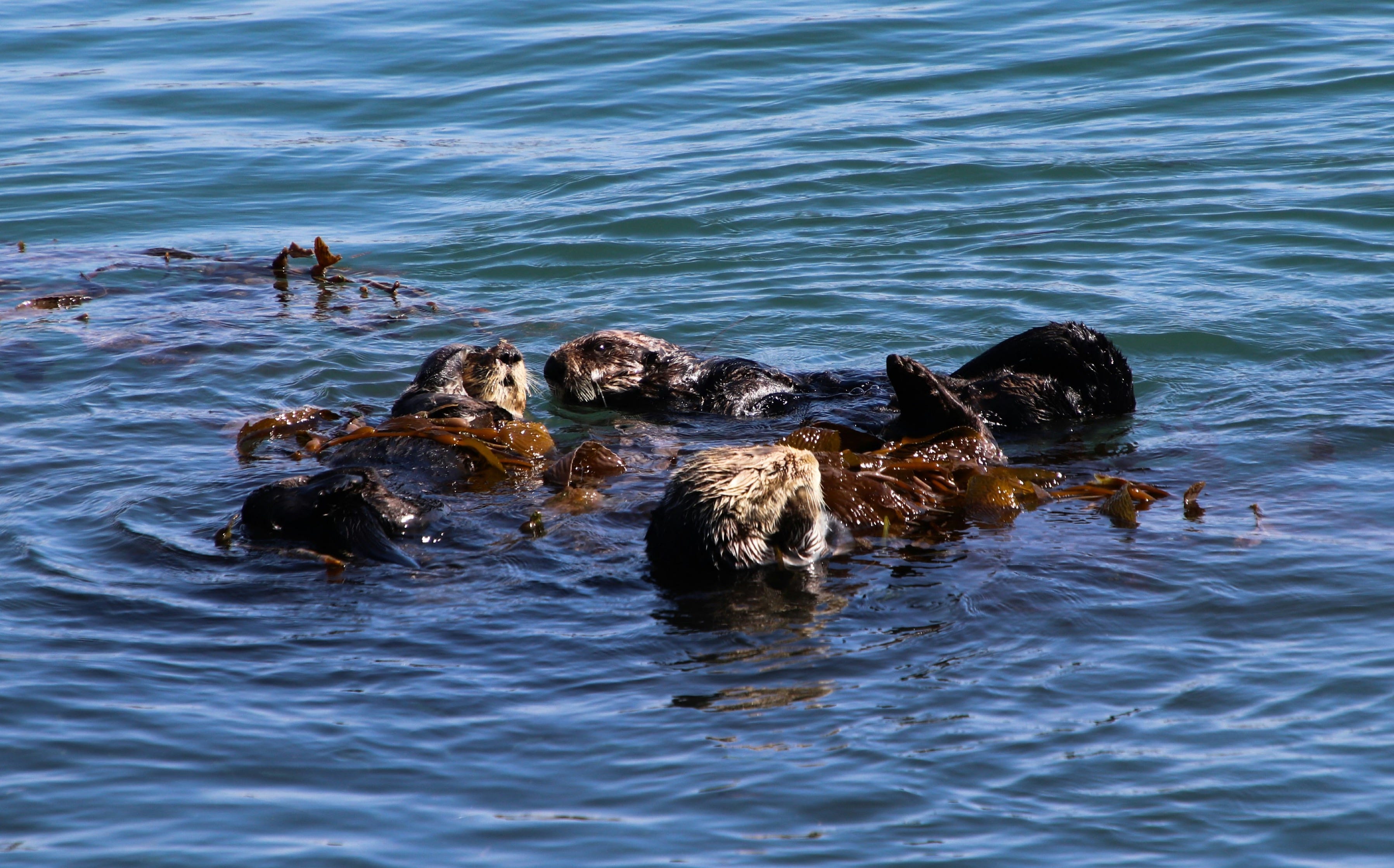
They also use tools – as they float along the Pacific coast, anchored by long strands of kelp so they don’t drift away in the current, otters hold rocks on their stomachs while lying on their backs, whacking snacks of shellfish against the rocks to get at the juicy meat.
Otters are important to the ecosystem – making them ‘keystone species’ – because they eat sea urchins and crabs that would otherwise decimate the kelp forests and seagrass areas near the shore. The kelp forests and seagrasses, in turn, have many ecological benefits for animals and anchor sediment, preventing erosion and degradation of coastal marshes.
Sea otters eat a lot of food – to help keep themselves warm in the frigid ocean waters, they eat 25% or more of their body weight daily, primarily from urchins, mussels, crabs and other high-protein snacks.
Near-extinction of sea otters in the early 1900s
But this idyllic life is not without dangers.
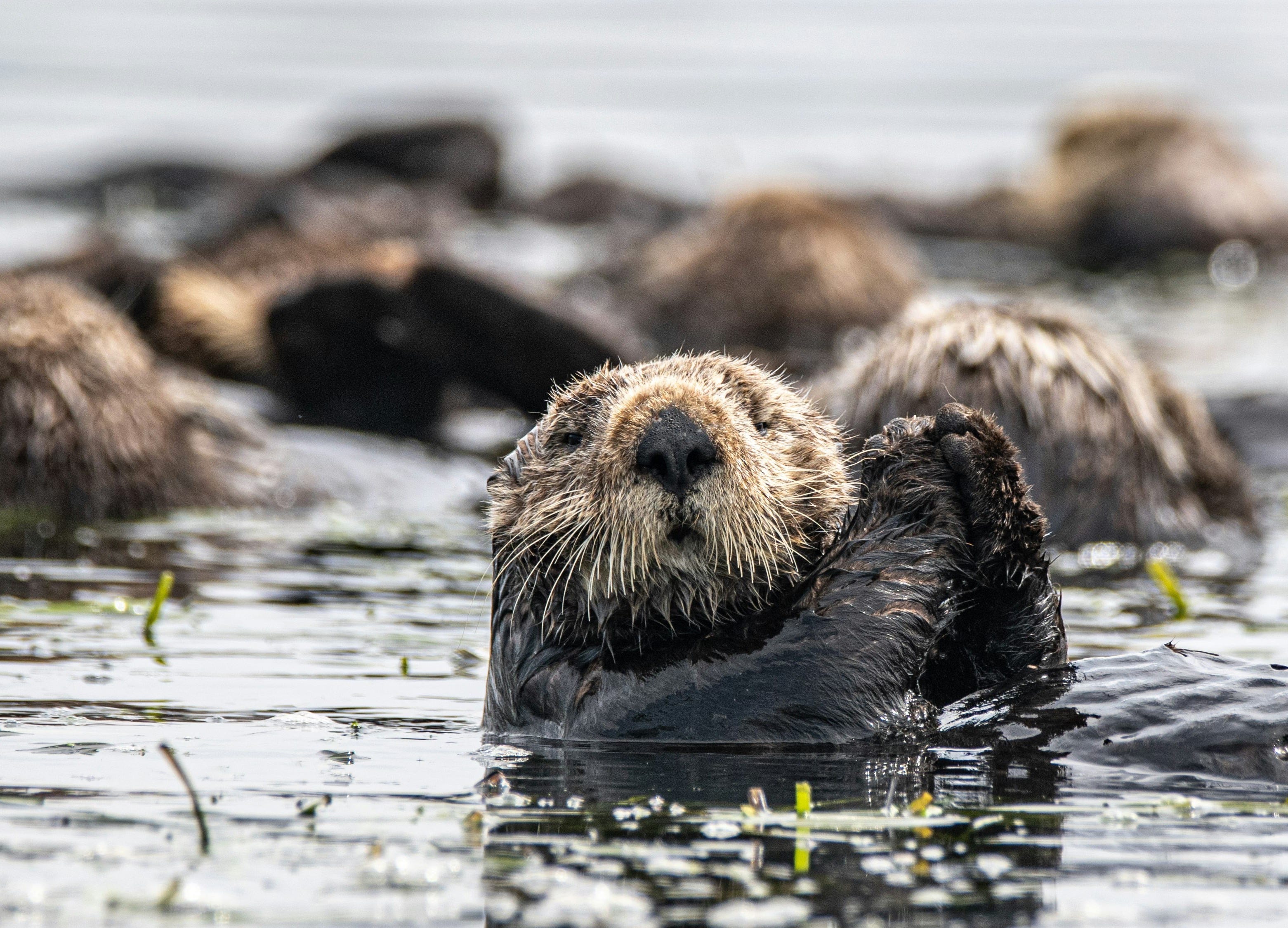
Sea otters nearly went extinct in the early 1900s, causing changes in coastal ecosystems that researchers didn’t fully understand until their numbers started rebounding again in the 1970s.
Biologists estimate that up to 300,000 sea otters once flourished along the Pacific coast from Mexico north to California, British Columbia, Alaska, west to Russia and south to Japan.
Then, in the 1700s and 1800s, they were nearly hunted to extinction because of their extremely dense fur. With up to nearly 1 million hairs per square inch, they have the thickest fur of any mammal (compare that with up to 1,300 hairs per square inch of humans!).
Otters need this lush coat to stay warm. They’re the smallest marine mammal of the northern hemisphere, but instead of relying on a thick layer of blubber like other marine mammals (think whales or seals), they have their thick, water-resistant fur.
That made their pelt a highly prized possession, fetching up to $1,500 per skin by the early 1900s (equivalent to about $44,000 in today’s U.S. dollars).
Partial recovery following legal protections
By 1911, only a tiny fraction of otters were left when they were protected under the Northern Pacific Fur Seal Treaty. In the 1970s, they gained additional protections through the U.S. Marine Mammal Protection Act of 1972. Some populations were listed as threatened under the U.S. Endangered Species Act of 1973.
In Canada, they’re listed as Special Concern under the Species at Risk Act, and they’re endangered on the International Union for the Conservation of Nature (IUCN) Red List.
Because of these legal protections, their numbers have now recovered to some extent, aided by reintroductions to areas from which they disappeared. However, even now they only occupy a tiny portion of their original range, and the population isn’t secure.
Pollution has replaced hunting as one of the main threats
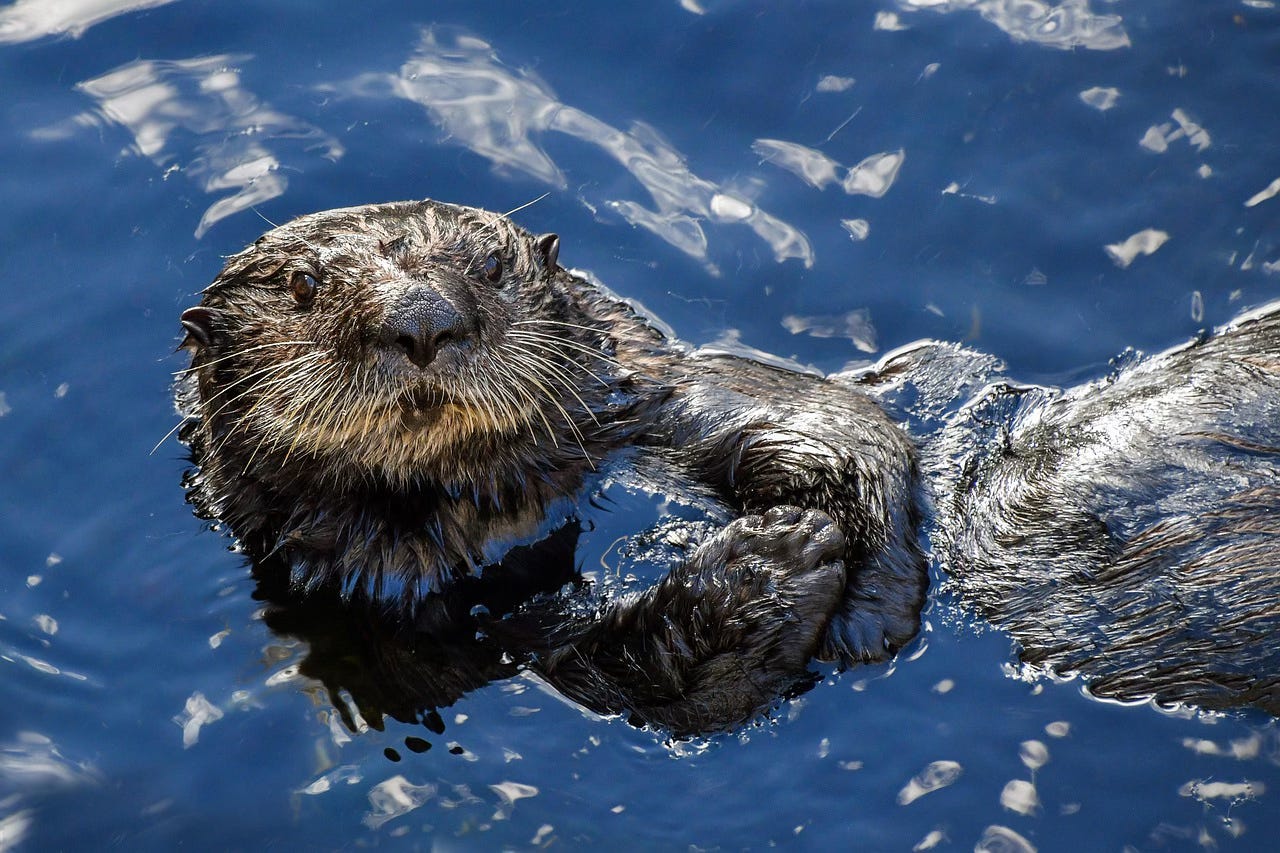
While they’re not hunted by humans anymore, threats now include oil spills (oil decreases the insulating effect of their fur, causing them to die of hypothermia), entanglement in fishing gear and being hunted by killer whales and white sharks.
Another threat is pollution. A 2006 study found that California sea otters that died of disease had higher PFAS concentrations than those that died from other causes.
“Forever chemicals” in sea otters
That brings us back to the study’s findings of high PFAS levels in British Columbia sea otters.
The study, which appeared in the journal Environmental Toxicology and Chemistry, was the first to investigate PFAS in sea otters near Vancouver Island. Some of the study sites were near cities and shipping lanes; others were more remote.
Because sea otters are protected in Canada, Dana Price with the University of British Columbia and the other authors could only examine the remains of 11 otters found dead along the coast.
What they found was alarming.
Of the 40 PFAS chemicals they tested for, the researchers found eight in the sampled otters. All of the livers contained at least two of the chemicals, and two of the flesh samples contained them.
Contamination levels in otters found close to urban centers or shipping lanes were more than three times higher on average than those in remote areas.
Health impacts of PFAS on sea otters
With such a small sample size, it’s difficult to determine any correlation between the cause of death and PFAS levels, but other studies have associated health problems like organ damage, reproductive impairment, insulin resistance, impaired liver function and decreased metabolic rates in wildlife like sea otters with high PFAS levels.
Metabolic effects could have particularly negative impacts on sea otters because they need a lot of food to keep warm. And their high-protein foods are susceptible to PFAS contamination from runoff from landfills, factories, airports and pesticides.
PFAS are a huge group of chemicals – it’s estimated there are around 15,000 of them. They have been manufactured since the 1940s, are used in multitudes of consumer and industrial products and are extremely persistent in the environment.
Much is unknown about the effects of the vast majority of PFAS on the environment and the health of humans and wildlife (only two of the chemicals are well-studied), but researchers are concerned they could cause disease in sea otters.
However, there is hope. Some countries are starting to regulate the use of at least some of them and consumers are increasingly becoming aware of their dangers, demanding products that are PFAS-free.
We have prevented the extinction of sea otters once already by stopping the indiscriminate hunting and reintroducing them to areas from where they had disappeared. Now it’s time to clean up the pollution that is once again endangering their health.
If you’d like to get new posts sent directly to your inbox every week, subscribe to my newsletter via Substack:
It’s free to subscribe, but if you choose the paid option you’d support my work and help keep my articles free for those who can’t afford a paid subscription!
Not ready to subscribe? It takes many hours to research and write each post, so please consider supporting my work by buying me a coffee (or a beer…😄).
Links to more information:
- Price et al., 2025. Concentrations of per- and polyfluoroalkyl substances in Canadian sea otters (Enhydra lutris) are higher near urban centers. Environmental Toxicology and Chemistry, 45(1): 80-91.
- Gregr et al., 2020. Cascading social-ecological costs and benefits triggered by a recovering keystone predator. Science, 368(6496): 1243-1247.
- Kannan, Perrotta and Thomas, 2006: Association between perfluorinated compounds and pathological conditions in southern sea otters. Environmental Science & Technology, 40(16):4943-4948.
- Shukla et al., 2023. The diversity of animals identified as keystone species. Ecology and Evolution, 13(10):e10561.
- PFAS – Environmental Working Group info
- PFAS – European Commission info
- PFAS – U.S. EPA info