From feeding baby birds to recycling nutrients, a new study shows conserving insects has surprising benefits for other animals and biodiversity.
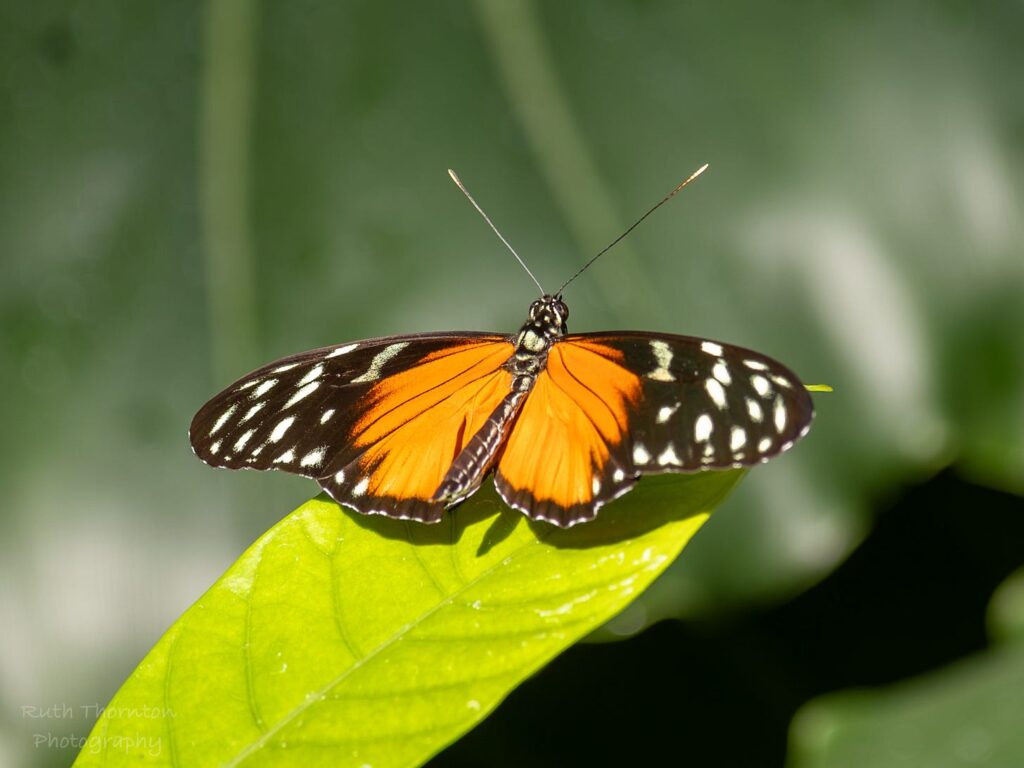
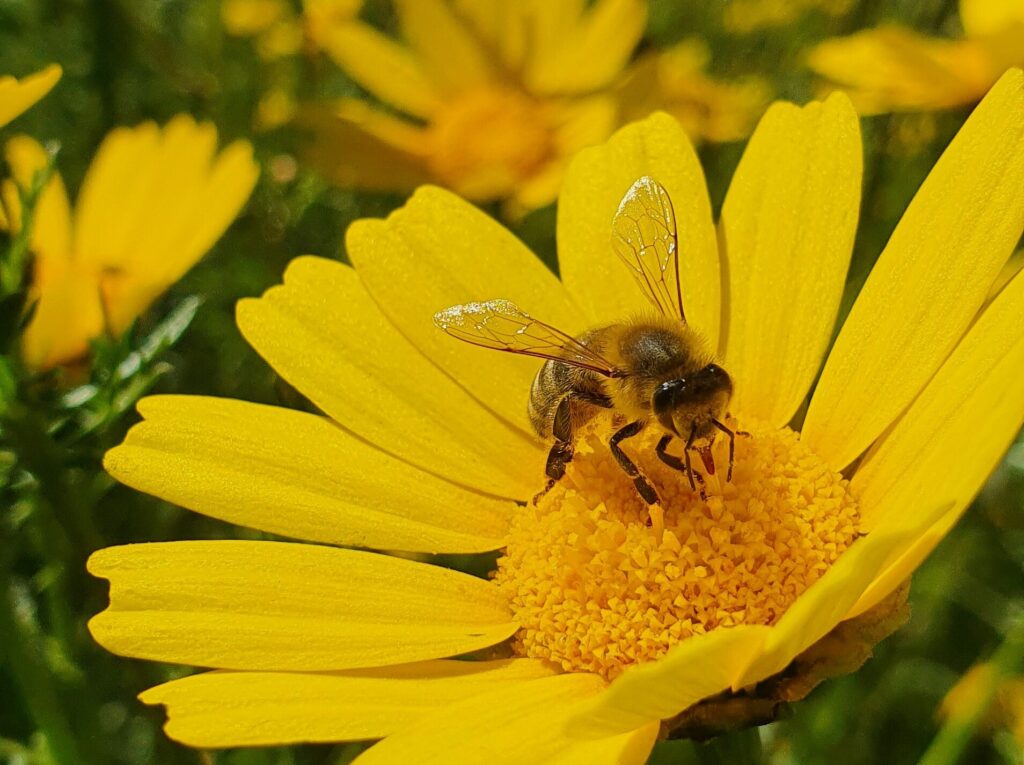
As many insects are declining in what some experts call an impending “insect apocalypse,” a new study highlights countless benefits these tiny creatures provide other animals, including serving as food, pollinating flowers, dispersing seeds, building structures birds and mammals use as shelter, sanitizing nests and recycling nutrients.
The review, published last week in the journal Nature Reviews Biodiversity, assembled what is probably the most comprehensive dataset yet about the many ways insects benefit the natural world.
Its findings highlight the far-reaching effects insect declines could have on wildlife globally.
“Insects are so much more than bird food or bat food,” Eliza Grames, assistant professor at New York’s Binghamton University and one of the study’s two lead authors, told me. “Things that benefit insects are going to have massive benefits for vertebrates and plants.”
If you’d like to get new posts sent directly to your inbox every week, subscribe to my newsletter via Substack:
Insect populations are declining worldwide
Insect populations have crashed in recent years, and since insects pollinate 75% of globally important crops, many farmers worry about how fewer pollinators will affect agricultural production.
What was even less known is an understanding of how the decline of insects could affect vertebrates – animals with a spine, such as mammals, birds, reptiles and amphibians – and the larger ecosystem.
To get a better handle on “how a decline in insect abundance and biomass will cascade through food webs,” Grames said, she and a global team of experts in insects, birds, bats, mammals, lizards and other vertebrates assembled to pool their knowledge about how different animals use the little critters.
The researchers pored through nearly 300 studies published over several decades to complete the review, which is part of an international Research Coordination Network project on the status of insects, funded by the National Science Foundation.

Importance of insects as a food source for other animals
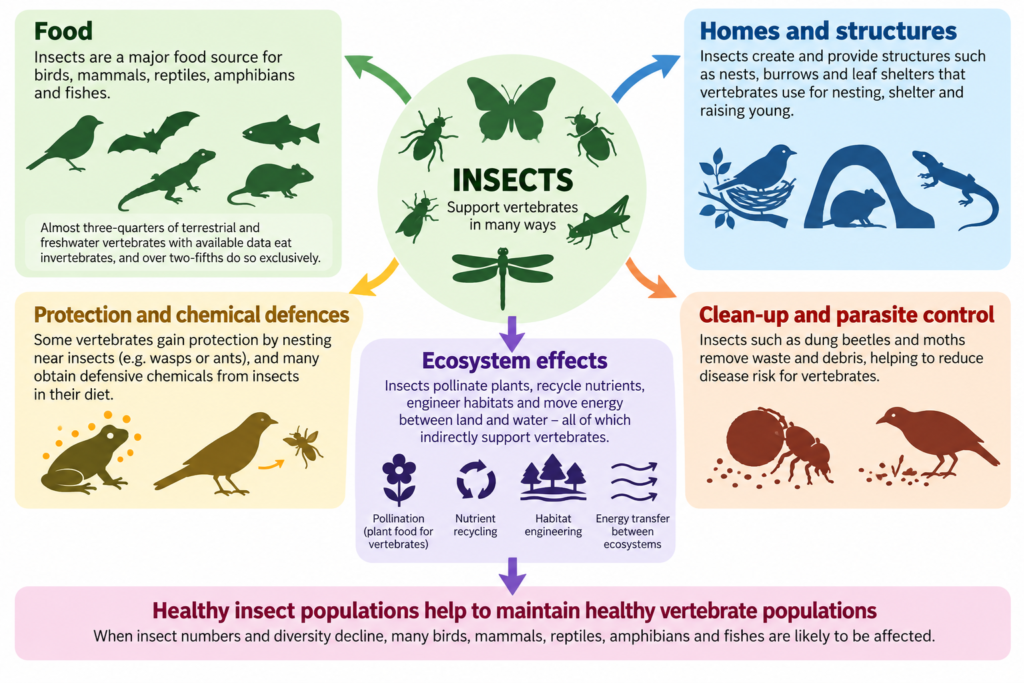
The results underscored insects’ importance in the food web: Almost three-quarters of terrestrial and freshwater vertebrates eat insects as at least part of their diet. More than 40% of them subsist only on insects.
Nearly all North American birds rear their young at least partially on insects, as do many tropical birds. Insects also fuel the migrations of three-quarters of migratory birds, thanks to their high protein and fat content. Hummingbirds, for example, are often assumed to only eat nectar from flowers, but they supplement their diet with insects to get enough protein.
Some insects also produce tasty snacks like honeydew, honey and wax that feed wildlife.
But the researchers discovered insects play many other important roles for wildlife and the ecosystem.
The many ways insects benefit vertebrates
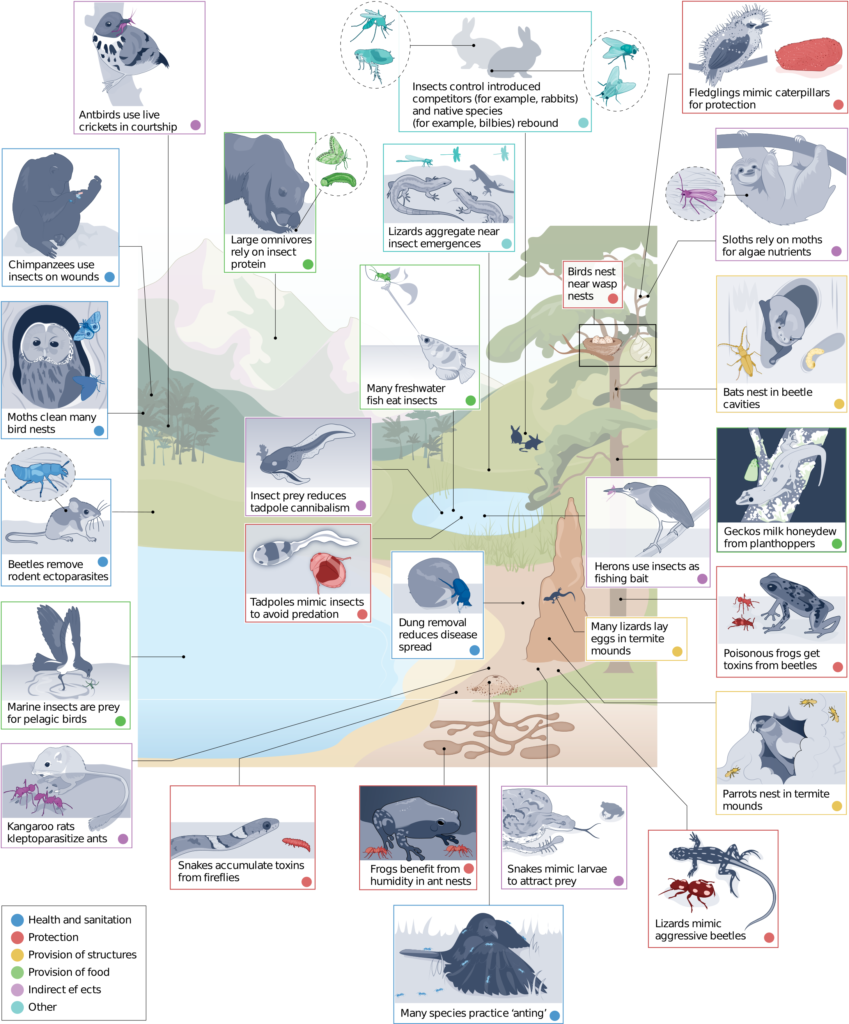
Grames said she was surprised by the diversity of the types of interactions, ranging from protection – “some birds will nest next to a wasp nest because it might deter nest predators,” she explained – to wound care, sanitation and even nest decoration.
The team assembled a long list of examples, including:
- Termite mounds and ant nests are used by birds, small mammals, reptiles and amphibians as shelter.
- Some lizards and snakes lay their eggs in ant nests.
- Birds use spider and insect silk to improve and insulate nests.
- Bowerbird males use butterfly wings or beetle parts to decorate their elaborate bowers to attract mates.
- Many amphibians and some birds purposefully eat toxic insects, especially ants and some beetles, to either use the toxins for defense from would-be predators or to ward off parasites.
- Chimpanzees have been observed applying ants, beetles, grasshoppers and other bugs to open wounds.
- More than 200 species of birds use ants for grooming – a behavior biologists call “anting” – as do some mammals, like squirrels and primates, and some reptiles and amphibians.
- Some insects remove poop, an important service that mitigates disease and recycles nutrients. Dung beetles, perhaps the best-known insects that do this, flourish on every continent except Antarctica.
- Some herons and egrets use insects to bait fish by placing grasshoppers and other insects on the water surface.
Negative effects of insects
Many people think mainly about insects’ negative effects – like blood-sucking mosquitoes, fleas spreading the plague or bugs damaging crops.
“Obviously, insects spread diseases. But what they don’t get enough credit for is insects also regulate the insects that spread diseases,” Grames said. For example, many dragonflies eat mosquitoes.
Sometimes insects also turn the tables on vertebrates and eat them.
“Praying mantises are kind of notorious for this, where they’ll hang out on a hummingbird feeder and snatch a hummingbird,” Grames said. Some aquatic insects also eat tadpoles and small fish.
Overall though, she said, insects contribute either positively to vertebrates or they have a neutral effect. “There are some negative interactions, but it’s really a kind of small subset of insect species that are more in that kind of pest category.”
Insect biodiversity crisis
Despite recent declines in insect populations, Grames said she thinks the term “insect apocalypse” is a misnomer. She calls it an “insect biodiversity crisis” since it’s unlikely that insects as a group will disappear.
But “we’re losing a lot of insects in terms of especially abundance and biomass,” she said. Studies estimate that insects are declining an average of one to two percent every year. One study documented a loss of nearly one-quarter of butterflies in the U.S. in the last 20 years.
There’s a lot of uncertainty about how many insect species exist in the world, with estimates ranging from 10 to 30 million, Grames said. Only around 1.2 million insect species have been described, so biologists estimate that at least 90% of insects are as yet unknown to science.
“Some species are also going extinct, and a lot of those might be things that we haven’t even described yet,” she said. “It’s really about which species are we losing, which services do they perform. So, I think it’s right to be alarmed and concerned and putting resources towards [insect conservation].”
But, she said, insects have existed since before the dinosaurs. “If insects disappeared, we wouldn’t be here anymore. They’re going to outlast us for sure.”
Insect conservation supports vertebrate conservation
The review also identified several remaining important data gaps about insect – vertebrate interactions. For example, exactly which insects a particular critically endangered bird or mammal might eat.
That uncertainty can complicate conservation efforts.
“[If] you don’t know what it eats, you don’t know which insect to target for conservation,” she said. Since insect classification can be very technical, not all vertebrate biologists have the necessary expertise to identify some insects.
Chris Elphick, a professor at the University of Connecticut who contributed to the study, said, “If you want to have vertebrates, then you’ve got to be thinking about insect conservation, and we don’t do that nearly enough.”
Elphick, who works on birds, said he hopes the review will foster increased collaboration between scientists who study vertebrates and those who study insects.
“We should stop siloing conservation efforts,” Grames said. “By prioritizing [insect] conservation, it’ll kind of ripple out through food webs and across ecosystems.”
A message of hope
Despite the dire situation for insects, Grames said not all is lost. The right conservation actions can pay off quickly thanks to many insects’ capacity to bounce back in a short time.
“Insects can have three, four generations in a summer, and so you get pretty instant gratification sometimes,” she said. “That’s always my message of hope – sure, they’re hanging on by a little thread right now, but give them a little lifeline and they’ll do great soon.”
If you’d like to get new posts sent directly to your inbox every week, subscribe to my newsletter via Substack:
It’s free to subscribe, but if you choose the paid option you’d support my work and help keep my articles free for those who can’t afford a paid subscription!
Not ready to subscribe? It takes many hours to research and write each post, so please consider supporting my work by buying me a coffee (or a beer…😄).
Links to resources:
- Cooke et al., 2026: The importance of insect biodiversity for vertebrates. Nature Reviews Biodiversity.
- Status of Insects: An international Research Coordination Network.
- National Science Foundation
- Science, 4/25/2026, by Jeffrey Mervis: Trump fires every member of the U.S. National Science Foundation’s governing body.
- The New York Times, 10/2/2026, by Adam Sella, Christopher Flavelle and Irena Hwang: Agency diverted $1.4 Billion in science funds mandated by Congress.
- Edwards et al., 2025: Rapid butterfly declines across the United States during the 21st century. Science, 387(6738): 1090-1094.
- Tamburini et al., 2019: Pollination contribution to crop yield is often context-dependent: A review of experimental evidence. Agriculture, Ecosystems & Environment, 280: 16-23.