The fragile insects travel thousands of miles to bring a bit of summer to northern countries. But what does it mean for conservation in their home countries?
I recently had an interesting assignment with local news station WKTV Journal to cover a tropical butterfly exhibition in Grand Rapids, Michigan. I’d visited it in prior years and had delighted in photographing the vibrant insects filling the large tropical conservatory, so looked forward to the opportunity to interview staff and learn more about what it takes behind the scenes to coordinate and run a temporary exhibit with thousands of insects buzzing around.
All photos in this story were taken by me.
Going behind the scenes at a tropical butterfly exhibit
The day I arrived was a typical end-of-winter day in West Michigan – cool, breezy, but at least the sun was out. Then I stepped inside the glass house containing the conservatory and realized immediately that I was overdressed – in a turtleneck, sweater and jacket – as the warmth and humidity enveloped me. Oh yes, a tropical exhibit would require tropical temperatures and humidity, wouldn’t it?
I gratefully accepted the staff’s offer to dump my superfluous layers behind the observation station, freeing up my hands to take notes and photos.
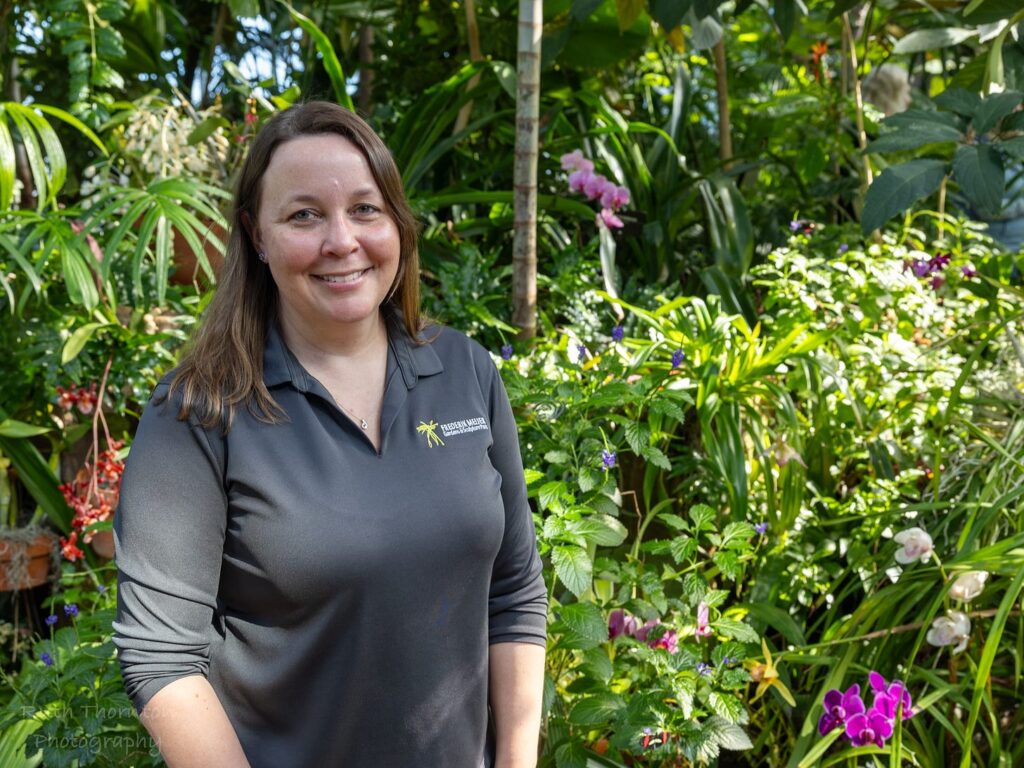
It was a fun time. As I was interviewing the horticulture director, butterflies kept landing on her, and she very graciously explained the ins and outs of both butterfly biology and the work that goes into farming butterflies in their home countries and transporting them to butterfly houses around the world.
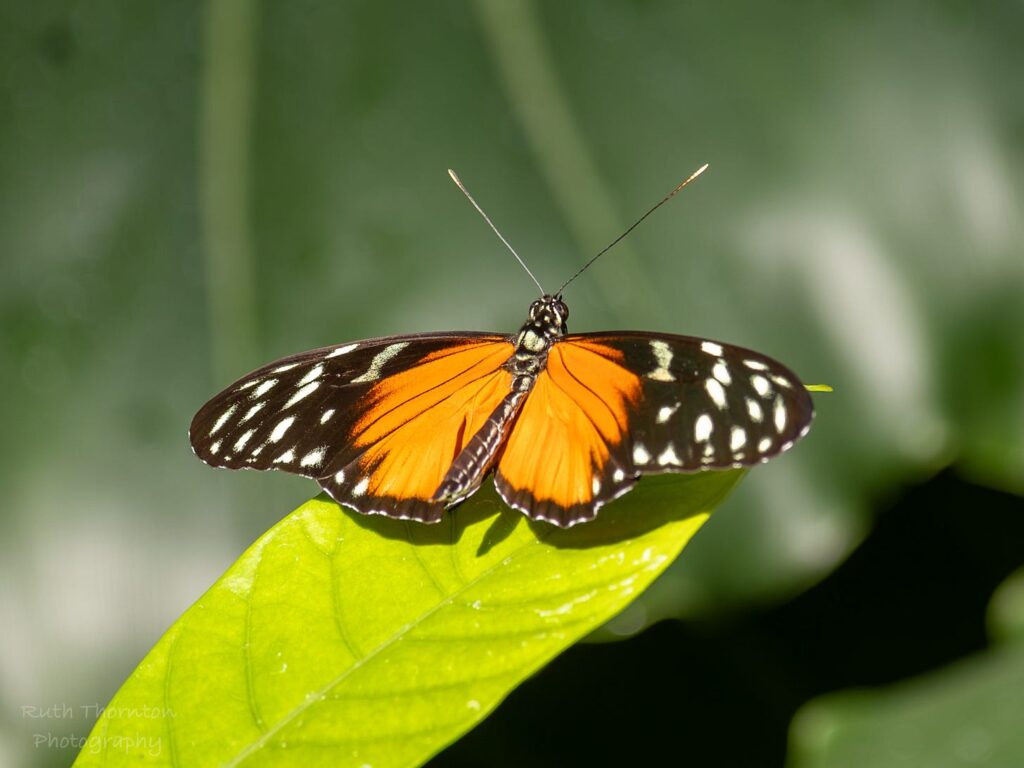
I did wonder, however, about the effects of butterfly farming on conservation. Proponents claim the revenue from ticket sales supports conservation in areas that grow the butterflies and provides income for local people, including women. Critics argue that over-collecting can harm butterflies and can spread diseases.
Who’s right? Well, it’s complicated, and it depends on the specific circumstances of each farm and where the butterflies end up. Stay tuned next week as I delve into the research on the pros and cons of tropical butterfly farming for exhibits in the Global North!
Meanwhile, here’s the expanded version of the story I wrote for WKTV Journal. That version had to adhere to a limited word count, so a lot was left out. I’m glad I get to add more of the fascinating information I learned here!
The WKTV Journal article can be found here.
If you’d like to get new posts sent directly to your inbox every week, subscribe to my newsletter via Substack:
Popular West Michigan butterfly exhibit expects a quarter million visitors this spring
Around a quarter million people are once again expected to experience the 31st annual tropical butterfly exhibition at Frederik Meijer Gardens & Sculpture Park, escaping the cold and blustery Michigan spring weather for a few hours.
More than 7,000 butterflies from Central and South America, Asia and Africa charm visitors at Fred and Dorothy Fichter Butterflies are Blooming, the nation’s largest temporary tropical butterfly exhibition. It runs from March 1 through April 30 at 1000 East Beltline Ave. NE in Grand Rapids.
The first butterfly exhibit was held the year Frederik Meijer Gardens opened, said Wendy Overbeck Dunham, the director of horticulture.
“The idea was that in Michigan in March and April, we’re past the beauty of winter and we’ve made it to that stage where things aren’t quite warm enough to do stuff outside,” Overbeck Dunham said. ”You can visit the tropics without even leaving West Michigan this way.”
Visitors flock to see the butterflies from Michigan and beyond. “We do see people from all over the United States during this exhibition,” said John VanderHaagen, the director of communications.
The mix of butterflies people can admire varies throughout the exhibit period. “There are some species that we’ll get at the beginning that we won’t get at the end and vice versa,” Overbeck Dunham said.
Every year is different
The types of butterflies also differ from year to year. “Butterflies are farmed just like fruit crops are farmed,” she said. “Availability can depend on season, weather. Whether it’s been rainy, whether it’s been unusually cold where they come from, whether it’s been extra dry.”
The bustle starts well before the exhibition opening day: butterflies start arriving in mid-February. That’s when the biggest shipments arrive from the farms and the huge tropical conservatory – five stories high and 15,000 square feet in size – starts filling with butterflies, Overbeck Dunham said.
On average, each butterfly lives and flies for about two weeks – depending on the species – so additional shipments keep coming until mid-April. “As the exhibit goes, we are still getting almost 1,000 in a week,” she said.
“And then by mid-May, there’ll be no more butterflies,” she added.
Every year, the exhibit gets anywhere from 60 to 85 species, ranging from the small Costa Rica clearwing (Greta oto), aptly named for its transparent wings, to the common morpho (Morpho peleides), a strikingly blue visitor favorite from Central and South America and one of the largest butterflies in the world. They also receive a few moth species, for example the impressive green African moon moth (Argema mimosae) from sub-Saharan Africa.
The exhibit is popular with families from the area and beyond.
Amber Nelson and her three girls, aged 8 years old and younger, from the Coopersville area, were among those admiring the insects. She said the stunning blue butterflies are their favorites.
Nelson said they’ve been coming to the butterfly exhibit for three or four years. “The kids just love the butterflies, their bright colors. And being able to have a nice, slow walk and look at the butterflies until we get hungry,” she said.
Butterflies are emerging throughout the exhibition
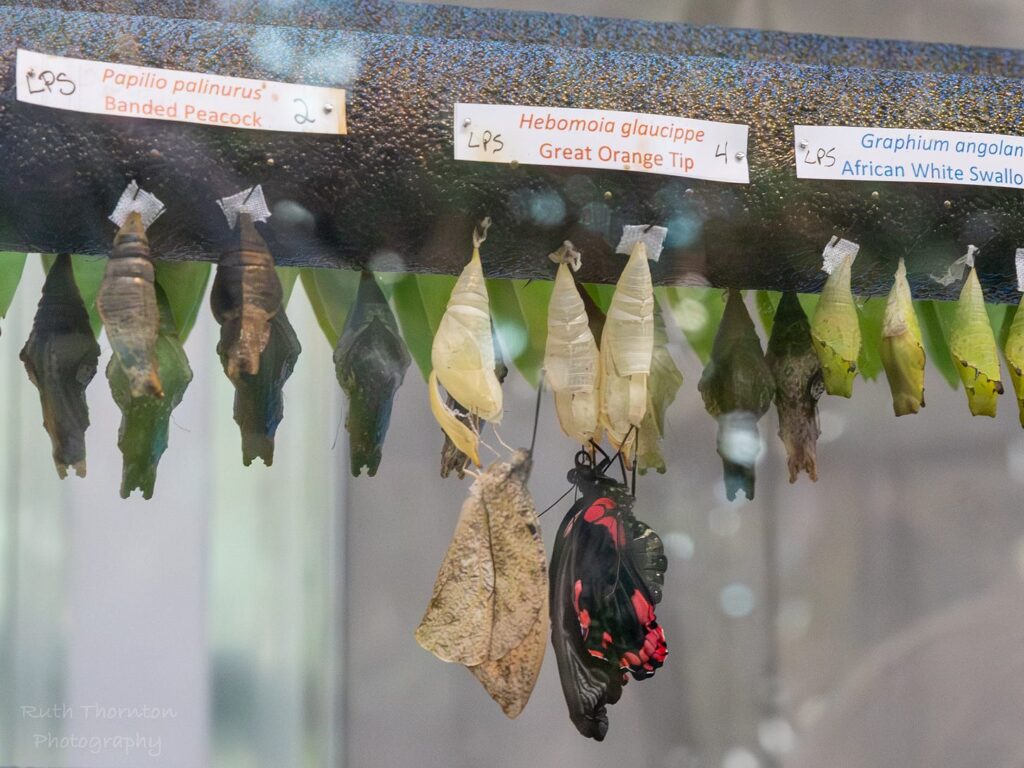
Butterflies are shipped not as the beautiful, winged adults, but in an immature stage called ‘chrysalis,’ created when the caterpillar forms a protective casing and transforms into a butterfly through a process known as ‘metamorphosis.’
A popular spot for adults and children alike is the observation station, where the newly arrived chrysalises are pinned on bars to hang, just like they would in their natural homes, until they transform into butterflies.
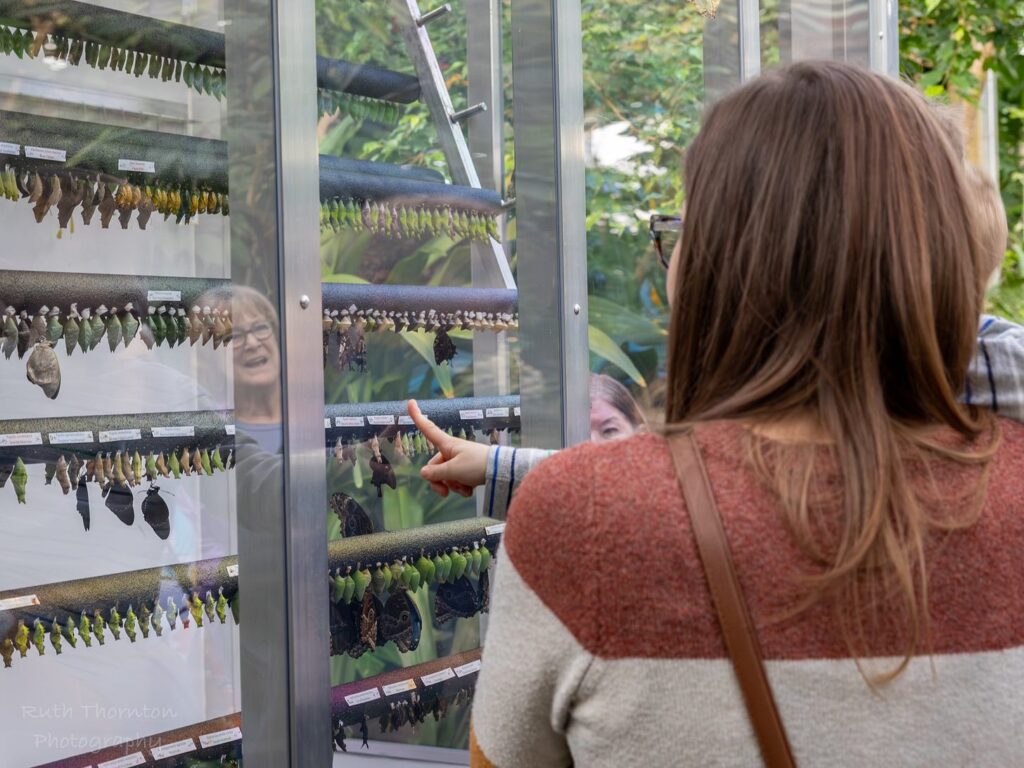
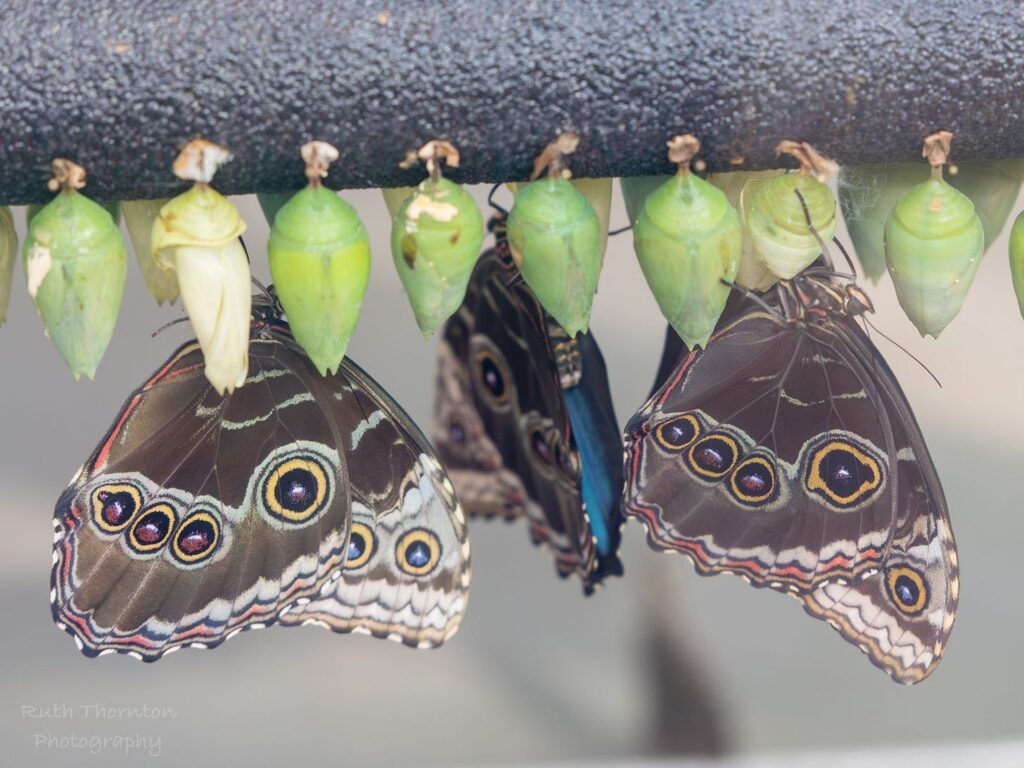
“When butterflies emerge, what they’ll do is they’ll actually use the chrysalis husk or shell, and they’ll hold onto that with their feet, their bodies,” Overbeck Dunham said. Their abdomens are initially swollen with liquid and the wings are shriveled up and folded.
As the butterflies hang in the observation station they pump the liquid from their abdomen to the wings, expanding them as they’re preparing for flight.
When staff see that new butterflies are starting to fly around the station, they coax any that are ready into a little glass case for release into the larger butterfly exhibit.
“We’ll walk out of here with a full case of butterflies sometimes,” she said. “It’s a wonderful opportunity for people to get pictures of a cluster – or kaleidoscope (of butterflies).”
Birds share the conservatory with the butterflies
Besides insects, visitors can also expect to see several birds flying and running around the exhibition.
“We have a tropical bird collection in here from tropics around the world,” Overbeck Dunham explained. That includes finches, canaries and Chinese painted quail.
Some visitors are worried that the birds might eat the butterflies, but staff make sure the insects are not in danger. “Our birds are primarily seed eaters, and that is intentional. So that when the butterflies are in here, there isn’t a conflict,” she said.
Getting the butterflies is a logistical challenge
Bringing in so many butterflies from dozens of species from many geographic regions is a logistical challenge, Overbeck Dunham said. It requires not only working with many butterfly farmers and brokers all over the world but also navigating strict permits and inspections by the U.S. Department of Agriculture, plus permits from the exporting countries.
It’s also a race against time while handling delicate cargo. “These are fragile, live animals that are traveling thousands of miles around the world in boxes,” she said, packed on trucks and airplanes before reaching their destination.
Each chrysalis lasts for around two weeks, on average, before it transforms into a butterfly, she said. The transportation alone from farm to exhibit takes around a week, so there’s little room for error.
“Luckily, as precarious as that whole process sounds, it’s been pretty reliable for us,” Overbeck Dunham said.
Importing endangered species is not permitted. “The butterflies that we get here are common in the places that they come from,” she said. “But they are not butterflies that you’ll find here in Michigan.”
What you can do to help butterflies
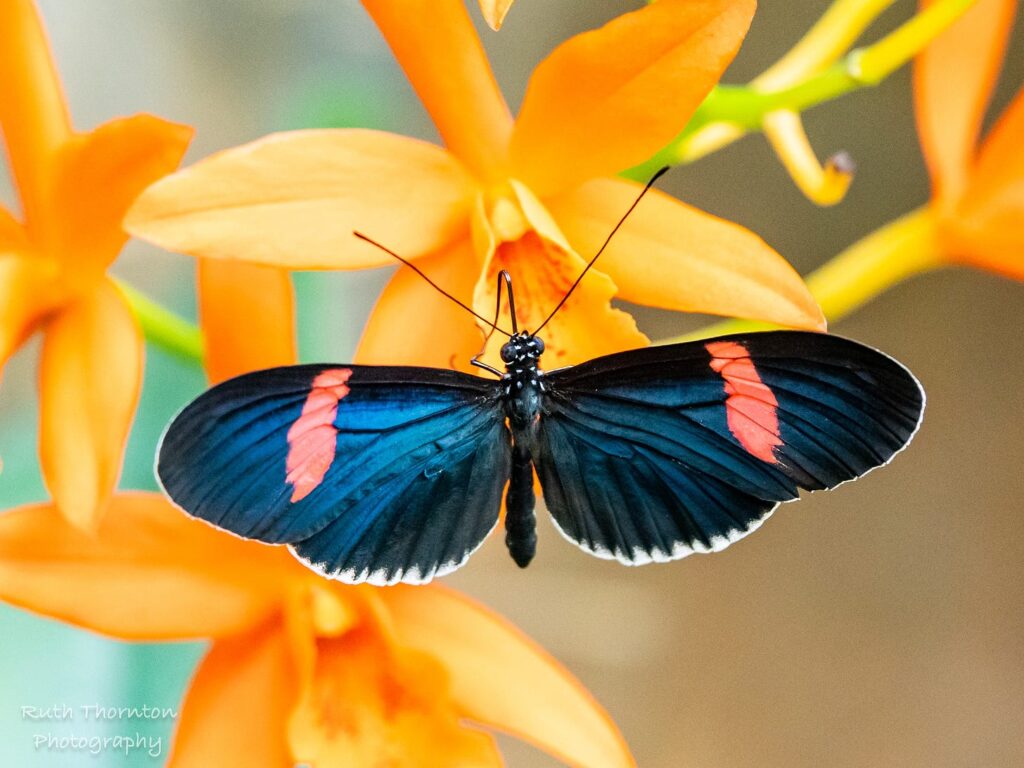
When asked what people can do to help butterflies – and insects in general – Overbeck Dunham said, “my personal response to that is always, stop mowing your lawn. Honestly, turf is a terrible thing when it comes to biodiversity.”
But, she added, figure out where you can strike a balance. It’s not necessary to stop mowing everything; even one corner that’s not mowed can make a difference.
It’s also important to plant native flowers. But again, she added, you don’t need to go all-native. “Do you want a planter of petunias? Have a planter of petunias. But then maybe balance it out with something that’s a little more wildlife-friendly, or bird-friendly,” she said.
Some butterflies use trees as their host plants. “Maybe flowers aren’t your thing. There are trees you can plant,” she added. Oak trees, for example, are used by many caterpillars and larvae, she said.
“And caterpillars and larvae are what turn into butterflies and moths,” she said.
Experts also recommend minimizing the use of pesticides, which directly harm many beneficial insects, including butterflies and moths.
It’s also important to support butterfly houses, she said. That brings revenue to the butterfly farms in tropical areas, which in turn protect local ecosystems.
“As long as those people have a source of income for farming butterflies, then they’re going to maintain those farms, which are again tied back to healthy butterflies, healthy plants, healthy ecosystem,” she said. “It’s all connected.”
The planning never ends
Overbeck Dunham said the planning for the next exhibit never ends. “We are always three to four years out planning and making sure that we have everything in line that we need to be able to do the exhibit.”
“That’s everything from making sure that our permits are up to date, that we’re satisfying all of the current USDA recommendations, regulations, rules. Staying in contact with our inspectors and those who issue permits and so on,” she said.
Overbeck Dunham has been working on the butterfly exhibit for more than 20 years, but it never grows old, she said.
“I get excited by it every year. It’s my favorite time of year,” she said. “If I’m in here and one is in the process (of emerging), I can’t help but stop and take a moment and watch, because it’s still just the coolest thing in the world to me.”
For readers in Michigan – for more information about the exhibit, visit the Fred & Dorothy Fichter Butterflies are Blooming website. Tickets can be purchased online at MeijerGardens.org/tickets or at the entry desk. Multiple special events are featured throughout March and April, some of which require an RSVP.
If you’d like to get new posts sent directly to your inbox every week, subscribe to my newsletter via Substack:
It’s free to subscribe, but if you choose the paid option you’d support my work and help keep my articles free for those who can’t afford a paid subscription!
Not ready to subscribe? It takes many hours to research and write each post, so please consider supporting my work by buying me a coffee (or a beer…😄).