The COP17 U.N. Biodiversity Conference exposed major gaps in funding and political will, putting wildlife, people and the future of our planet at risk.
Many of you have probably not heard about a major international summit, attended by almost every country on Earth and centered on nature, that occurred a couple of weeks ago in Yerevan, Armenia: The U.N. Biodiversity Conference, aka “COP17.” It received even less news coverage by mainstream media than the U.N. Climate Conference that is finishing up now in Turkey.
The neglect of the biodiversity crisis by the media is a perpetual pet peeve of mine (check out my post about it here), and it has consequences – the public is largely unaware of the extent of biodiversity loss (many people don’t even know what the term “biodiversity” means), and hence politicians and corporations see little reason to do anything about it.
Add to that intense lobbying and disinformation by industries with a financial interest in exploiting our planet’s resources as quickly and cheaply as possible – the fossil fuel industry, pharmaceutical industry, pesticide manufacturers, mining interests, etc. – and the world’s wildlife and natural habitats have little chance to thrive.
That’s despite warnings by scientists and many business leaders that biodiversity loss and other environmental threats, such as pollution, are at least as great a threat to people’s long-term prosperity, security and well-being as climate change.
Unfortunately, it again became clear at the Biodiversity Conference that the world’s countries are not on track to protect nature, and at the end of two weeks of intense negotiations, several important questions on how to protect nature – and fund that protection – were left vague or unfinished, with many countries noncommittal in the face of these challenges.
If you’d like to get new posts sent directly to your inbox every week, subscribe to my newsletter via Substack:
Why is the extinction crisis so invisible?
So why does the extinction crisis still not garner more attention? I have a nagging feeling that part of its PR problem is that biodiversity loss is just so darn complex.
Climate change seems simple in comparison – the Earth’s climate is heating up and the main culprit has been identified: increasing greenhouse gas emissions, mostly due to fossil fuels. The solution seems straightforward, though certainly not easy.
The biodiversity crisis, on the other hand, is not straightforward. Most people don’t even understand what biodiversity is: basically, the “diversity within and between” all species – animals, plants and fungi – and ecosystems. That’s a lot to get one’s head around.
The causes are also complex, with habitat loss, invasive species, climate change, exploitation of species and pollution the main culprits. Trying to tackle all of these issues is daunting to say the least.
That means the Biodiversity Conference dealt with immense challenges as organizers tried to direct a huge diversity of stakeholders – countries, large corporations and indigenous groups – to define concrete implementation steps that would be effective in stopping the decline of nature.
To help you, dear reader, get your head around the Biodiversity Conference and its goals and challenges, I thought I’d present a little primer that outlines what it’s trying to achieve, implementation so far and what the future outlook is.
Why is it called “COP17” and what is its purpose? How is it different from “COP31”?
The unelegant name COP17 stands for the “17th meeting of the Conference of the Parties,” which is the “supreme decision-making body of an international convention,” organized by the United Nations. It deals with the Convention on Biological Diversity. The meetings occur every two years, starting in 1992 at the Rio Earth Summit.
It should not be confused with COP31, the U.N. Climate Conference that started on Nov. 9th in Turkey. That name refers to “the 31st meeting of the Conference of the Parties,” but this meeting deals with climate change and is wholly independent of the Biodiversity COP meetings. The climate change meetings started in 1995 and happen mostly every year, hence the higher number.
Nearly 200 countries have ratified the Convention on Biological Diversity, which oversees these conferences. The only two exceptions are the U.S. and the Vatican. The U.S. is also one of only a handful of countries not currently a signatory to the Paris Agreement, which addresses climate change.
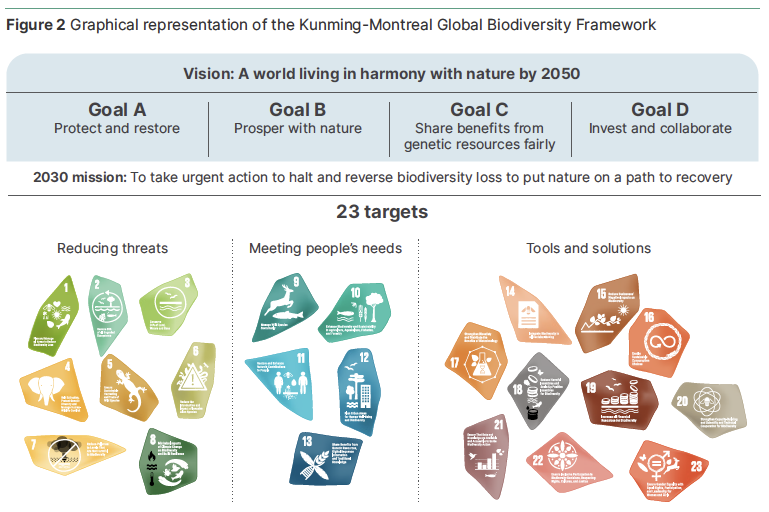
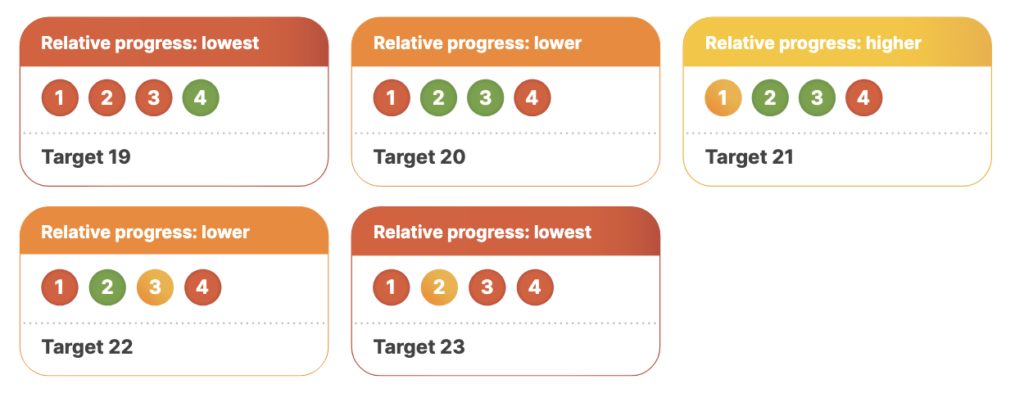
The purpose of COP17 – the Biodiversity Conference – was to assess progress towards the Kunming-Montreal Global Biodiversity Framework, adopted in 2022 at “COP15,” with the lofty “global vision of a world living in harmony with nature by 2050.” To fulfill that vision, the member states defined four goals and 23 targets that need to be achieved by 2030.
The “2030 mission” is “to take urgent action to halt and reverse biodiversity loss to put nature on a path to recovery.”
COP17 marked the half-way point between adopting the Framework and 2030, so its main purpose was to assess progress so far.
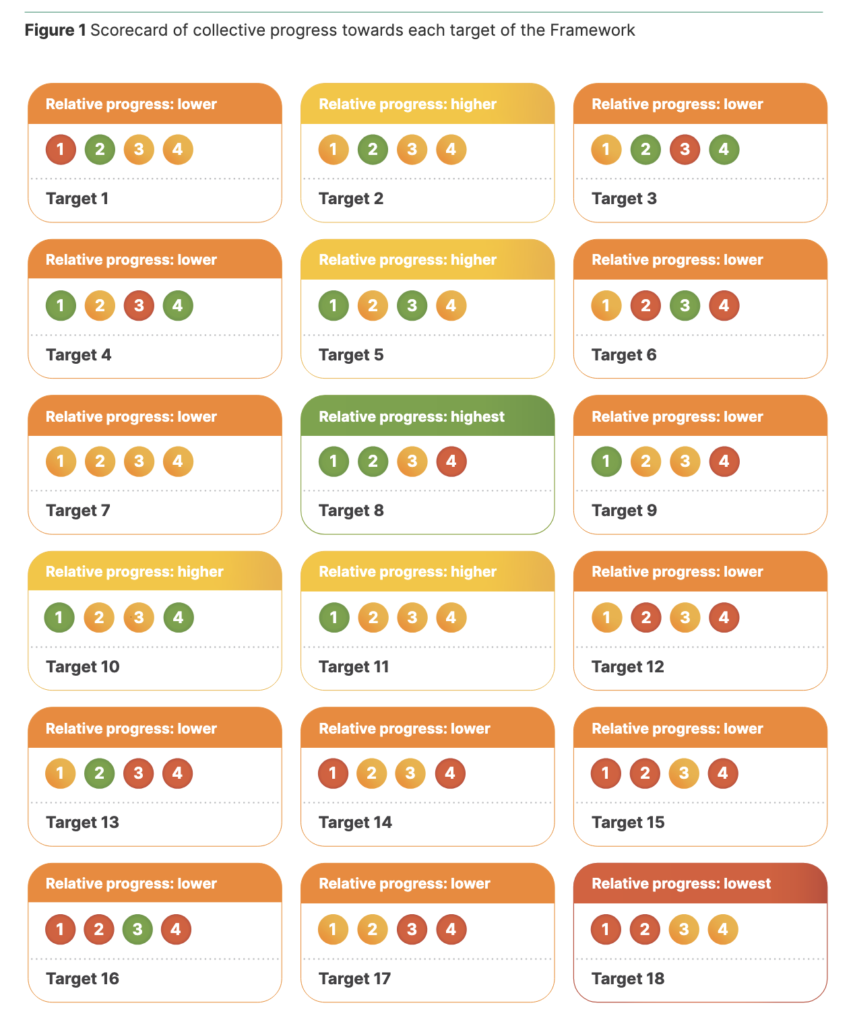
But an assessment completed just before the meeting found that not a single target is on track to be successfully achieved, which means that unless countries start ramping up their efforts significantly, the 2030 targets are already doomed and the 2050 goal is in jeopardy.
What are the 23 targets that need to be achieved?
The targets are grouped into three categories: 1) reducing threats to biodiversity, 2) meeting people’s needs through sustainable use and benefit-sharing, and 3) tools and solutions for implementation and mainstreaming.
The eight targets in the first category involve direct actions to protect the species and ecosystems that make up biodiversity. You may have heard of the catchphrase “30 by 30,” which refers to protecting at least 30% of all lands and waters by 2030, Target 3. Other targets in this group include restoring degraded ecosystems, stopping species extinctions, protecting genetic diversity, harvesting wild species sustainably and limiting invasive species.
The second category deals with the compatibility of people and biodiversity for the benefit of both – managing wild species sustainably to benefit people that rely on them, sustainable agriculture, supporting green spaces and urban biodiversity and sharing the benefits of genetic resources, among others.
Finally, the third and largest category (with 10 targets) defines the tools for implementing the other categories – for example, that governments should consider biodiversity in all of their decisions; businesses should assess, disclose and reduce their negative impacts on biodiversity; protecting nature needs to be funded adequately with at least US$200 billion per year; and subsidies that harm nature need to be reduced by at least US$500 billion per year.
The latter was one of the biggest sticking points of the conference, as the nature funding gap has been one of the most persistent problems threatening biodiversity.
Harmful nature subsidies continue
A 2026 U.N. report found that in 2023, the latest data available, “for every US$1 the world invests in nature, it spends US$30 destroying it.”
The report identified US$7.3 trillion in “nature-negative finance flows,” with US$4.9 trillion from private sources, primarily utilities, industrials, energy and basic materials. Public subsidies that are environmentally harmful, including towards fossil fuels, agriculture, transportation and construction, totaled US$2.4 trillion in 2023.
One of the Framework targets specifically addresses this immense imbalance, calling for a reduction of US$500 billion per year from subsidies that degrade nature. Another target called for investing at least US$200 billion per year to support biodiversity, but this target is also falling short, although the U.N. progress report noted that biodiversity finance is increasing.
Another disappointment involved Target 13, the so-called “Cali Fund,” which was established two years ago with the goal to share commercial profits from genetic materials from plants and animals with biodiversity-rich countries, Indigenous peoples and local communities to support conservation.
The idea was that companies that benefit from genetic resources – such as pharmaceutical, biotech and cosmetics companies – would voluntarily finance the fund by contributing 1% of their profits or 0.1% of revenue. The Cali Fund was expected to raise at least $1 billion per year, but so far only a handful of companies have contributed a total of $10,000.
The influence of commercial interests on the conference shouldn’t be ignored. In a concerning move, the U.N. has stopped disclosing company affiliations for conference attendees, according to an investigation by DeSmog. This makes it nearly impossible to scrutinize the influence powerful corporations may exert on key decisions.
DeSmog found that some sectors with a significant stake in the negotiations – including big pharma, the pesticide and agricultural sector, mining interests and finances – sent teams that outnumbered those of some countries in the Global South, which are also the most biodiverse.
That’s almost certainly an undercount, since DeSmog was only able to confirm company affiliations for individuals who had also attended COP16, when the U.N. still disclosed this information.
“30 x 30” is also not on track
Another key target that’s missing the mark is Target 3, commonly called “30 by 30,” referring to protecting at least 30% of lands and waters by 2030. Campaign for Nature’s 30×30 Global Assessment 2026 report found that we’re far short of this goal, with less than 20% of Earth’s lands and inland waters and 10% of oceans protected, according to SkyTruth’s 30×30 Progress Tracker.
Even counting current commitments, countries are on track to only reach protection of 27% of lands and 12% of oceans, according to the report. The configuration of conserved areas also matters to ensure the sites chosen for protection include meaningful biodiversity and representative habitat types. Right now, key vegetation types are underrepresented, including grasslands, boreal forests, freshwater systems and deep-sea ecosystems.
Outcomes and next steps
Negotiations at the two-week conference went until the last minute, with final concessions weaking commitments and including vague language for some of the most hotly contested issues, like the Cali Fund and contributions by developed countries to support nature in the more biodiversity-rich Global South.
In the end, countries agreed to a roadmap to protect nature in the Yerevan Pathway, which recognized that progress needs to be accelerated to achieve the agreed-upon targets in the next four years – particularly by decreasing nature-harmful subsidies and incentives; increasing financial, scientific and technical support for developing countries; and strengthening implementation and reporting mechanisms.
But the measures are mainly voluntary and many key decisions were postponed until COP18, scheduled for 2028 in Ecuador.
Astrid Schomaker, the Executive Secretary of the Convention on Biological Diversity, stated in the Yerevan Pathway that “ultimately, the test is not what governments agreed to in Yerevan, but what they change when they return home.”
All essays are free for everyone to read and subscribing is free. But if you can afford it, please consider a paid subscription or a one-time donation to help me continue researching, talking to experts and writing!
Or:
Links to reports and other resources:
- United Nations Biodiversity Conference 2026 in Yerevan, Armenia: COP17
- Kunming-Montreal Global Biodiversity Framework, adopted at COP15, the 2022 U.N. Biodiversity Summit.
- The Convention on Biological Diversity.
- IPBES (Intergovernmental Science-Policy Platform on Biodiversity and Ecosystem Services), 2019: Global Assessment Report on Biodiversity and Ecosystem Services.
- World Economic Forum, 2026: The Global Risks Report.
- U.N. Environment Programme, 2026: State of Biodiversity Action.
- U.N. Environment Programme, 2026: State of Finance for Nature – Nature in the Red: Powering the trillion dollar nature transition economy.
- Campaign for Nature: 30×30 Global Assessment 2026 report.
- The Cali Fund – financial mechanism to share the profits from the use of genetic materials with biodiversity-rich countries.
- U.N. Biodiversity Conference: Yerevan Pathway
- Dilys Roe, The Lancet Planetary Health, 2019: Biodiversity loss – more than an environmental emergency.
- Nature Signals, by Ruth Thornton, 2/28/2026: Nature is in trouble. So why aren’t we talking about it?
- ScienceDaily, 1/20/2012: Biodiversity crisis is worse than climate change, experts say.
- AFP, 10/31/2026, by AFP staff: Nations commit to get nature goals back on track.
- Mongabay, 10/31/2026, By John Cannon: Leaders grapple with finance and harmful subsidies at UN’s COP17 biodiversity conference.
- The Guardian, 10/31/2026, by Patrick Greenfield: Calls grow for COP summit reforms as countries remain on track to fail nature targets.
- DeSmog, 11/10/2026, by Rachel Sherrington, Clare Carlile, Brigitte Wear: UN fails to disclose company names on biodiversity summit delegates list.
- SkyTruth: 30×30 Progress Tracker interactive map.