6/6/2026: Elephant poop’s outsized effects on habitat, death of a butterfly’s last caterpillar, daddy longlegs hunt frogs, tracking a nesting sea turtle, conservation as a solution for climate change, and more…
Welcome to another compilation of newsworthy stories about the state of biodiversity, the threats it faces and emerging solutions – articles that caught my eye that offer a snapshot of what’s happening in nature around the world and why it matters.
Today I’m covering:
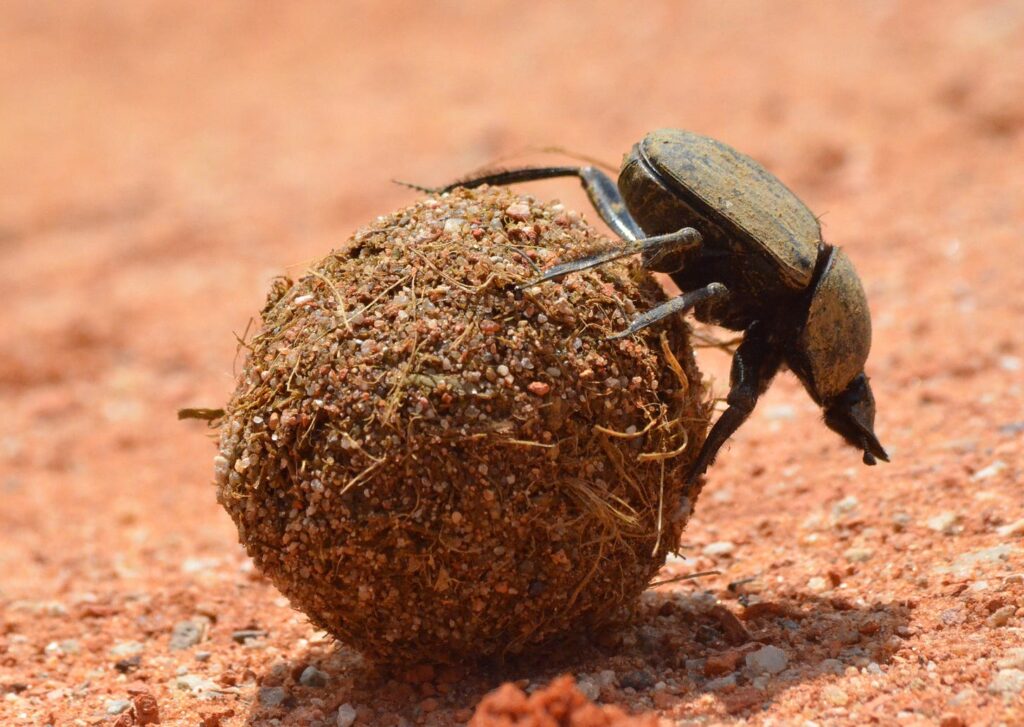
- Elephants are essential for African ecosystems, and so is their poop. Just ask the dung beetles.
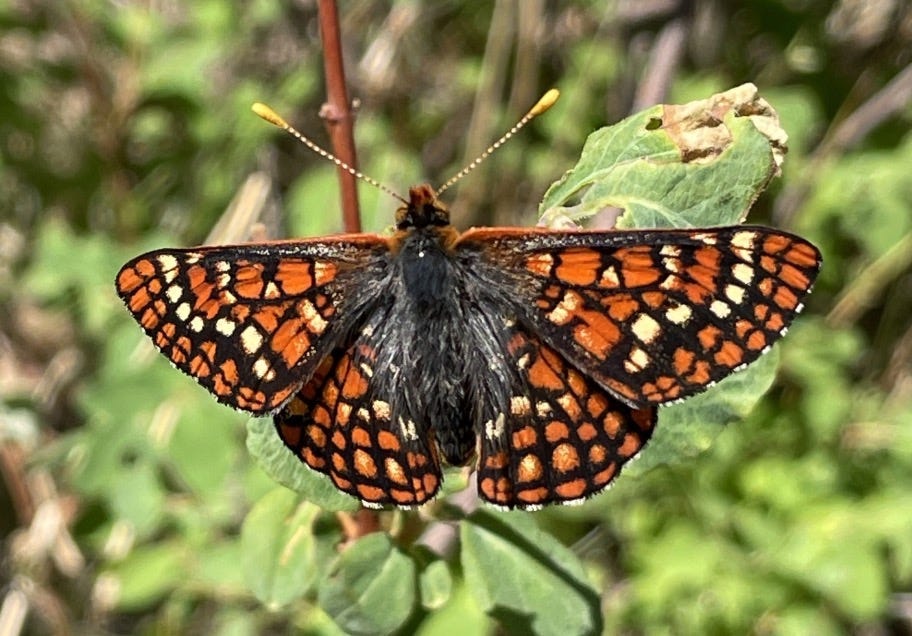
- The last known caterpillar of a rare butterfly has died, all but eliminating all hope of reviving the species.
- Daddy longlegs don’t just eat insects – they also hunt down frogs.
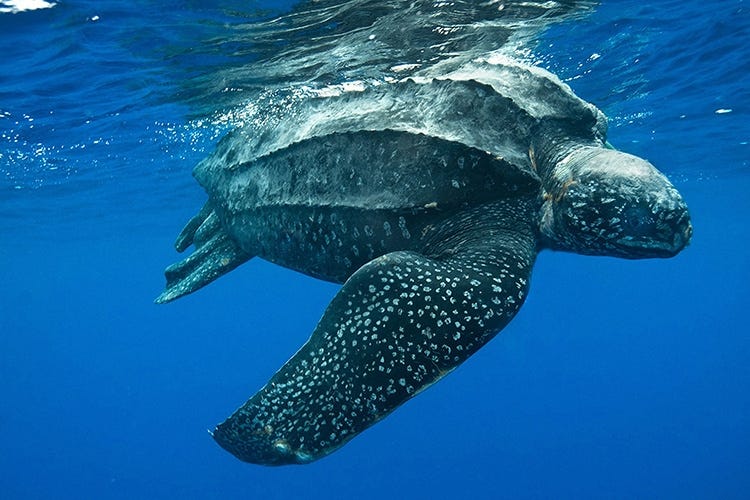
- Scientists tagged a rare sea turtle while she was laying eggs, hoping to discover her migration and feeding patterns to help with conservation decisions.
- Incorporating nature into farming practices to make crops resilient to climate change.
- Biodiversity conservation as a solution for climate change.
If you’d like to get new posts sent directly to your inbox every week, subscribe to my newsletter via Substack:
Elephants are essential for African ecosystems, and so is their poop. Just ask the dung beetles.
One thing that always amazes me about biodiversity is how everything is connected, and removing one species from the system can have surprising effects on other species. For instance, ecologists have long known that elephants are vital to their habitats because of their direct effect on vegetation. What was, until recently, underappreciated is how important their poop is.
Dung beetles play an important role in recycling nutrients in animals’ scat, making them available for uptake by plants. The insects have evolved into an amazing diversity at the Mpala Research Center in Kenya, where a whopping 176 species of dung beetles have been identified. And a new study discovered that this diversity is surprisingly dependent on one particular animal in the area – elephants, reports Warren Cornwallfor Anthropocene Magazine:
Insect diversity can hinge on the health of a single giant herbivore species. And that in turn can influence everything from nutrient cycling to seed dispersal. It’s a lesson how shifts in diversity can fray whole ecosystems.
The researchers found that while elephants are just one of many large herbivores in Africa – think giraffes, hippopotami, buffaloes, and wildebeest, to name just a few – they seem to influence the abundance of dung beetles, and, therefore, the decomposition of poop and resulting dispersal of seeds from said poop, more than elephants’ size, or the size of their dung piles, would suggest. It turns out that dung beetles really dig elephant dung. Cornwall writes:
Traps set next to piles of elephant poop captured between 1.5 and 24 times more individual beetles and 2 to 6 times more species than any other kind of feces.
To test the connection, researchers excluded elephants and giraffes from certain areas. When they compared those areas to other areas 15 years later, plots that were accessible to elephants had the “highest total number of dung beetles, the largest variety of beetle species and the largest total biomass of the beetles.” Further testing showed that it was the exclusion of elephants, not of giraffes, that had likely produced those results.
Additionally, they found that dung piles decomposed about a third slower in areas from which elephants were excluded, and small fake seeds the researchers had placed in the poop were removed at about half the pace.
It turns out that dung beetles, despite their small size – and, shall we say, interesting feeding habits – have an outsized role in the ecosystem, Cornwall writes:
Their work breaking down dung not only helps disperse seeds and spread nutrients, it also reduces parasites and pests and enhances carbon storage. Their presence in the U.K. alone was estimated to have produced some $800 million in benefits to the cattle industry there in today’s dollars.
But the beetles’ sensitivity to the removal of one animal is a reminder of just how precarious the balance among species is in an ecosystem, and how difficult it is to predict downstream effects when one is removed.
The last known caterpillar of a rare butterfly has died, all but eliminating all hope of reviving the species.
Speaking of extinctions – for nearly four years, scientists have been caring for the last known caterpillar of the Sacramento Mountains checkerspot, a butterfly native to New Mexico’s Sacramento Mountains, reports Catrin Einhorn for the New York Times.
It has now died.
The butterfly was common until just a few decades ago. In 2022, biologists caught four wild butterflies, which produced more than 160 caterpillars. Three years later, only one had survived.
In a desperate attempt to save it, the researchers induced hibernation. At first, it seemed like it might have worked, but as spring approached, its health worsened. The biologists did what they could to revive the caterpillar, Einhorn writes:
They brought it up to temperature and examined it carefully. They offered it crushed leaves. They gently brushed its bristles. As hope drained, they gave it a couple of extra days, just to be sure.
Without luck.
Still, there’s a small chance that some wild butterflies could remain, undiscovered, in the mountains. Surveys are planned to try to find any survivors, but hope is dim. Researchers believe that a combination of climate change, changing wildfire regimes, overgrazing, and invasive species has caused the butterfly’s decline. Einhorn writes:
Species at high elevations, like the Sacramento Mountains checkerspot, are especially at risk because they often can’t flee to cooler habitats.
“It’s called the elevator to extinction,” [said Quin Blaine, the invertebrate species survival specialist at the New Mexico BioPark Society and one of the scientists in charge of the caterpillar’s care]. “Moving up and up and up the slope until there’s nowhere else to go.”
Daddy longlegs don’t just eat insects – they also hunt down frogs.
Delicate daddy longlegs – the familiar, gangly arachnids also called harvestmen – don’t look like they could be a danger to any animal other than insects. A new study sheds light on an unexpected talent: catching frogs, reports Jake Buehler for Scientific American:
“We were shocked,” says study co-author Luís Fernando García, an arachnologist at the University of the Republic in Uruguay. “The literature often says that harvestmen are omnivores, that they are slow, they are weak.”
First reports appeared nearly 20 years ago, when Venezuelan biologists observed a harvestman “pinning down a struggling frog,” Buehler writes. The researchers were surprised. Over the years, more instances were observed in Ecuador and Colombia.
It appeared that the practice was more common than thought, but much remains unknown, Buehler writes:
It’s still unclear how the somewhat unathletic arachnids are capturing strong, leaping prey, particularly because they don’t have venom like their spider and scorpion relatives do. Their primarily pinching mouthparts are typically used to nibble at very small insects, fungi and plants, says Jose Valdez of the German Center for Integrative Biodiversity Research, who was not involved with the new paper.
So far, it’s not known if daddy longlegs outside of the Neotropics are capable of hunting and killing frogs. They are bigger and sturdier in the tropics than in the more temperate areas of North America or Europe.
But it does show how much we still don’t know about the behavior of even some of the more common species on our planet.
Scientists tagged a rare sea turtle while laying eggs, hoping to discover her migration and feeding patterns to help with conservation decisions.
Leatherback turtles in the eastern Pacific are critically endangered, with fewer than 1,000 remaining, so researchers in Ecuador were thrilled when they were able to tag a female as she was laying eggs, reports Bobby Bascomb for Mongabay:
Scientists named the turtle Lucero, “morning star” in Spanish, and estimated her age at 25-40 years. They plan to gather data on her migration and feeding patterns, which should help inform conservation policies.
Leatherback turtles, which occur in most oceans, are rated as “vulnerable” by the International Union for the Conservation of Nature. But their subpopulation in the eastern Pacific has declined by around 98%, Bascomb writes:
One of their biggest threats is getting caught in fishing nets as bycatch, which can be deadly for turtles and expensive for fishers, whose nets get damaged in these entanglements.
Now, every time Lucero surfaces, the biologists can track her movements, providing vital information to inform fishers how they can avoid the large sea turtles.
Incorporating nature into farming practices to make crops resilient to climate change.
Climate change is causing rising temperatures and unpredictable weather patterns, with some areas experiencing droughts and others increased rain. Now, two farmers in Italy discovered a novel way to make their farm, Quintasapore, more resilient to the capricious weather: replicating some of the natural processes they observed in a nearby forest, reports Becca Warner for Atmos.
During the punishingly hot summer of 2020, with temperatures of more than 100 degrees Fahrenheit (around 40 degrees Celsius), much of their crops failed, but the nearby woodland survived. Warner writes:
Inspired by what they saw, Alessandro and Nicola set out to replicate the forest. They planted 1,000 fast-growing trees all over the farm, across about 89 acres. The canopies now shade the crops in summer, and in autumn the leaves fall and decompose, adding nutrients to the soil. The brothers opted for species with deep roots, which reduces the need for irrigation.
The brothers call their approach “biomimetic,” referring to the mimicry of nature. It’s a movement that is gaining traction, including at Arizona State University’s Biomimicry Center. Warner writes:
Nature’s systems, [explained Sara El-Sayed, director of the Biomimicry Center at ASU], are about optimization, not just efficiency. “Nature is not trying to solve for one thing. It’s trying to solve for many things,” she said.
Systems built by people, on the other hand, usually prioritize efficiency and uniformity. Hence, the monocultures that are often preferred for efficiency. That often neglects resilience, however.
The brothers estimate that their farm now hosts around 1,600 plants and fungi species. And they don’t neglect promoting variety in insects and microbes either. They don’t use pesticides and have substituted a blend of bacteria, yeasts, and fungi, called “effective microorganisms,” for standard fertilizer.
Research suggests the approach may be increasing the crops’ nutritional value, including their olive oil, though more studies are needed. But there are tradeoffs – not surprisingly, it costs more than conventional agriculture. Warner writes:
[Nicola] argues the price reflects value—especially if the food is more nutrient-dense, as the olive oil analysis suggests. “When you’re hungry, it means your body is craving a certain amount of nutrients,” he said. “You’re not necessarily saving money buying crappy food, because you need to buy three, four times more to feel full.”
Biodiversity conservation as a solution for climate change.
Scientists have been arguing for a long time about “the best” way to combat climate change. That designation is typically measured by a strategy’s ability to reduce greenhouse gases. Now Thomas Crowther contends in an editorial in the Guardian that we should also consider the impact on biodiversity and the capacity to “improve the livelihood and wellbeing of people”:
There is one set of solutions, however, that present[s] no trade-off at all when … done right. The restoration of natural habitats like forests is an exception in our climate toolkit because it draws on the same network of connections that allowed life to flourish in the first place.
Most technological advancements that reduce emissions, he argues, while essential, also come at a price, be it financial, energy disrupting, or by impacting our ecosystems.
But “the revival of nature might help with 30% of our carbon drawdown needs,” he writes. Much of that benefit comes from the underappreciated effects of “feedback loops” – self-regulating processes that impact other processes. We generally differentiate between positive feedback loops and negative ones. Positive feedback loops amplify a process, and negative ones counteract it.
Natural feedback loops have operated since the beginning of life on Earth, he writes:
Around 3.8bn to 4.2bn years ago, feedback loops allowed life to spread on an otherwise toxic and uninhabitable planet: Earth. As life gained a foothold, it began to transform the environment, making it hospitable to more life. Species emerged that generated opportunities for even more species.
Humans introduced new processes, however. Climate change, for example, causes more carbon to be released, leading to more warming, which dries forests, which can then store less moisture, causing more drying.
Crowther cites several examples of successful conservation projects that interrupt the harmful cycles and support Earth’s positive feedback loops, leading not only to healthier ecosystems but also increasing their ability to store carbon. And local (human) communities also often benefit, which motivates them to protect the environment around them in a win-win scenario.
Crowther writes:
We do not need remarkable innovation or great sacrifice to move things forward. We just need to allow a tiny fraction of our collective attention and wealth (perhaps less than 1% of global GDP) to flow towards these rural land stewards, supporting their ongoing efforts.
And that’s it for this week’s updates.
Drop a note in the comments if any article resonated with you, or if there’s another biodiversity or other nature-related story you’d like to share with us!
If you’d like to get new posts sent directly to your inbox every week, subscribe to my newsletter via Substack:
It’s free to subscribe, but if you choose the paid option you’d support my work and help keep my articles free for those who can’t afford a paid subscription!
Not ready to subscribe? It takes many hours to research and write each post, so please consider supporting my work by buying me a coffee (or a beer…😄).
Articles & Resources:
- Anthropocene Magazine, 5/28/2026, by Warren Cornwall: What happens to the small things when the big things disappear?
- Gijsman, Nutter, and Pringle, 2026: Importance of elephants for dung beetle diversity and ecosystem functions. Science: 392(6801).
- The New York Times, 5/21/2026, by Catrin Einhorn: A very lonely caterpillar, possibly the last of its kind, has died
- The New York Times, 3/6/2025, by Catrin Einhorn and Harry Stevens: See how butterflies are surviving, or not, near you.
- Scientific American, 5/21/2026, by Jake Buehler: Daddy longlegs are actually bloodthirsty killers – of frogs.
- Calvache et al., 2026: Harvestmen (Arachnida: Opiliones) as overlooked predators of anurans in the neotropics. Ecology and Evolution: 16 (4).
- Mongabay, 5/26/2026, by Bobby Bascomb: Tracking Lucero: Scientists follow a rare Eastern Pacific leatherback sea turtle.
- IUCN: Leatherback turtle (Dermochelys coriacea).
- Atmos, 5/25/2026, by Becca Warner: For more successful farming, follow the forest.
- Biomimicry Center, Arizona State University.
- The Guardian, 5/24/2026, editorial: Could nature itself hold the solution to climate change?