8/27/2026: The amazing transoceanic migrations of a tiny dragonfly, hotter forest fires are changing forests, city life supercharges evolution of animals, tiny penguins get bird flu vaccines and more…
Welcome to another edition of newsworthy stories about the state of biodiversity, the threats it faces and emerging solutions. These are the articles that caught my eye during the past couple of weeks that offer a snapshot of what’s been happening in nature around the world.
Today I’m covering (click on the link to go directly to that section):
- Globe-trotting dragonfly migrates farther than any other insect.
- Forest fires are getting hotter, transforming forests.
- Prescribed fires can help save giant sequoias from climate change-fueled forest fires.
- Proximity to humans supercharges evolution for some animals.
- Should we consider animals’ culture in conservation decisions?
- 1,000 wild penguins get bird flu vaccines in Australia.
- What else I’m reading
Prefer to listen to this post? Check out the podcast on Apple Podcasts or Spotify, or listen here:
If you’d like to get new posts sent directly to your inbox every week, subscribe to my newsletter via Substack:
Globe-trotting dragonfly migrates farther than any other insect
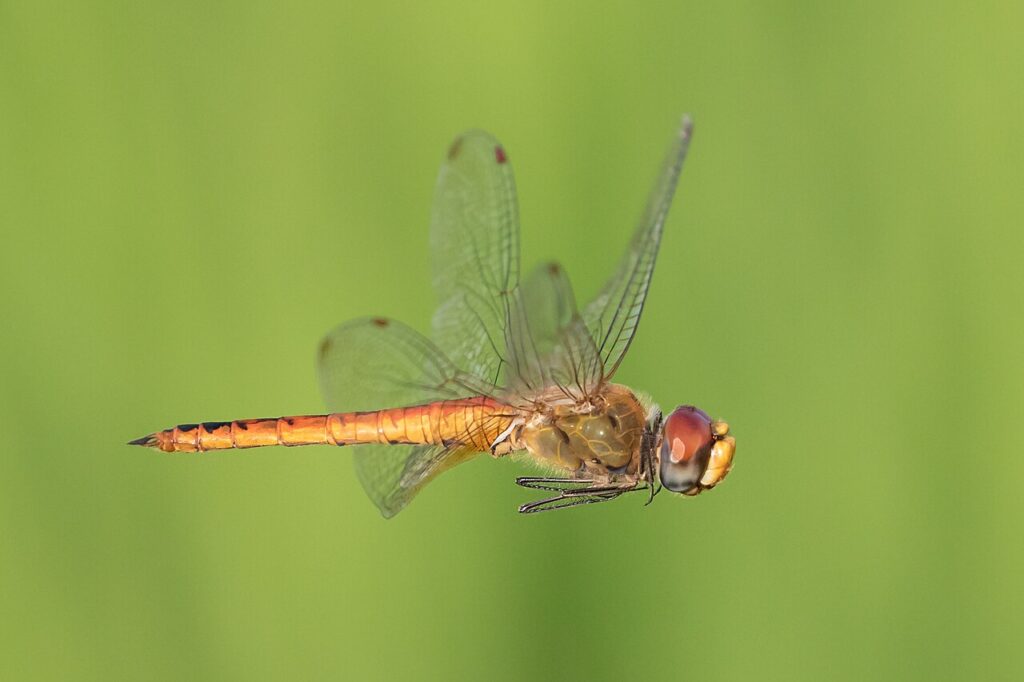
The wandering glider dragonfly, also called globe skimmer (Pantala flavescens), accomplishes amazing feats of endurance, traveling across oceans to complete the longest known migration of any insect, reports Patrick Barkham for the Guardian. The insect is known to travel up to 18,000 km (more than 11,000 miles) across multiple generations, with some individuals crossing 3,500 km (around 2,000 miles) of open water, carried along by high-altitude monsoon winds.
While absent from most of mainland Europe, the ubiquitous insect occurs almost everywhere else in the world (except Antarctica) and has been found as high as 6,000 meters (nearly 20,000 feet) in the Himalayas. Yet the dragonfly’s stunning feat of endurance was unknown until about 15 years ago, when Charles Anderson, a marine biologist, observed dragonflies arriving in the Maldives with the October monsoons.
Dragonflies as a group have been successful by evolutionary standards – their ancestors have been around since before the dinosaurs, and the two modern suborders of dragonflies – “true” dragonflies (Anisoptera) and damselflies (Zygoptera) – are thought to have evolved around 200 million years ago, during the late Triassic. At that time, Earth’s continents were still assembled in one big “supercontinent,” Pangea – which might help explain the wandering glider’s presence on most modern continents!
Whatever the reason, the insects’ astonishing migration and widespread range is a testament to their success as a species. Even more surprising, a 2016 genetic analysis indicated that wandering gliders are likely one global population that interbreeds over long distances, including indications of gene flow between the Americas and other continents, via as-yet-unknown migration routes. There’s a lot we don’t know about this dragonfly! Barkham writes:
Ben Price, principal curator of entomology at the Natural History Museum in London, said: “That a common, familiar insect could hide the greatest [insect] migration on the planet until our own century is a perfect reminder that the natural world is still full of discoveries. Ubiquitous, fearless, and quietly astonishing.”
Forest fires are getting hotter, transforming forests
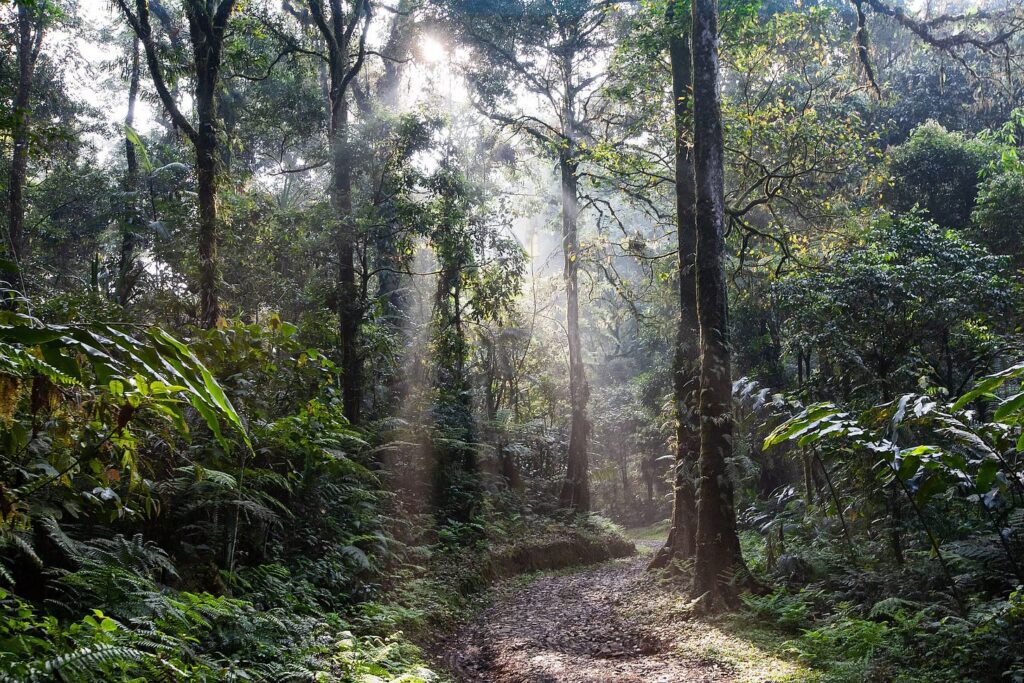
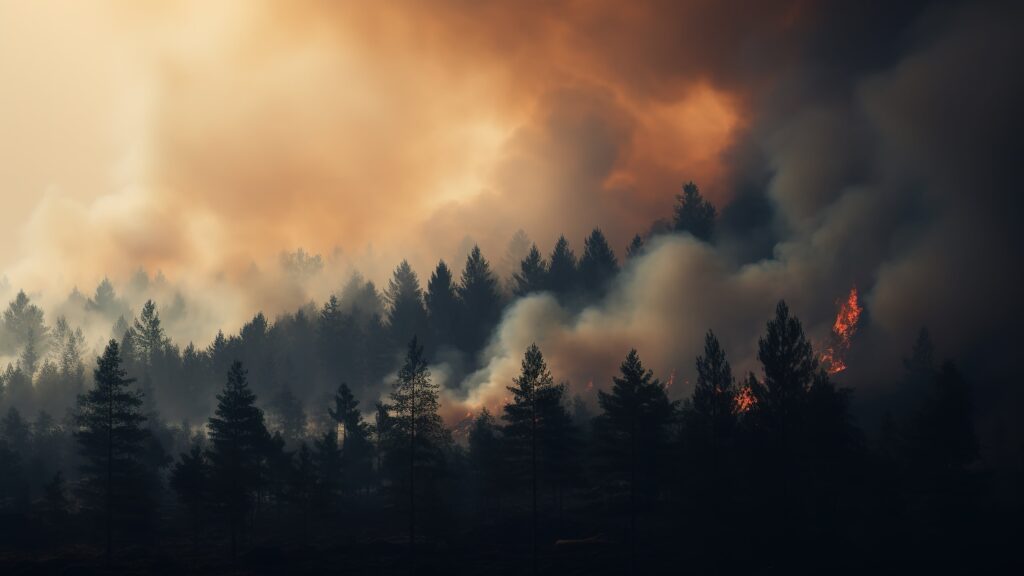
Throughout the western United States, climate change is causing bigger and hotter forest fires, transforming ecosystems that are overwhelmed by the conditions brought on by warming temperatures, reports Eric Niiler for the New York Times:
It’s part of a wider transformation that’s taking place across the Western United States, from Oregon to New Mexico, as bigger and hotter wildfires sweep through forests that have not evolved to survive such high-intensity blazes and a warmer climate. Recent studies estimate that as much as 40 percent of Western conifer forests will turn into shrubland by 2100 as a result.
Niiler followed ecologists from the University of California, Berkeley as they studied the effects of recent forest fires on the area’s vegetation and soils. The new combination of hotter fires and drier conditions is upending the delicate balance that has evolved over thousands of years in western forests, which are no longer regenerating as they did in the past. Experts estimate that around one-fifth of conifers are not well adapted to these new conditions.
“Forests do have innate resilience and under normal circumstances, they can take a hit or two and bounce back,” [said Jonathan Coop, a fire ecologist at Western Colorado University]. “But circumstances just aren’t normal anymore.”
Prescribed fires can help save giant sequoias from climate change-fueled forest fires
To counteract the devastating effects of intense forest fires fueled by climate change, forest managers are bringing back an old tool: prescribed burns, reports Warren Cornwall for Anthropocene Magazine:
Prescribed fires have long been considered a critical—if underutilized—strategy for turning down the temperature in today’s era of megafires. The aim is to return fire-adapted forests to something closer to the conditions in which many of them evolved, when fires often acted more like cleansers than destroyers.
Although giant sequoias have evolved to coexist with fire – equipped with thick bark and serotinous cones that release their seeds only when heat from a fire melts the resin that keeps them shut – recent fires have become hotter than even these behemoths can withstand. In 2020 and 2021, wildfires killed thousands of trees in Sequoia and Kings Canyon National Parks.
After these devastating fires, scientists studied the blazes’ aftereffects, comparing the death toll of sequoias in stands that had previously been treated with prescribed burns to unburned areas. They found trees in stands with prescribed fires during the past decade had a 77% lower chance of dying. It turns out that these intentionally set low-intensity fires reduce underbrush enough to lower the heat of forest fires to a survivable level for these long-lived giants.
Proximity to humans supercharges evolution for some animals
Many animals – from lizards to birds to foxes and raccoons – are evolving over surprisingly short timeframes to adapt to humans’ effects on the natural world, reports Lucy Sherriff for BBC:
Cities have become the planet’s newest ecosystem, and many of the animals residing in them have been forced to adapt to survive. At the extremes, these changes – either behavioral or genetic – happen over very short timeframes, sometimes just a few generations.
Human environments differ from natural habitats in many ways, including different predators and food sources, more noise, excess light, warmer temperatures and pollution.
Changes observed in numerous studies include longer limbs in lizards, raccoons that show signs of domestication – including being less aggressive and having shorter snouts – and birds that change their songs to be heard over traffic. Many of these changes can be seen in city environments, but not exclusively. For example, more elephants are born without tusks nowadays, which makes them less desirable for poachers.
Many traits that were advantageous and resulted in more offspring before people dominated the landscape may no longer benefit animals that live close to us. But species that can’t adapt so quickly are at a disadvantage, said Andrew Sih, who studies the evolution of animal behavior at the University of California at Davis:
“Other animals – often in the same species – simply ‘don’t get it’, and do not respond well behaviourally to these new challenges,” says Sih. “If anything, I note that for many animals, they don’t really have time to evolve, as things have changed too much too quickly,” Sherriff writes.
Should we consider animals’ culture in conservation decisions?
Many animals have unique regional cultures that are instrumental in teaching their young how to survive and communicate with other members of their species. Should these cultures be considered when making conservation decisions, including for the U.S. Endangered Species Act, asks John R. Platt in the Revelator:
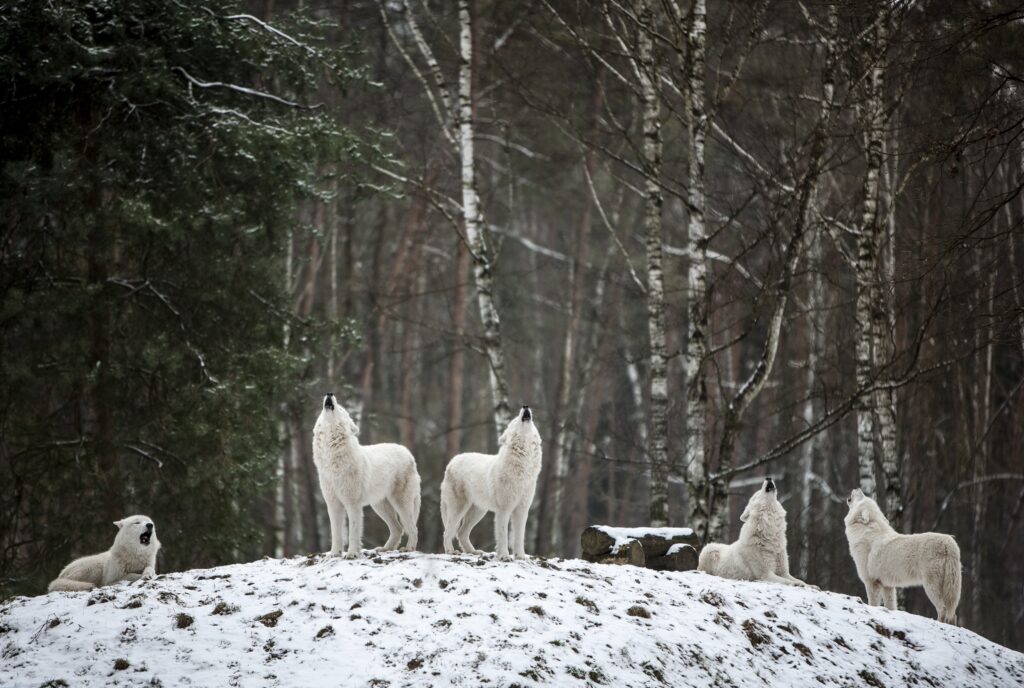
How does a young wolf learn how to be a wolf? Genetics certainly plays a role, but so do the knowledge and techniques passed on by the previous generation of wolves, who teach their young how to hunt, what areas to avoid, and how and when to howl (and what each variation in those howls means).
Wolf howls vary depending on where a wolf grew up, he writes, similar to human dialects and accents. Other animals – whales, for example – are also known to have distinct cultures.
Platt writes about a recent paper that dissected how the U.S. Endangered Species Act and other conservation laws reflect animal behavior, finding that behavior does not seem to be a factor in most listing decisions. But given our limited knowledge of animal culture, changing that may be challenging:
“Implementing the ESA for a distinct population segment based on distinctive cultures would potentially be challenging, given, for example, that cultures can be dynamic, and that conserving them may not always be as straightforward as simply protecting habitat,” [the paper’s authors] write.
Still, it’s an intriguing idea that could expand our understanding of biodiversity beyond genetic and ecological factors, providing a more robust framework for conserving the full array of characteristics that define wildlife populations.
1,000 wild penguins get bird flu vaccines in Australia
More than 1,000 little penguins (Eudyptula minor) were recently vaccinated against bird flu in Victoria, Australia, reports Petra Stock for the Guardian. It’s part of a larger initiative that aims to vaccinate around 5,000 birds and is “believed to be the largest vaccination program involving wild birds,” Stock writes.
Little penguins are the world’s smallest species of penguin – about a ruler’s length in height – and found only in southern Australia and New Zealand. The birds, which are not listed as threatened under federal environment laws, are considered at “very high risk” from the deadly bird flu, according to a national risk assessment.
The program started after bird flu was detected in birds on Phillip Island near Melbourne and in other areas of southern Australia, including in little penguins. That created a sense of urgency, especially since little penguins nest together in large colonies, which could lead to up to 16,000 little penguin deaths in a recent report’s worst-case scenario.
The tiny penguins – they measure around 40-45 cm tall, around 15-17 inches – are already threatened by severe storms, sea level rise caused by climate change and pollution. They’re a significant tourist attraction in Australia.
What else I’m reading
There are always more fascinating stories that don’t fit in this weekly update but are also worth a read! Instead of ignoring them, I’m starting a new section so you can check out these articles as you have time (in no particular order):
- Inside Climate News, 8/2/2026, by Jake Bolster: Can new ranching practices help cattle, cowboys and wolves coexist?
- The New York Times, 8/2/2026, by Hilary Howard: When the fireflies come out to play.
- The New York Times, 8/4/2026, by Sopan Deb: Dolphin carries dead calf in what experts call grieving.
- The Conversation, 7/17/2026, by Laura Russo: Bees of many species contain tiny magnetic particles – suggesting they may have an innate magnetic compass for navigation.
- AP, 8/5/2026, by Annika Hammerschlag: British Columbia is logging its last old growth. Protesters are sleeping in the road to stop it.
- Smithsonian magazine, 8/12/2026, by Sarah Kuta: Pumas might be making your drive home safer. When the predators are around, deer tend to avoid roads, preventing some collisions.
- Anthropocene Magazine, 8/4/2026, by Sarah DeWeerdt: A majority of Americans don’t actually fit either climate camp.
- Grist, 8/19/2026, by Matt Simon: Why Egyptian farmers are growing crops under solar panels.
- UNEP, 6/29/2026 – The hidden environmental cost of your jeans – and what’s being done about it.
- Chicago Tribune, 8/19/2026, by Michael Hawthorne: Great waste in the Great Lakes: How plastic pollution is clogging our waters.
- Anthropocene Magazine, 8/21/2026, by Emma Bryce: Recycling food waste has a huge climate upside and a surprising downside.
- The Revelator, 8/11/2025, by Nicole Williams: Meet the activist fighting PFAS pollution – and winning.
And that’s it for this week’s updates.
Drop a note in the comments if any article resonated with you, or if you have any ideas on what else you’d like me to cover – I love to hear from readers!
If you’d like to get new posts sent directly to your inbox every week, subscribe to my newsletter via Substack:
It’s free to subscribe, but if you choose the paid option you’d support my work and help keep my articles free for those who can’t afford a paid subscription!
Not ready to subscribe? It takes many hours to research and write each post, so please consider supporting my work by buying me a coffee (or a beer…😄).
Links to articles and other resources:
- The Guardian, 8/8/2026, by Patrick Barkham: “Fearless and quietly astonishing’: the dragonfly that migrates further than any other insect.
- Mongabay, 11/10/2021, by Neha Jain: High-flying dragons: how the globe skimmer migrates across the Indian Ocean.
- Troast et al., 2016: A global population genetic study of Pantala flavescens. PLoS One, 11(3): e0148949.
- The New York Times, 8/23/2026, by Eric Niiler: Bigger, hotter fires are slowly erasing America’s great forests.
- Kodero, Felzer and Shi, 2024: Future transition from forests to shrublands and grasslands in the western United States is expected to reduce carbon storage. Communications Earth and the Environment, 5(78).
- Anthropocene Magazine, 7/29/2026, by Warren Cornwall: How to save giant sequoias: burn the forest around it first.
- Dixon et al., 2026: Previous prescribed burns saved thousands of ancient sequoias during historically unprecedented wildfires. Nature Communications, 17: 8558.
- BBC, 8/6/2026, by Lucy Sherriff: Extreme evolution: The animals evolving at super speed to survive
- The Revelator, 8/12/2026, by John R. Platt: Conserving Culture in Endangered Species.
- Jennings, Harl and Carter, 2026: Implications of non-human animal culture for laws and policies affecting wildlife conservation in the USA. Oryx, 2026: 1-4.
- The Guardian, 8/24/2026, by Petra Stock: How do you vaccinate 1,000 tiny penguins against bird flu in the wild? It’s ‘really tricky’ but there is a way.