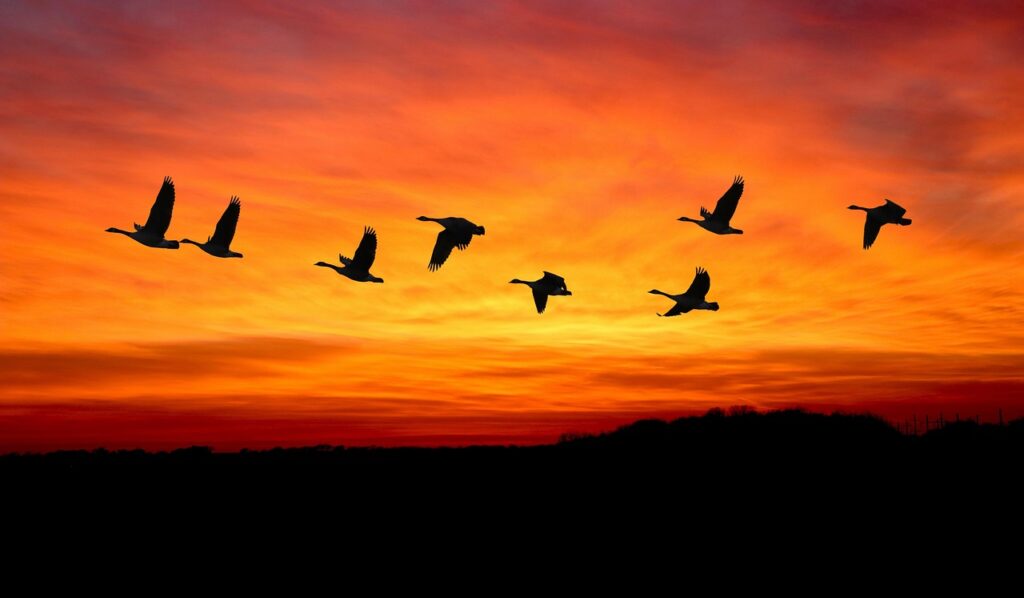
9/25/2026: Migrating birds are confused by bright lights, one in nine migratory birds are declining, birds apparently actually enjoy flying, rare raccoons can make toys and scientists race to save coral reefs amid global warming.
Welcome to another edition of newsworthy stories about the state of biodiversity, the threats it faces and emerging solutions. These are the articles that caught my eye during the past couple of weeks that offer a snapshot of what’s been happening in nature around the world.
Today I’m covering:
- Help migrating birds by dimming your lights at night.
- One in nine migratory bird species are threatened with extinction.
- Do birds actually enjoy flying? The answer appears to be yes.
- An endangered young raccoon made her own toy, then taught her family how to do it.
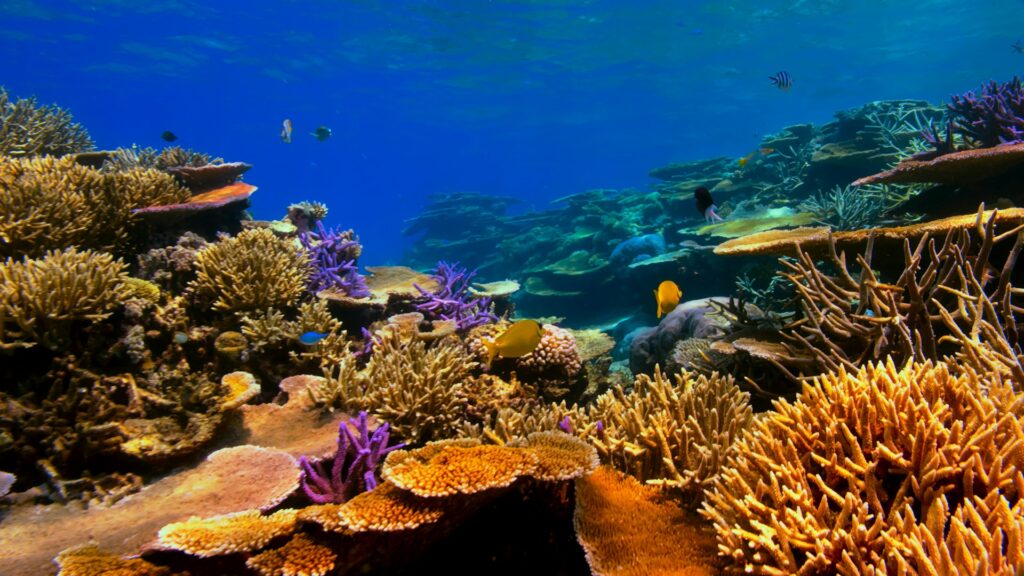
- Oceans are getting hotter – now scientists are racing to identify coral reefs that can tolerate the heat.
- What else I’m reading – Scroll down to the very end to read up on even more interesting biodiversity news!
If you’d like to get new posts sent directly to your inbox every week, subscribe to my newsletter via Substack:
Help migrating birds by dimming your lights at night
Bird migration is in full swing. It’s an exciting annual phenomenon where billions of birds worldwide take to the skies, some completing astounding feats of endurance. The tiny Arctic tern, for example, completes the longest known migration of any animal, traveling up to 96,000 km (60,000 miles) every year!
It’s also an incredibly difficult event for them – they have to find safe food and rest sites along the way to maintain their energy. Most birds migrate at night, which helps them avoid predators and prevents overheating, but makes finding their way over such large distances challenging. They navigate using the stars, but with humans’ habit of lighting up structures and buildings, orientation can be tricky for birds.
Now experts are urging everyone to dim their lights at night to help birds navigate and avoid colliding with buildings, reports Ishani Desay for The New York Times:
At least one billion birds die each year after crashing into skyscrapers and other lighted buildings, said Adriaan Dokter, a research associate who leads Cornell University’s BirdCast, an online resource that tracks the birds in real time.
Brightly lit areas and reflections in glass can disorient them, causing them to veer off course and collide with structures. Crashing into buildings is a leading cause of death for wild birds, Desay writes.
The fall migration typically goes from August to November, with different bird groups peaking at different times – in the eastern U.S., shorebirds are generally among the first migrants, many warblers fly in September and raptors and waterfowl travel later.
In North America alone, billions of birds migrate each year, moving south from Canada and the U.S. into warmer wintering grounds in the U.S. or Central and South America. If you’re interested in learning about the current status of the migration in your area, you can use Cornell Lab’s Migration Dashboard (unfortunately only in the U.S.).
When I plugged in Michigan, where I live, it’s estimated that more than 1 million birds crossed the state last night alone. That’s down from more than 33 million that crossed the state just a couple of weeks ago. It’s truly an awe-inspiring natural phenomenon!
One in nine migratory bird species are threatened with extinction
And unfortunately, migrating birds desperately need all the help they can get – a recent report by BirdLife International found that “one in nine migratory birds are threatened with extinction and 45% of migratory species, such as cuckoos, turtle doves and Arctic terns are in decline,” reports Patrick Barkham for the Guardian:
The threats to migratory birds, which are overwhelmingly caused by humans and include the intensification of farming, unsustainable hunting, pollution, invasive species and global heating, were revealed in the State of the World’s Birds report.
Another significant threat is habitat loss. The report “found that more than half of key biodiversity areas for migratory birds are in poor or very poor condition,” Barkham wrote.
While the situation is dire, there are reasons for hope. The report also showed that conservation actions are helping some species, citing examples of habitat restoration projects and eradication of invasive species that resulted in an improvement for several migratory seabirds and shorebirds.
Still, only about one-third of migratory bird species have stable populations and a mere 14% are increasing, so we need to act quickly. It’s time to put our knowledge of what is threatening birds to work and start implementing conservation actions to make sure they can survive and thrive over the long term.
Do birds actually enjoy flying? The answer appears to be yes.
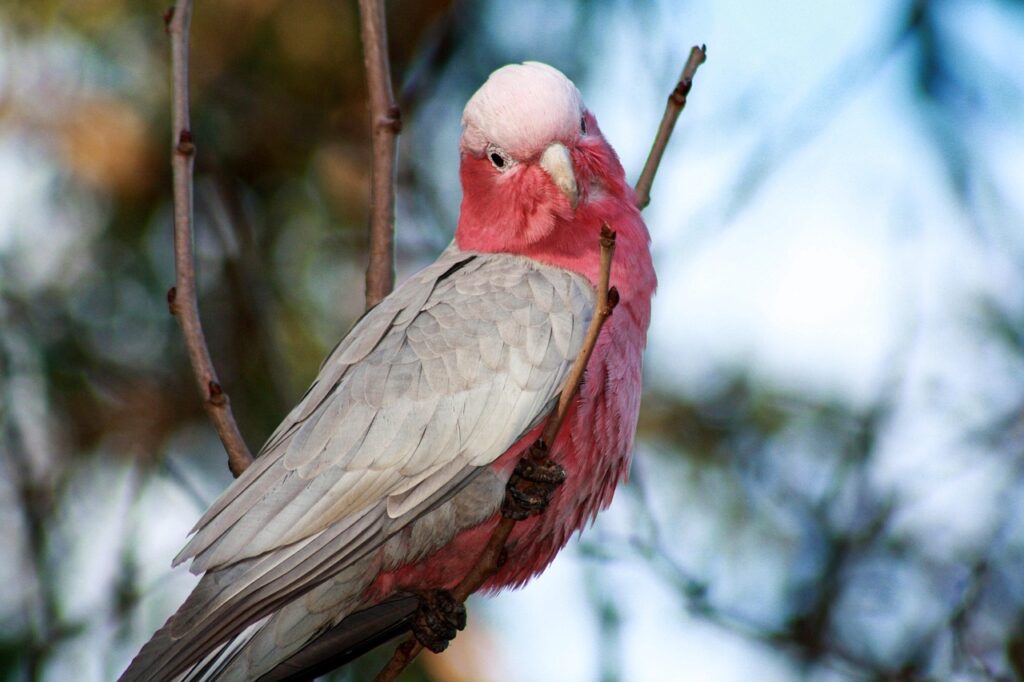
On a lighter note, I greatly enjoyed Clarissa Brincat’s reporting in Scientific American about a neat animal behavior experiment testing whether birds actually enjoy flying. It appears that daily flight outings did indeed produce “positive emotions and optimism” in a group of 17 captive galah cockatoos.
To test the theory, researchers led by Jorg Massen, a behavioral biologist at Utrecht University in the Netherlands, gave the galahs the choice to either leave their aviaries and fly free or stay in their cages several times a day. Almost every time, the birds chose to fly. The one time two birds chose to stay, they had an ulterior motive, Brincat wrote:
The only exception was a pair of birds that skipped flying once, on a day when they had just been given new nest boxes, Massen says: “they had other activities to attend to”—such as courtship and mating—“which are also considered joyful.”
This consistent choice to take to the skies could be an indicator that the birds enjoyed the experience. Other indications were that, in additional tests, the birds showed signs of more optimism about getting their favorite treats and behaved in ways that showed “positive excitement” after the flights.
Does all of this add up to the birds being “happier” after flying? Scientists can’t answer that – it’s inherently difficult for us to know what’s going on in other animals’ brains, especially when it comes to emotions.
I personally think we can make an educated guess, however. Although I’m a huge believer in the importance of science and critical thinking, science can’t answer all important questions in life, at least not yet. Sometimes we need to read between the lines, and I think it’s arrogant and dangerous to assume that humans are the only animals capable of feeling emotions. Perhaps we should err on the side of caution and assume more similarities than differences, especially in animals like birds and mammals that are so similar to us in other ways. As Brincat wrote:
Animal-cognition scientists have typically been extremely hesitant to ascribe feelings or desires based on animals’ behavior, but researchers have become increasingly open to attributing such conscious experiences to animals when the data support it. If birds are capable of conscious experience, Mendl says, “the findings would indeed suggest that the birds enjoyed flying.”
I couldn’t help asking myself after reading this story if birds might actually enjoy those ultra-long flights while migrating? Who knows!? Migrations and many other behaviors are driven by instinct instead of being strictly voluntary, like those galah joy flights. But – to seek a human analogy – there are plenty of people who love ultramarathons, so perhaps at least some birds truly enjoy these long journeys as well?
Though I can’t think of a realistic study that could test that question, so perhaps we’ll never know for sure.
An endangered young raccoon made her own toy, then taught her family how to do it
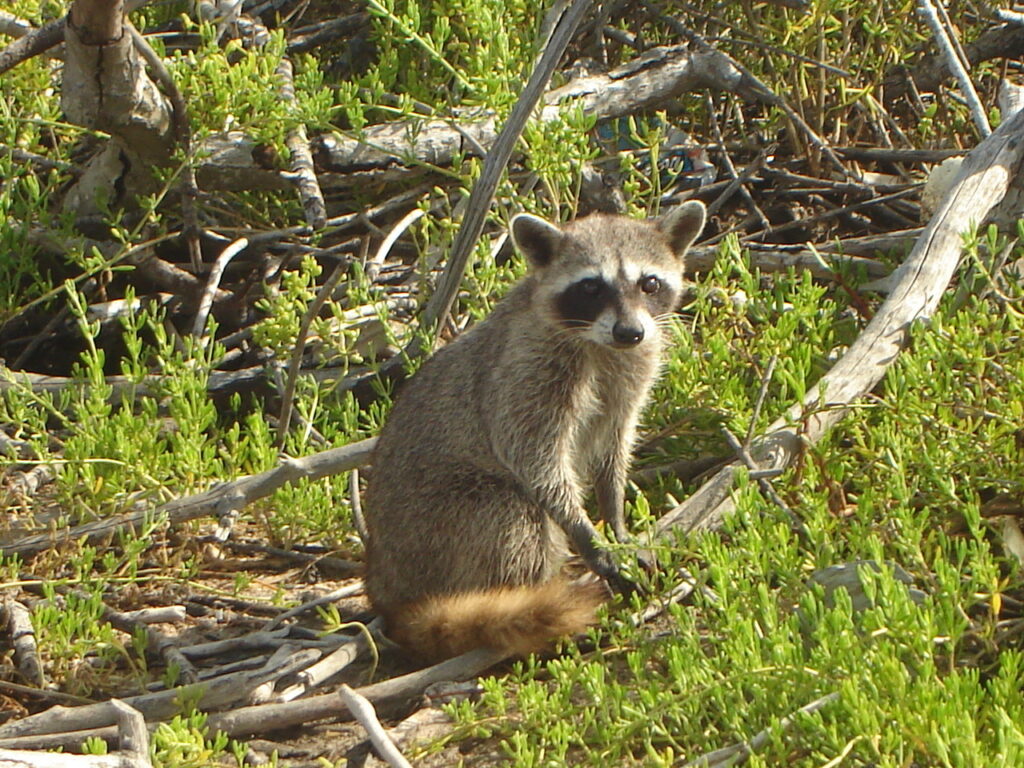
Continuing with the animal behavior theme, researchers at Miami University observed a young pygmy raccoon using a receipt she found in trash to make herself a toy, then showing her family how to do the same, reports Isabel Gil for Scientific American:
The raccoon used her paws to repeatedly dunk the receipt into a bowl of water (a common exploratory behavior). After working the receipt into a ball and rolling it around in the sand, she began batting it across the ground, seeming to play with it.
The raccoon’s mother and sister then tried to make their own balls, “with varying levels of success.” Passing knowledge from one individual to another is referred to as “material culture” by scientists. It has likely never been documented in this group of animals before, though it is known from animals such as chimpanzees, pigs and dolphins, Gil wrote.
Unfortunately, the young raccoon died soon after – likely from malnutrition and exposure to pollution, according to the study. Two other siblings succumbed to the same causes. However, another sister was later observed creating another ball, so perhaps this behavior will continue to be passed on to other raccoons.
Pygmy raccoons occur only on Mexico’s Cozumel Island and are rated critically endangered by the International Union for Conservation of Nature. The population is declining, driven in large part by humans, including tourism, invasive species and severe weather from climate change. Learning more about the animals’ abilities to use tools and learn could also aid conservation efforts.
Watch a video of the raccoon in action and the paper’s lead author explaining the behavior and implications for conservation: Video: pygmy raccoon creating a toy.
Oceans are getting hotter – now scientists are racing to identify coral reefs that can tolerate the heat
As climate change is heating up oceans around the world, many coral reefs are struggling and scientists are racing against the clock to find corals that can withstand the changing conditions, Benji Jones reports for Vox:
Reefs are among the planet’s most endangered ecosystems: Rising ocean temperatures, pollution, and other threats have killed off an estimated 50 percent of live coral globally since the 1950s.
In addition to their beauty and serving as habitat and nurseries for countless other species, including fish and endangered sea turtles, coral reefs provide humans with measurable economic benefits – they reduce wave energy during tropical storms by an average of 97%, according to one study. In the U.S. alone, another study estimates that coral reefs save more than $1.8 billion every year in flood damage prevention.
Now scientists are putting corals through a type of fitness test, exposing them to extreme heat in a lab to identify those that can withstand extreme conditions. The individual corals that fare the best in these tests may also be able to survive conditions in the new, hotter oceans.
Research to find resilient corals takes place in many regions, including at the well-equipped Palau International Coral Reef Center in the Republic of Palau, which consists of more than 300 islands. More than 400 coral species exist in the region. The quest to save coral reefs is urgent here – fisheries and tourism make up more than a quarter of the country’s GDP, Jones writes, and they depend on healthy coral reefs.
But it’s difficult going and not all restoration efforts are successful – for example, despite initial establishment success at a Florida restoration site, Jones describes the effects of one extreme heat wave in 2023:
The reefs turned a ghostly white. And eventually, nearly all of the staghorn and elkhorn coral in the Florida Keys — including the vast swaths of replanted corals — died, becoming functionally extinct. It was one of the more devastating things I’ve seen in my time covering the biodiversity crisis.
In the end, even successful restorations will not come close to matching natural coral reefs in diversity and benefits to local habitats, but they might be enough to serve as a replacement for at least some of the ecosystem benefits.
But the more extreme global warming gets and the longer it lasts, the harder it will be to ensure enough coral species survive to form resilient communities, despite our best efforts to find those corals that can thrive in hotter waters.
If you’re interested in this topic, I urge you to read Benji Jones’ beautifully written and photographed article that dives much deeper into the intricacies of the biologists’ efforts to protect the coral reefs we have left.
And that’s it for this week’s updates.
Drop a note in the comments if any article resonated with you, or if you have any ideas on what else you’d like me to cover – I love to hear from readers!
If you’d like to get new posts sent directly to your inbox every week, subscribe to my newsletter via Substack:
It’s free to subscribe, but if you choose the paid option you’d support my work and help keep my articles free for those who can’t afford a paid subscription!
Not ready to subscribe? It takes many hours to research and write each post, so please consider supporting my work by buying me a coffee (or a beer…😄).
Links to articles and other resources:
- The New York Times, 9/12/2026, by Ishani Desai: As millions of birds migrate, residents are asked to turn off the lights.
- Live bird migration maps: CornellLab BirdCast
- The Guardian, 9/11/2026, by Patrick Barkham: One in nine migratory birds threatened with extinction, global report says.
- BirdLife International: State of the World’s Birds
- Scientific American, 9/8/2026, by Clarissa Brincat: Do birds enjoy flying? Scientists asked cockatoos.
- Massen et al., 2026: Do birds enjoy flying? An analysis of affect after flight in galah (Eolophus roseicapilla). Behavior, 2026.
- Scientific American, 3/11/2025, by Jacek Krywko: The secret to understanding animal consciousness may be joy.
- Scientific American, 9/3/2026, by Isabel Gil: This tiny raccoon turned trash into toys – and taught her family how, too.
- O’Neil, Szydlowski and Rivas-Camo, 2026: Preliminary evidence of material culture in the critically endangered pygmy raccoon (Procyon pygmaeus). Wild, 3(3), 33.
- Video: Raccoons making toys!
- International Union for Conservation of Nature Red List: Pygmy raccoon (Procyon pygmaeus).
- Vox, 8/25/2026, by Benji Jones: Inside the race to buy coral reefs more time.
- Ferrario et al., 2014: The effectiveness of coral reefs for coastal hazard risk reduction and adaptation. Nature Communications, 5: 3794.
- Reguero et al., 2021: The value of U.S. coral reefs for flood risk reduction. Nature Sustainability, 4: 688-698.
What else I’m reading:
There are always more fascinating stories that don’t fit in this weekly update but are also worth a read! Here’s a selection of seven articles I came across since the last State of Nature Update, I hope you find them useful and interesting.
- bioGraphic, 9/15/2026, by Jude Isabella and Katrina Pyne: The unwilding of Patagagonia’s pollinators.
- Scientific American, 9/9/2026, by Ainslie Cruickshank: Gray whales are washing up dead on the West Coast. The reason is alarming.
- Earth.com, 9/10/2026, by Sanjana Gajbhiye: Most insect species live in the tropics, but we barely know what’s there.
- Earth.com, 9/14/2026, by Eric Ralls: Baby toads challenge what scientists thought they knew about family.
- Reasons to be cheerful, 9/3/2026, by Ogar Monday: Former poachers are protecting one of Nigeria’s last rainforests.
- Pew Research Center, 8/27/2026, by Andres Esparza, Annie Merrill and Carrie Sandstedt: How states are protecting freshwater resources.
- The Guardian, 8/25/2026, by Tomé Morrissy-Swan: Going with the grain: how restoring biodiversity led one farmer back to heritage wheat.