7/9/2026: Ukraine’s embattled bison, Ice Age squirrel poop shows they ate dead mammoths, California’s wild horse roundup creates controversy, bats are confused by radiation, and more.
Welcome to another compilation of newsworthy stories about the state of biodiversity, the threats it faces, and emerging solutions. These are the articles that caught my eye that I thought offer a useful snapshot of what’s happening in nature around the world.
Today I’m covering:
- The struggle to save Ukraine’s bison amid the war.
- Unlocking nature’s secrets through ‘environmental DNA.’
- Ancient ground squirrel poop uncovered an astonishing diet of mammoths, bison, and even large cats.
- Controversial roundup of 450 wild horses proceeds in California.
- Wireless radiation disrupts bats’ flight patterns in new study.
- Wildlife crossings gain legislative support in four U.S. states
If you’d like to get new posts sent directly to your inbox every week, subscribe to my newsletter via Substack:
The struggle to save Ukraine’s bison amid the war
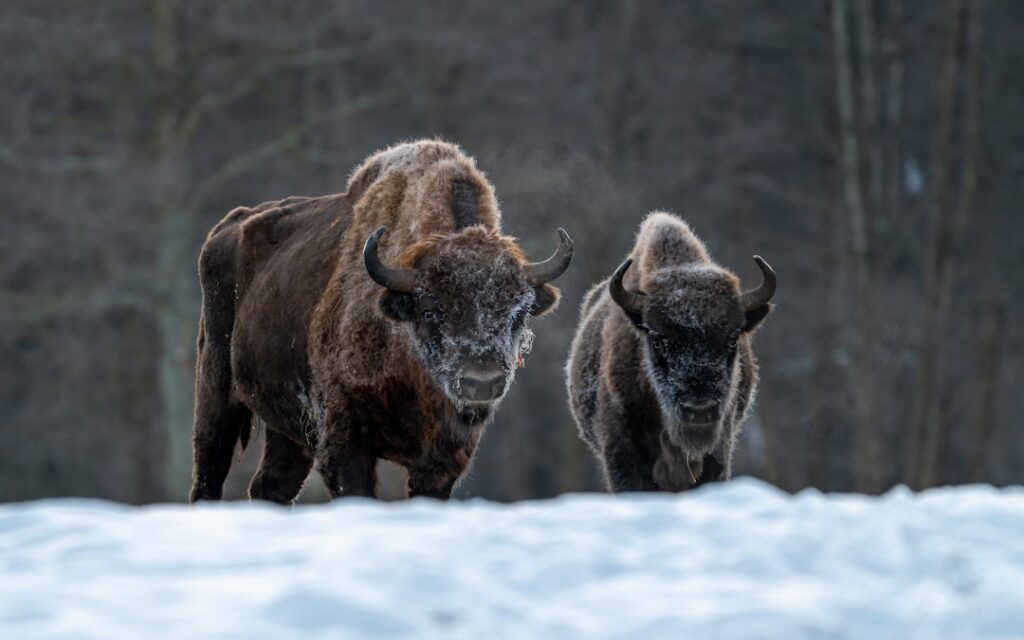
The war in Ukraine, now in its fifth year, has not only been rough on the country’s people, but also its wildlife. Dustin Patar reports for BioGraphic about the heart-wrenching struggle to save one of Ukraine’s remaining herds of European bison amid the destruction wreaked by Russian drones and land mines.
Environmental damage because of the war has been pervasive, reports Patar:
In 2024, Ukraine’s environment minister claimed that the Russian military had committed 6,500 crimes against the environment since the invasion, such as damage to forests, contamination of ecosystems by mines and other unexploded ordnance, water pollution, and air pollution. Some 30 percent of protected areas had been impacted by the war as of 2023, and several remain under Russian occupation.
The story is a gripping account of perseverance of staff at Zalissia National Nature Park near Kyiv and their attempts to revitalize its bison herd after one-third of it perished in the war. That included all but one male bison, named Muscat, who was thought to be sterile after some failed breeding attempts.
European bison have had a tough time. They’re taller but lighter than their North American counterparts and once roamed Europe’s forests and woodlands. They went extinct in the wild 100 years ago, and all European bison alive now – estimated at more than 9,000 wild individuals scattered throughout Europe – descend from just 12 captive-bred animals. While rewilding efforts have been successful in many areas, the low genetic diversity makes the animals fragile and highly susceptible to stress.
Unfortunately, when biologists tried to bolster Zalissia’s bison herd by relocating another male from a forest in central Ukraine, that fragility resulted in the animal’s death through a stress-induced heart attack during the day-long transport.
One of the biologists who helped in the efforts to relocate the bison was Ihor Dykyy, who works at World Wide Fund for Nature-Ukraine and is a professor of zoology at a Lviv university. Shortly after the war began, he enlisted in the territorial defense forces to help defend his country. But even while at the front lines, Dykyy “spent whatever downtime he could manage trying to document the ecological effects of the war, imagining that one day he could return to the classroom and share them with students,” Patar writes.
Fortunately, it turned out that Muscat was not sterile after all, and Zalissia’s bison herd welcomed three calves into the world. The war, however, continues to endanger the animals – last November, Muscat also died of acute heart failure after a massive Russian attack on the greater Kyiv area.
But biologists are nothing if not resilient and are attempting to learn more about the impacts of war on the environment even as bombs fall around them. Patar writes:
Dykyy has now returned to his university and is teaching a new course on how combat influences wildlife habitats, based on his front-line observations.
One can only hope that the insights gleaned through the efforts by Dykyy and others will one day help repair some of the damage inflicted by human conflicts.
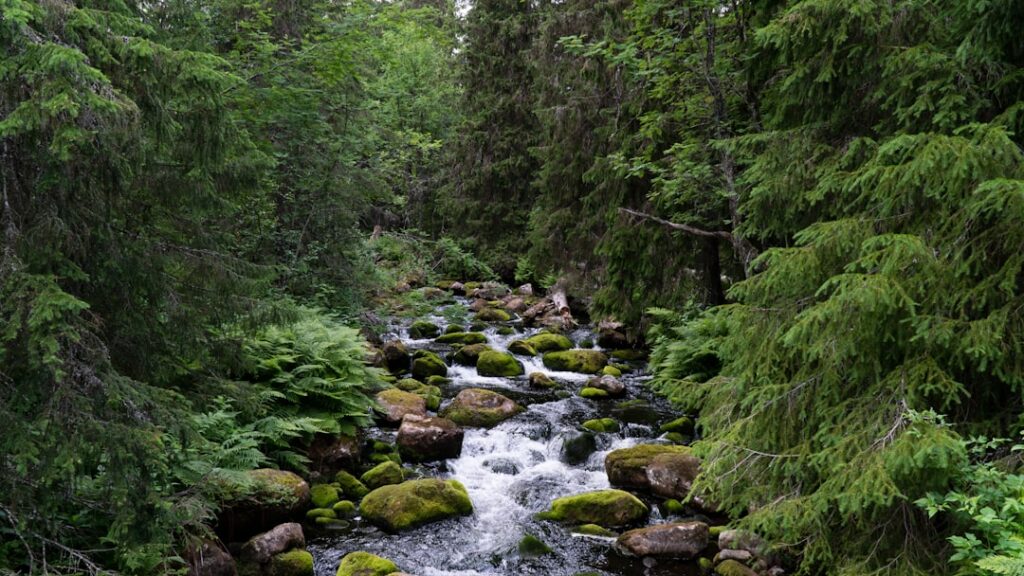
Unlocking nature’s secrets through ‘environmental DNA’
Biodiversity research is often costly and time-intensive, and limited funds means that even basic information about ecosystems and which animals, plants, or pathogens are present is frequently missing. This makes it difficult for biologists to assess the health of a habitat or make decisions about what restoration actions would be best.
But exciting technological advances are helping biologists speed up the pace of surveys. Jenny Whilde, an adjunct research scientist at the University of Florida, reports in the Conversation about using so-called ‘environmental DNA’ – or ‘eDNA’ – to assess a broad range of species in an area, completing biological surveys that would otherwise by exceedingly difficult and cost-prohibitive. Whilde writes:
[This] eDNA can come from cells shed from skin, spores and pollen blowing on the wind, or even just a cough or sneeze. It can provide huge amounts of information. Researchers can use it to assess biodiversity, monitor the spread of invasive species and detect pathogens.
Whilde’s team is using a new technique she calls ‘long-read shotgun metagenomic DNA sequencing.’ Compared to another method, known as ‘metabarcoding,’ the shotgun approach allows the researchers to quickly assess not only animals, plants, and fungi in an area, but also tiny microbes by simply taking a water sample. She writes:
The DNA we filtered from the water samples came from many organisms living in or near the water, including otters and oysters, foxes and fish, badgers and bacteria. Some of the species we detected were common and easily visible along the river (cows, sheep, dogs and humans), while some were more difficult to see (leatherback turtles and octopi).
The benefits of the new technology could be transformative. Not only can it be effective in evaluating the success of biodiversity restoration efforts, but it could help find the source of invasive species, making it easier to prevent further invasions.
It’ll be exciting to see how the technology could be used to guide conservation actions and ultimately help protect biodiversity!
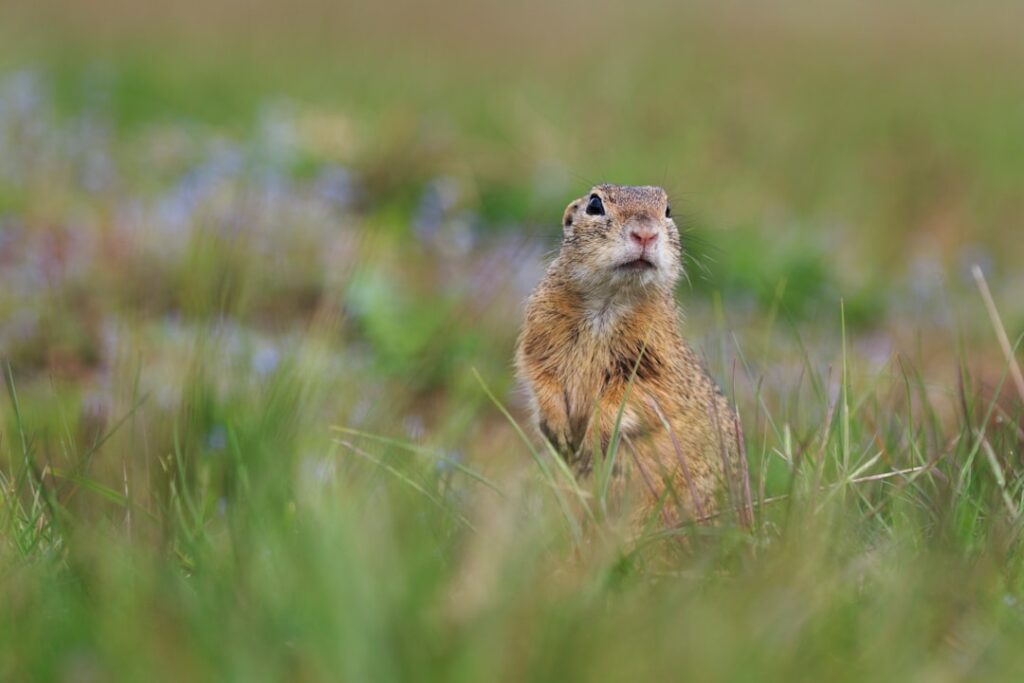
Ancient ground squirrel poop uncovered an astonishing diet of mammoths, bison, and even large cats.
We may think of present-day ground squirrels as innocuous herbivores, eating a diet of mostly nuts, seeds, and plants. But they can eat a surprising variety of small animals as well – enjoying the odd unlucky insect or lizard when the opportunity presents itself, or even scavenging carcasses.
Ground squirrels deep in the Pleistocene – what is often called the ‘Ice Age’ and lasted from about 2.6 million years ago to 11,700 years ago – ate a varied diet of large dead animals, reports Ewen Callaway for Nature News:
Ground squirrels spend many months in a winter slumber, and then awake ravenous and eat anything and everything in sight. A study of 700,000-year-old DNA from coprolites — fossilized poo — has now revealed that when ancient relatives of ground squirrels (Urocitellus sp.) woke up, they ate a diverse diet of plants, insects and carcasses of megafauna, including woolly mammoths, bison and big cats.
The ancient ground squirrel poop was dated to up to around 700,000 years ago using volcanic-ash deposits that were directly on top of it. If those datings are confirmed, the DNA sequences would be among the oldest known.
The lead author of the study in Nature Communications, Tyler Murchie, a biomolecular archaeologist at the Hakai Institute in Heriot Bay, Canada, said he “hopes other ancient-DNA researchers will see ground-squirrel poo as an untapped palaeo-archive that can be used alongside more conventional resources such as bones and sediment,” Callaway writes.
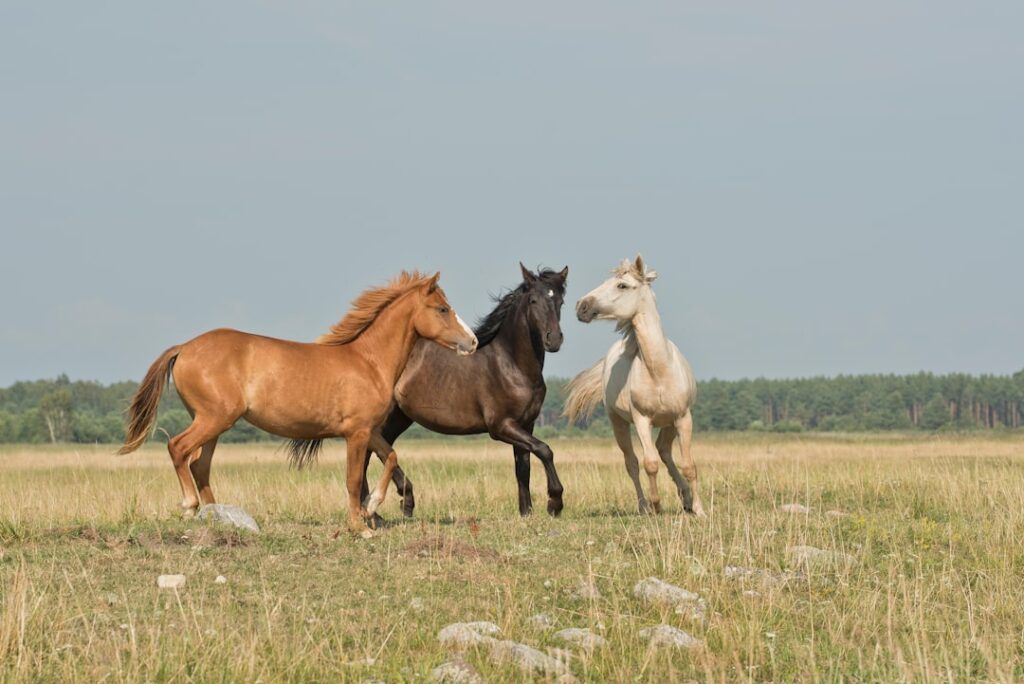
Controversial roundup of 450 wild horses proceeds in California.
A proposed roundup of hundreds of wild horses is proceeding in California,highlighting the frequent tension between conservationists and animal rights activists, Lila Seidman reports for the Los Angeles Times:
Federal officials have set a date to round up and relocate 450 wild horses they say are damaging Mono Lake’s famed limestone tufas and posing a threat to drivers. The move is hailed by environmentalists but heartbreaking for tribes and horse lovers who have fought to stop it.
The horses will be herded by helicopters and vehicles into a large catch pen and transported in trailers to another location, where they will be readied for adoption.
It’s a controversial operation, to say the least. Many environmental groups support the measure to protect the local vegetation and habitats. Seidman writes:
On the remote east side of Mono Lake, [said Steve Heimlich, who had spent around 40 years working at a California Department of Fish and Wildlife hatchery and is now retired], the animals gobbled down grass, roots and all, depriving certain birds of the worms that live in the vegetation — their sustenance. He said they displace antelope and other species too. “It’s upsetting the biological balance,” he said.
Other biologists also report significant damage by the growing horse herd to the pristine wetlands. Some local tribes and animal rights groups, however, oppose the roundup. Seidman writes:
Representatives from two local tribes draw a parallel between the gather and past efforts to expel their people from their ancestral lands, and say the horses are intertwined with their culture.
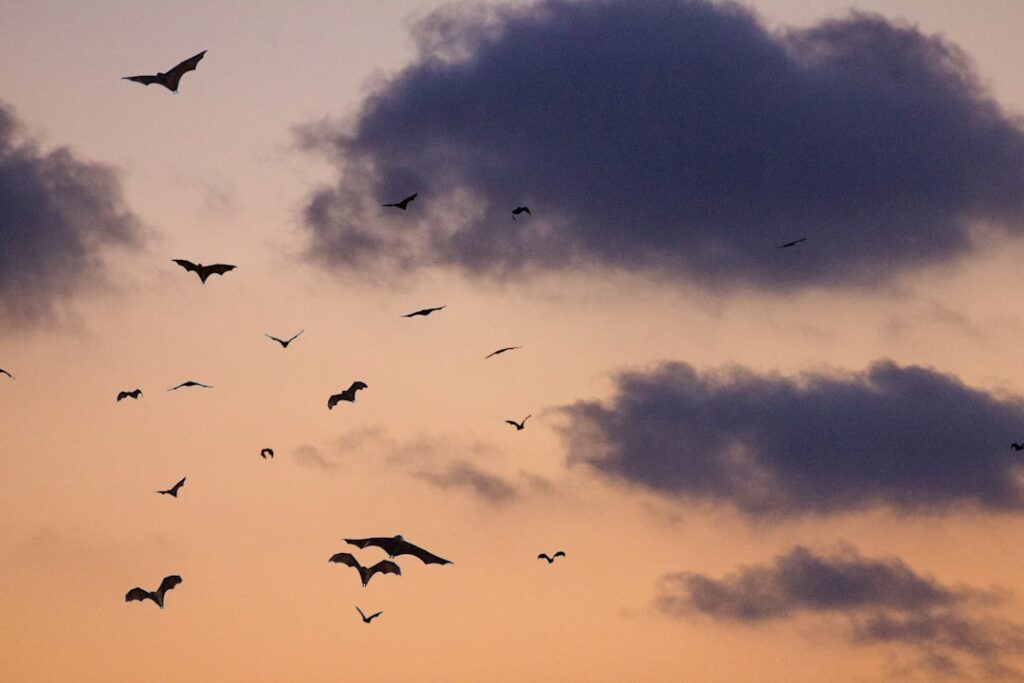
Wireless radiation disrupts bats’ flight patterns in a new study
Even brief exposure to wireless radiofrequency (RF) radiation can severely impact the flight patterns of bats, reports Environmental Health News according to a new study published in Science.
The study tested frequencies that are emitted by sources including AM radio, shortwave radio, and aviation communications, and found that bats “consistently flew in random directions, rather than the normal directional behavior of the nonexposed controls.”
Environmental Health News reports:
This study adds to a growing body of research reporting that non-ionizing EMF [short for electromagnetic field] – which is emitted by power lines, electrical substations, cell towers, and other forms of wireless infrastructure – can impact wildlife.
The impacts, besides disrupting animals’ orientation, can also affect their metabolism, reproduction, and foraging behavior. The amount of radiation and electromagnetic fields in the environment keeps increasing, however:
Numerous experts caution that EMF limits are outdated and focused solely on humans, failing to account for the growing body of research on wildlife impacts and leaving animals and ecosystems largely unprotected.
Wildlife crossings gain legislative support in four U.S. states.
So far in 2026, four states – Utah, Virginia, Idaho, and Oregon – have advanced legislation to support wildlife crossings, reports Carol Kaufman for the Pew Research Center:
These overpasses and underpasses and strategically placed fencing allow animals to safely traverse busy highways and roads along their natural corridors in search of food, shelter, and mates.
It’s estimated that more than one million wildlife-vehicle collisions occur every year in the U.S., causing about 26,000 injuries, more than 200 human deaths, and costing more than $10 billion in repairs, Kaufman writes. These figures are almost certainly underreported. Additionally, road mortality takes a significant toll on many wildlife species.
A recent analysis estimated that installing wildlife crossings could reduce collisions by more than 90%.
According to Kaufman, legislations introduced include establishing a designated wildlife crossing fund that will receive $2 million per year in Utah; a permanent fund for wildlife corridors funded by private grants, federal matching funds, and voluntary contributions in Virginia; a resolution supporting investment in wildlife crossing infrastructure and addressing habitat fragmentation in Idaho; and an increased lodging tax that will help fund several conservation programs including improving wildlife infrastructure in Oregon.
While not all of these initiatives received dedicated funding, many succeeded because of bipartisan support, which is nice to see in these polarized times.
And that’s it for this week’s updates.
Drop a note in the comments if any article resonated with you!
If you’d like to get new posts sent directly to your inbox every week, subscribe to my newsletter via Substack:
It’s free to subscribe, but if you choose the paid option you’d support my work and help keep my articles free for those who can’t afford a paid subscription!
Not ready to subscribe? It takes many hours to research and write each post, so please consider supporting my work by buying me a coffee (or a beer…😄).
Links to articles and resources:
- BioGraphic, 6/2/2026, by Dustin Patar: Saving bison as bombs fall
- IUCN Red List: European bison (Bison bonasus)
- World Wide Fund for Nature in Ukraine: WWF-Ukraine
- The Conversation, 7/7/2026, by Jenny Whilde: Fishing for DNA – how a cup of river water can reveal secrets about human health, pollution and biodiversity.
- Nature, 6/9/2026, by Ewen Callaway: Ancient ground squirrels feasted on carcasses like ‘zombies of the Pleistocene.‘
- Murchie et al., 2026. Ground squirrel coprolites preserve complex archives of ancient environmental DNA over 700,000 years.
- Los Angeles Times, 6/30/2026, by Lila Seidman: 450 wild horses face a roundup in Eastern Sierra as feds proceed with contested plan.
- U.S. Forest Service press release, 6/22/2026: Inyo wild horse gather starts July 8.
- Environmental Health News, 6/5/2026: Study finds EMF radiation exposure disrupts bat behavior for hours.
- Lindecke et al., 2026. Disruptive effects of brief radiofrequency noise exposure on migratory bat navigation.
- Pew Research Center, 6/30/2026, by Carol Kaufman: States act to reduce wildlife collisions.
- Scioto Analysis, 3/10/2025: Scioto Analysis releases cost-benefit analysis of wildlife crossings.