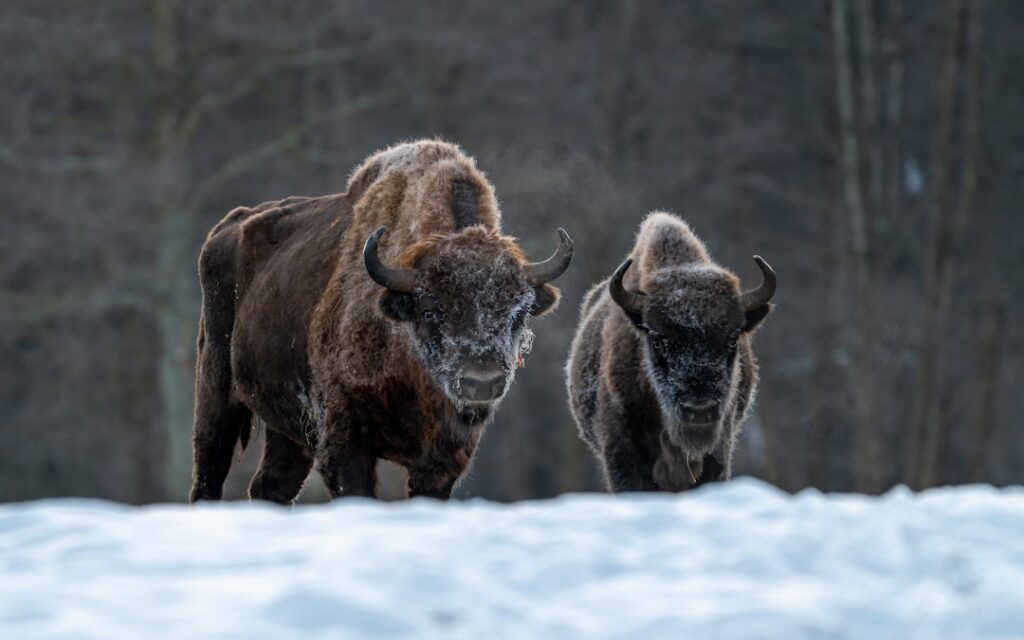
7/30/2026: India’s tigers are booming but concerns remain, elusive Sunda clouded leopards caught on camera, female chickadees prefer smart males, half of migratory bird species are declining, and more…
Welcome to another edition of newsworthy stories about the state of biodiversity, the threats it faces and emerging solutions. These are the articles that caught my eye that I thought offer a good snapshot of what’s been happening to the world’s wildlife the past couple of weeks.
Today I’m covering:
- India’s tigers are increasing, but protecting and connecting their habitats is the next struggle.
- Elusive Sunda clouded leopards, ‘ghosts of the forests,’ caught on camera, providing new insights.
- Female chickadees cheat on their mates with smarter males.
- Half of migratory bird species are declining, but comprehensive conservation actions could reverse the trend.
- Personal pro-environmental actions don’t hurt larger climate engagement or policy support after all.
If you’d like to get new posts sent directly to your inbox every week, subscribe to my newsletter via Substack:
India’s tigers are increasing, but protecting and connecting their habitats is the next struggl
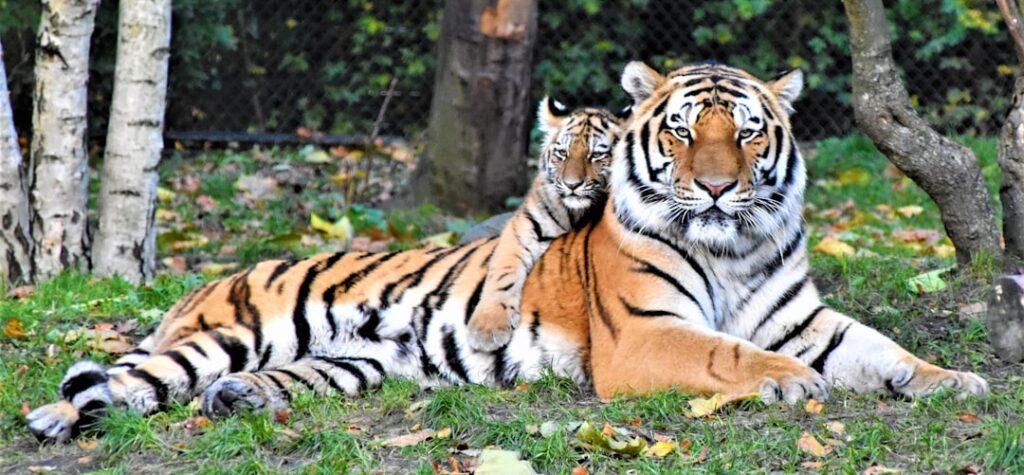
The number of tigers in India has doubled in recent decades, from a rough estimate of around 1,800 in 1972 to more than 3,600 today, reports Nirmal Ghosh for Mongabay.
But the expanded tiger population needs room to roam, and development and road projects are threatening the progress the country has made in protecting its wildlife habitat, Ghosh writes:
This jungle has survived, and even been revived, in a country of 1.4 billion people — in an economy that has grown at 6-7% per year over the last decade. As it strives to graduate to new-generation infrastructure, India is now building large highways at precisely the time that wild tigers have rebounded to the point that the existing network of protected habitats is no longer sufficient.
Roads act as barriers for many wildlife species, even large animals like tigers and elephants, preventing them from dispersing to new areas or completing their migrations. Wildlife crossings can help mitigate these isolating effects – they are structures such as bridges or culverts, often planted with native vegetation that allow animals to go under or over a road.
According to the Wildlife Institute of India, India “has created the world’s 10 largest wildlife underpasses and overpasses,” Ghosh writes. But it may not be enough.
Tigers are classified as one species with several subspecies – though experts disagree on exactly how many subspecies exist, with some recognizing two subspecies, others nine. In either case, the species is listed as endangered on the IUCN Red List, with an overall decreasing population trend.
But while things aren’t looking good for most tigers across Asia, they are increasing in India and Nepal, according to the International Union for Conservation of Nature. India now has 58 tiger reserves, up from only nine 50 years ago, Ghosh writes:
But tiger density is uneven. Some reserves are overflowing, while a few may not have any tigers at all. The big cats roam across landscapes: Experts estimate that around 35% of India’s wild tigers live outside its protected area network.
And that can threaten their long-term survival since human-wildlife conflicts and poaching rise as the animals come into more contact with humans, especially with urban sprawl popping up around tiger reserves. Reserves and connecting corridors are also sometimes threatened by development and mines.
Tigers are notorious for moving long distances, and both males and females have large territories, making wildlife-friendly wildlife crossings that both facilitate the large cats’ movements and separate them from humans essential for their long-term survival.
But that won’t work unless their core habitat continues to be protected.
Elusive Sunda clouded leopards, ‘ghosts of the forests,’ are caught on camera, providing new insights
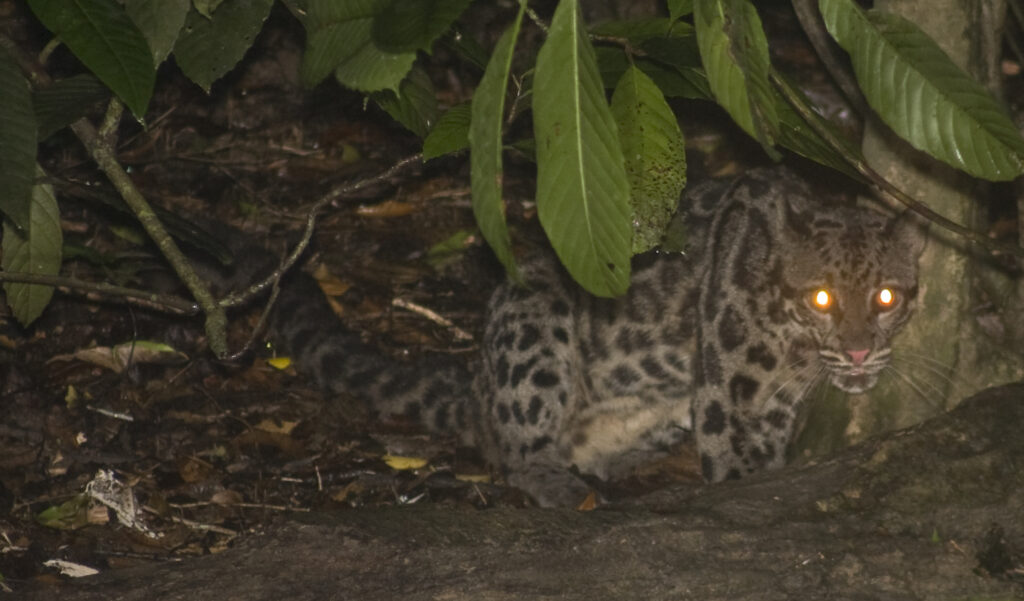
Staying with the large cat theme, a new 15-year study provides a tantalizing view into the mysterious Sunda clouded leopards that roam the dense rainforests of Borneo and Sumatra, reports Douglas Main for Scientific American:
Much remains unknown about these elusive big cats, sometimes called “ghosts of the forest,” including how long they live and how they spend their time.
The study, led by Katharina Kasper, a biologist with the Polish Academy of Sciences and the Leibniz Institute for Zoo and Wildlife Research, analyzed photos taken with camera trap surveys set out in the Malaysian Borneo state of Sabah between 2007 and 2023.
The research team captured images of 52 adult Sunda clouded leopards. More than half of the individuals, 30, were male – not because the sex ratio is skewed, the researchers believe, but likely because females spend more time in the trees, aided by their slenderer forms and fluffier tails compared to males.
Males, on the other hand, spend more time on the ground, marking their territories, and are therefore detected more often by the camera traps.
The biologists were able to identify individuals through their unique fur spot patterns, which also allowed them to age animals that appeared in multiple photos. One female was observed over 6.5 years. Since she was an adult at least two years old in the first photo, the team discovered that the age expectancy for the species in the wild is at least 8.5 years.
That tracks well with data from their close relative, clouded leopards, which occur in mainland Southeast Asia and are known to live up to 20 years in zoos. In general, wild large cats tend to live about half as long as their captive counterparts. Main writes:
Kasper says the study has already helped the group tweak its research efforts to look at what factors influence the disturbance and survival of Sunda clouded leopards. In turn, this will help guide conservation efforts for this species, which is classified as vulnerable by the International Union for Conservation of Nature—one step up from endangered.
Female chickadees cheat on their mates with smarter males
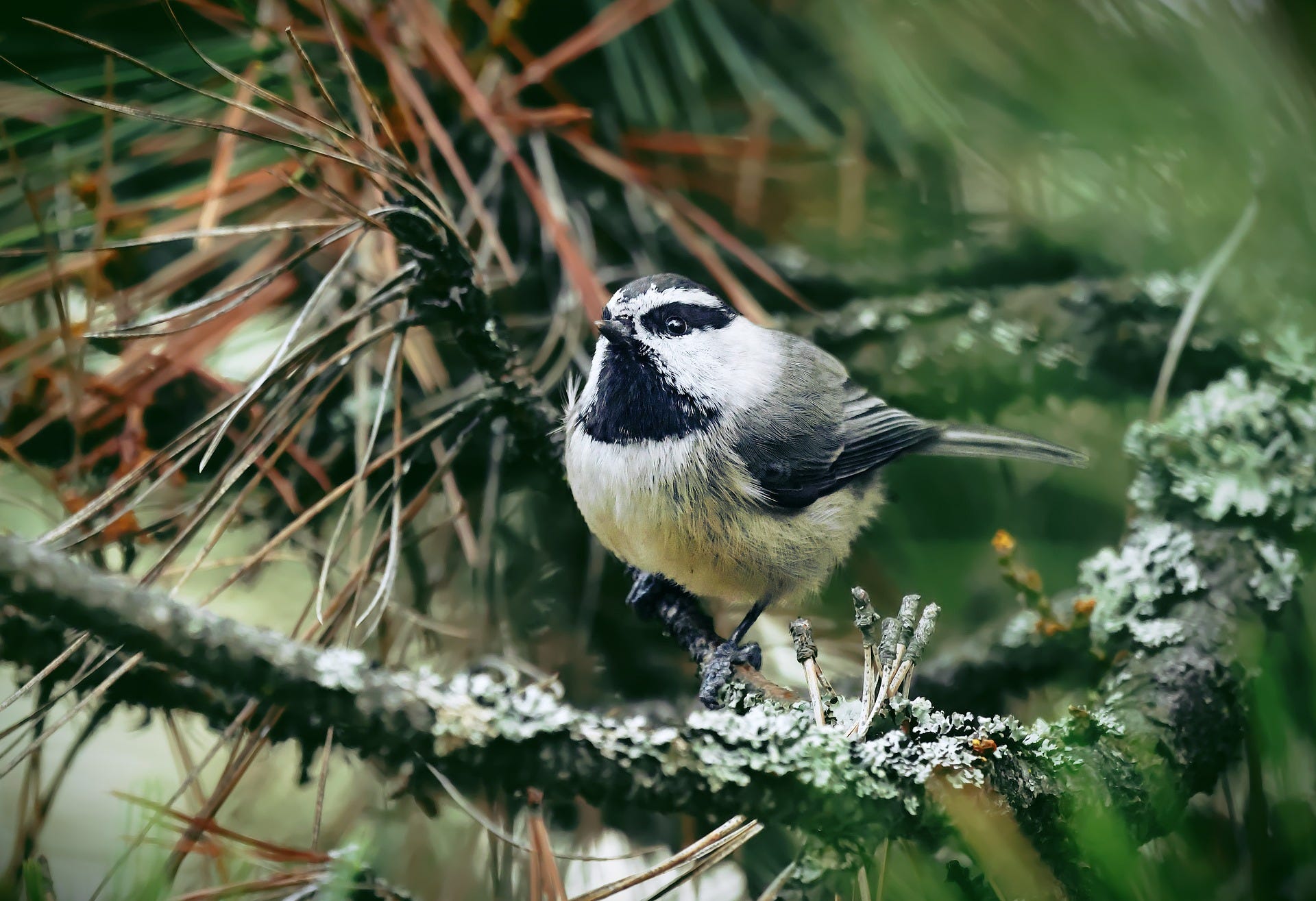
Turning now to fascinating insights into the behavior of our small feathered friends – while chickadees are known for being monogamous and forming pair bonds that last for several breeding seasons or even for life, it turns out that female mountain chickadees will stray to mate with more intelligent males, reports Annie Roth for the New York Times:
While it’s true that mountain chickadees breed and raise their young with the same mate year after year, scientists have found that nests are often full of half-siblings, suggesting that both males and females may be stepping outside of their pairs.
Carrie Branch, an assistant professor at Western University in Ontario, was the lead author of a study that examined if female mountain chickadees were drawn to affairs with smart males.
She did that to follow up on a hunch she had while in grad school, when she noticed that males from higher altitudes seemed to be particularly attractive to females. And because of the harsher conditions high up in the mountains, chickadees that live there need to be extra smart to remember where they hid their summer food caches.
Roth wrote about Dr. Branch’s experiment using several “smart” feeders that would only open for birds that wear certain colored bands that she had attached to male mountain chickadees in California’s Sierra Nevada mountains. That meant that the birds had to remember which feeder would respond to their individual leg band, demonstrating how smart they were.
Her team also took genetic samples of the males and chicks. They found that nearly three-quarters of nests had at least one chick with a different father from its siblings, and smarter males had fathered more young. Roth writes:
The males who performed best in the researcher’s cognition tests sired between six and seven chicks outside of the matings each year, while those who scored low sired only between one and two.
The researchers don’t know how the females judge a male’s intelligence, but since chickadees overwinter together in groups of up to a dozen birds, they may have the opportunity to assess the smarts of individual males during that time. So it could be that if a male does particularly well during that harsh time, females notice and remember when it’s time to find a father for their chicks.
Half of migratory bird species are declining, but comprehensive conservation actions could reverse the trend
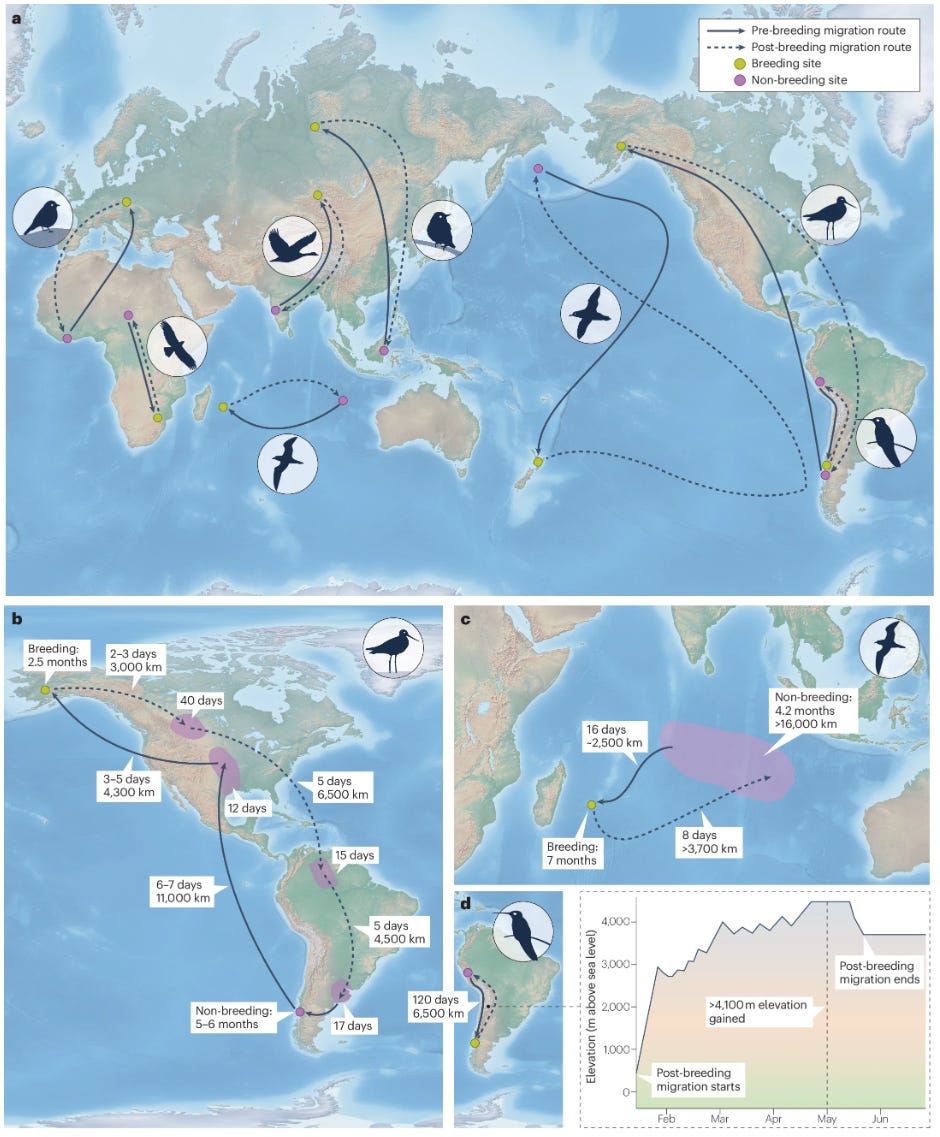
Many birds accomplish amazing feats of endurance and orientation every year during their annual migrations. But a recent study found that 51% of migratory birds are declining, write two of the study’s authors, Peter Marra with Georgetown University and Nathan Cooper with the Smithsonian Institution, for the Conversation.
Birds face many risks at home and during their travels, including habitat loss, collisions with buildings, the pet trade and toxic pesticides. While the results of their research are alarming, Marra and Cooper argue there is reason for optimism:
Our study offers a second conclusion with more hope. The science around migratory birds has changed dramatically over the past two decades, and conservation can help save these incredible species – if governments act before they become endangered.
New technologies have enabled scientists to track individual birds, making it possible to pinpoint exactly where conservation efforts would have the greatest impact. And each migratory species is different, meaning that one-size-fits-all strategies won’t work.
Marra and Cooper cite three birds – the grassland bird bobolink, the seabird Newell’s shearwater and the shorebird spoon-billed sandpiper – as examples to highlight the different approaches that will be necessary to halt the decline of migratory birds. All three are declining but face different threats.
The authors contend that refocusing conservation efforts to protect not only birds’ breeding grounds but also their wintering areas and migratory routes is necessary and would yield powerful results. That, however, would require international cooperation among governments and partnerships with scientists and conservation organizations.
Everyone can help to support migratory birds, the authors write:
Governments cannot do it alone. Landowners, businesses, conservation organizations and individuals all have roles to play. They can help protect and restore habitat and reduce threats, such as free-ranging cats and collisions with buildings. They can support bird-friendly policies and participate in citizen-science programs that help track migratory bird populations.
Personal pro-environmental actions don’t hurt larger climate engagement or policy support after all
I’ve often heard the argument that encouraging people to adopt individual eco-friendly behaviors could backfire and cause them to be less engaged in supporting larger, systemic efforts to alleviate climate change that could arguably have greater long-term benefits.
Now a research team put the theory to the test, reports Sarah DeWeerdt for Anthropocene Magazine. Omid Ghasemi, a climate psychologist at the University of New South Wales in Australia, led a study that surveyed nearly 2,800 Australians over at least two years about their environmental and climate attitudes and actions.
Survey participants were asked about both personal environmentally friendly behaviors, such as carrying their own drink container or using public transportation, their engagement in collective eco-friendly actions, including attending pro-environmental rallies or signing petitions, and their support for climate-related policies, such as setting national zero-carbon emission targets.
The results showed that those who were more active personally were also more likely to participate in collective actions and support climate policies, DeWeerdt writes:
Crucially, when a person’s personal climate actions increased in one year, this did not make them more—or less—likely to take collective action or support climate policies the next year. Nor was there any evidence of a gradual, cumulative effect of individual action over multiple years on broader climate engagement.
However, the researchers caution, putting too much emphasis on individual solutions can backfire as well, by “reducing the perceived necessity or effectiveness of systemic change.” If we want to prevent the most dire climate change scenarios and further biodiversity loss, it will take all hands on deck – public support of climate policies and conservation actions and also personal actions to reduce our carbon footprints. But at least, as DeWeerdt writes:
This means that governments and environmental advocates don’t need to worry that encouraging everyday climate actions will “crowd out” other forms of climate engagement—as long as those small, individual efforts aren’t presented as the whole solution.
And that’s it for this week’s updates.
Drop a note in the comments if any article resonated with you – I love to hear from readers!
If you’d like to get new posts sent directly to your inbox every week, subscribe to my newsletter via Substack:
It’s free to subscribe, but if you choose the paid option you’d support my work and help keep my articles free for those who can’t afford a paid subscription!
Not ready to subscribe? It takes many hours to research and write each post, so please consider supporting my work by buying me a coffee (or a beer…😄).
Links to articles and resources:
- Mongabay, 7/28/2026, by Nirmal Ghosh: India’s tiger numbers are rising. Protecting their pathways is next.
- Wildlife Institute of India
- International Union for Conservation of Nature Red List: Tiger (Panthera tigris)
- Science, 6/26/2015, by Kai Kupferschmidt: Controversial study claims there are only two types of tiger.
- World Wide Fund for Nature: Tigers
- Scientific American, 7/17/2026, by Douglas Main: Exclusive: See unprecedented images of Sunda clouded leopards, the ‘ghosts of the forest.’
- Kasper et al., 2026: Estimating Sunda clouded leopard lifespans from minimum residence times via long-term photo-tracking. Biotropica 58(2): e70169.
- International Union for Conservation of Nature: Sunda clouded leopard (Neofelis diardi)
- The New York Times, 7/2/2026, by Annie Roth: Cheating chickadees are seduced by smarts.
- Branch et al., 2026: Male chickadees with better spatial cognition sire more extra-pair young. eLife 15:RP110905.
- The Conversation, 7/22/2026, by Peter Marra and Nathan W. Cooper: More than half of Earth’s migratory bird species are declining – here’s how we can still save them.
- Marra et al., 2026. Status, threats and conservation of Earth’s migratory birds. Nature Reviews Biodiversity (2026).
- Road to Recovery – Saving our Shared Birds, an initiative focused on the recovery of declining birds in the U.S. and Canada.
- Anthropocene Magazine, 7/28/2026, by Sarah DeWeerdt: Do small climate habits help or hurt the bigger cause? What a 4-year study found.
- Ghasemi et al., 2026: Personal climate actions do not crowd out collective action and policy support: longitudinal evidence. NPJ Climate Action 5:62.