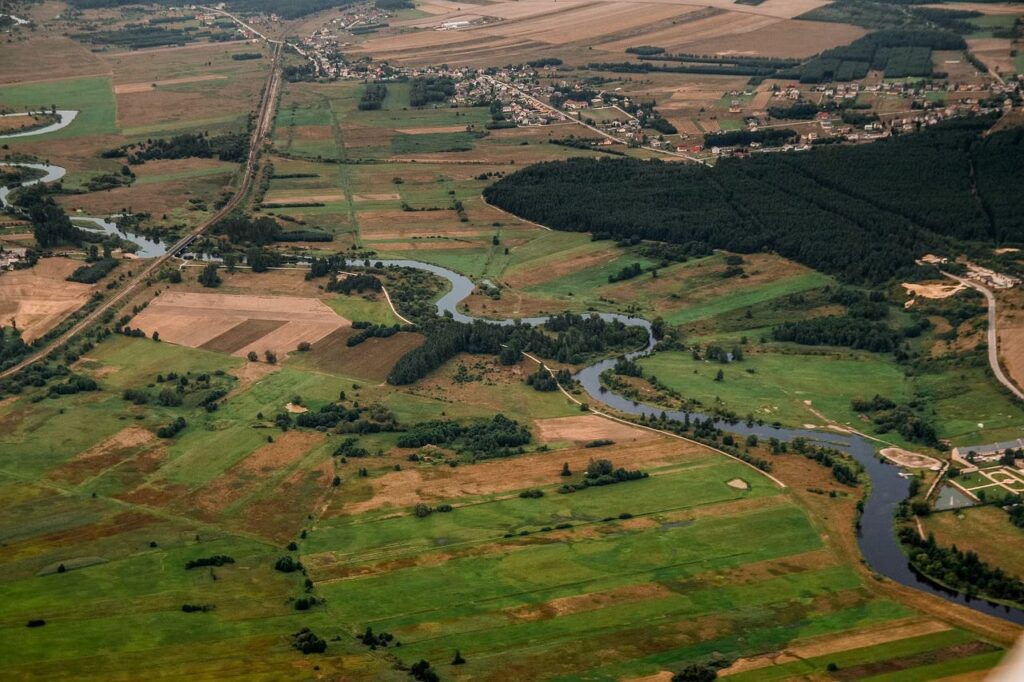
By using AI to identify mammal calls in hundreds of thousands of hours of audio recordings, a new study shows how this new method could make wildlife monitoring faster and more efficient.
Artificial intelligence is everywhere these days, promising to make workers’ lives easier by taking over menial tasks and making us all more efficient. At least that’s what the AI companies claim.
But companies and office workers aren’t the only ones testing AI to see if those promises hold up – biologists are also experimenting with new methods to see if AI can be used to benefit conservation.
I was fascinated to come across this 2025 study, in which Australian scientists used AI to analyze hundreds of thousands of hours of audio recordings taken over decades to identify mammals much faster than humans could.
And once we know where certain species of mammals occur, we can work towards protecting them – conserving their habitats or alleviating threats that could endanger them.
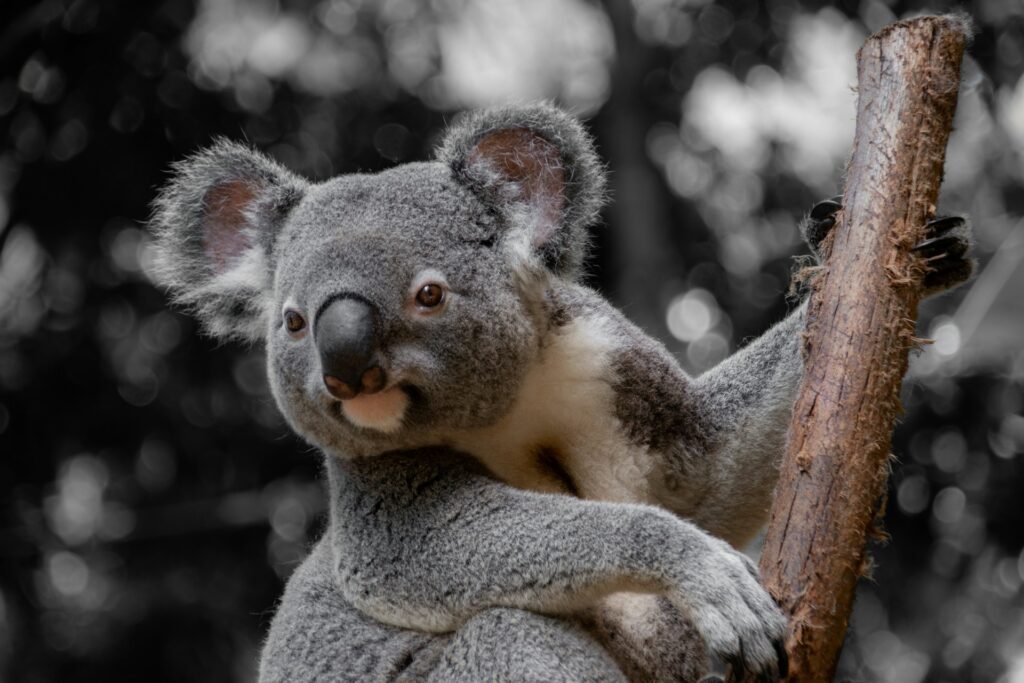
Finding ways to survey mammals more easily is vital because many species are notoriously hard to monitor. Many are small and inconspicuous, active only at night or shy, scuttling away whenever they notice a human nearby.
That means that finding and identifying them is often extremely time- and labor-intensive, demanding endless hours by trained researchers in remote areas. Yet knowing where mammals occur is an essential first step to protecting them.
This new study in Australia tried a new way to save time and money: Using AI to scan 36 years’ worth of audio recordings of mammals in a fraction of the time it would have taken humans to do it manually.
“Australia is the worst place for mammal extinctions in the world,” said Sebastian Hoefer, the lead researcher with James Cook University, in a statement. “Many of our mammals are endemic, with highly restricted ranges and important ecological roles.”
Mammals are a hugely varied group, ranging from animals like tiny shrews that weigh less than a dime to large blue whales – at up to 200 tons the largest animals known to have ever existed.
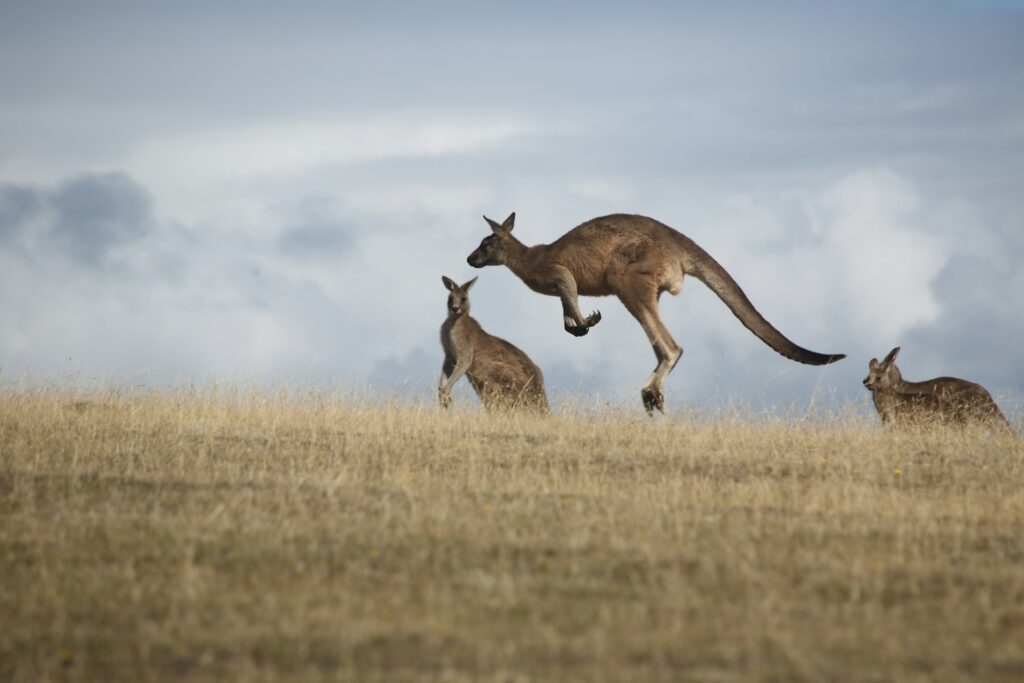
Australia is home to more than 300 species of mammals, including the vast majority of the world’s marsupials, a group that includes kangaroos, koalas and wallabies. They are unique mammals that give birth to underdeveloped young, which crawl into their mothers’ warm, safe pouches to complete their development.
Globally, many mammals are struggling and one-quarter of species are threatened with extinction because of habitat loss, invasive species and climate change.
If you’d like to get new posts sent directly to your inbox every week, subscribe to my newsletter via Substack:
The study, which appeared in the journal Methods in Ecology and Evolution, compared the effectiveness of three techniques to monitor mammals at six sites in eastern Australia:
1) “Observer-based monitoring,” where trained observers use traditional surveying methods such as pitfall traps, funnel traps or active night searches to find mammals the old-fashioned way;
2) “Camera trapping,” which uses trail cams attached to trees; and
3) “Passive acoustic monitoring,” where audio recorders document all sounds over a given time period, with the results analyzed by AI.
In the observer-based method, the biologists had to spend many days in the field, searching for the mammals. The camera trapping and audio recording involved setting up the equipment at the beginning of each period, taking it down again and analyzing it once the field work was done.
All three survey types were done at the same time, over 28 days, in national parks and conservation areas. The researchers then compared how many species each method detected to determine which was most effective.
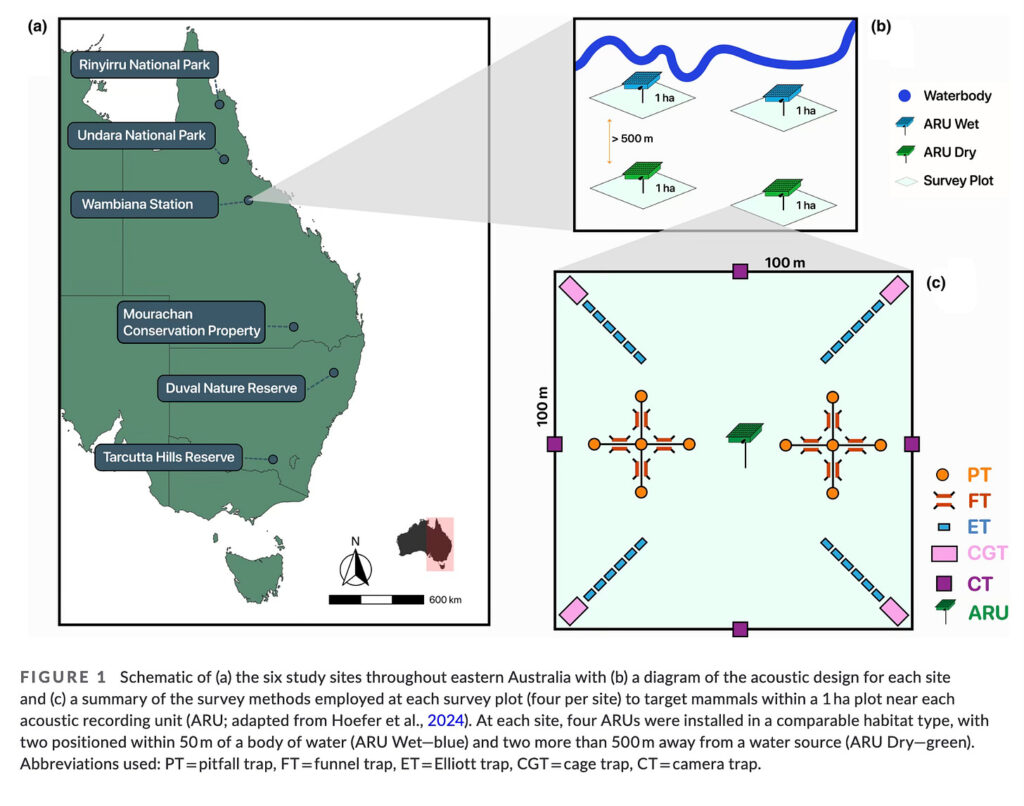
Long-term audio recordings were also available for the study sites – more than 300,000 hours, equivalent to more than 36 years. The researchers used these recordings to supplement the ones taken during the 28-day survey period. Hoefer and his team then fed all recordings into the open-source BirdNET AI software.
“You can imagine it’s a bit like ChatGPT,” Hoefer said in the statement. “It’s a machine learning recognizer that’s been trained on birds, but we can tell it what we want to find.”
“For example, we can input a single example call from a mammal — say, a male koala bellowing — and then instruct the system to locate all similar sounds across the recordings,” he said.
The biologists weren’t sure what to expect, but after analyzing all the data they found that the acoustic monitoring was surprisingly successful for those “vocal mammals,” finding all 17 species when the extended-term audio data was included.
When using the audio recordings from only the 28-day period, however, the recordings found fewer species than the direct observations or the trail cams. That means that the manual search found more species than just using audio recordings over the short term. But an audio recorder left out for a long time was just as effective as sending biologists to the site to conduct a survey, at least for vocal mammals.
“It was amazing to discover how effective using mammal calls can be to detect and monitor species over such large scales,” Hoefer said.
Not surprisingly, the species without calls audible to humans were not detected by the recordings. Including those silent species, the observers found 45 mammal species, more than either the audio recordings or trail cams.
That means that biologists will still need to spend time in the field to find all species that occur in an area, no matter how good AI gets at identifying animals’ sounds.
But I’m guessing biologists are not disappointed that AI won’t completely replace them in the field!
The researchers also found that the diversity of vocal mammals was highly correlated with the overall mammal diversity, allowing scientists to use AI to get a rough idea of all mammals in an area. So even if there’s not enough funding for a full, staffed survey by field biologists, this simpler method can stand in as a proxy, at least temporarily – it’s often better to have incomplete data than no data at all.
Another advantage is that the ability to use an automated tool means more resources are available for those species that require a manual approach.
“This allows us to redirect more time and funding towards monitoring mammals that don’t vocalize,” Hoefer said. “By continuously recording throughout the year, we can identify these peak activity windows and plan targeted management or monitoring during those times.”
If this survey method can be expanded to monitor animals in large geographic areas, it could be a game-changer for conservation, efficiently using limited funds to find rare species and directing resources where they are most needed.
All essays are free for everyone to read and subscribing is free. But if you can afford it, please consider a paid subscription or a one-time donation to help me continue researching, talking to experts and writing!
Or:
Links to resources:
- Hoefer et al., 2025. Sensors versus surveyors: Comparing passive acoustic monitoring, camera trapping and observer-based monitoring for terrestrial animals. Methods in Ecology and Evolution, 16: 2603-2621.
- South Australian Museum: Mammals.
- International Union for Conservation of Nature (IUCN): RedList