3/11/2026: Supposedly extinct marsupials discovered in New Guinea, 3D scans of ants, cannibalizing orcas, iconic ‘hellbenders’ declining, nature report released despite Trump’s cancellation, and more…
Welcome to another weekly compilation of newsworthy stories about the state of biodiversity, the threats it faces and emerging solutions, offering a snapshot of what’s happening in nature around the world and why it matters.
To find out what’s new this week, scroll down to read about:
Biodiversity:
- Marsupials thought to be extinct for millennia discovered in New Guinea.
- High-tech 3D scans of thousands of ants reveal amazing diversity, inside and out.
- Orcas may be cannibalizing other orcas, study finds. Or are they?
- Iconic Appalachian salamander keeps declining while waiting for action under the Endangered Species Act.
- Nature report is released despite cancellation by Trump.
- Grasslands and wetlands are gobbled up by agriculture worldwide.
Pollution & Pesticides:
- Experts warn of increasing pollution risks under Trump administration.
- World Health Organization finds common U.S. herbicide to be ‘probably carcinogenic.’
If you’d like to get new posts sent directly to your inbox every week, subscribe to my newsletter via Substack:
Biodiversity
Marsupials believed to be extinct discovered in New Guinea
We keep learning more and more about life on Earth. Every week I’m amazed at new and exciting discoveries about nature and how species function and interact with each other. That sometimes includes finding species that scientists know about from the fossil record but thought to be extinct.
For example, biologists recently discovered two species of marsupial that were previously only known from the fossil record, reports Adam Morton for the Guardian:
Researchers led by the Australian scientist Tim Flannery have made a once-in-a-lifetime discovery: that two charismatic marsupial species that had been thought extinct for 6,000 years are alive in rainforest in remote West Papua.
Marsupials are a group of mammals that give birth to very undeveloped young, which continue to grow in special pouches on mom’s belly. Well-known examples are kangaroos, koalas and possums.
One of the new species is the pygmy long-fingered possum (Dactylonax kambuayai). It “lived in Australia’s central Queensland region about 300,000 years ago but seemed to have vanished during the ice age. Before the recent discovery, it was last known to have lived in West Papua until about 6,000 years ago,” Morton writes:
The other is a ring-tailed glider (Tous ayamaruensis), which is closely related to the Australian greater glider but with unfurred ears and a strongly prehensile tail used for gripping.
These finds are particularly remarkable since it’s exceedingly rare to discover one species known only from the fossil record, let alone two!
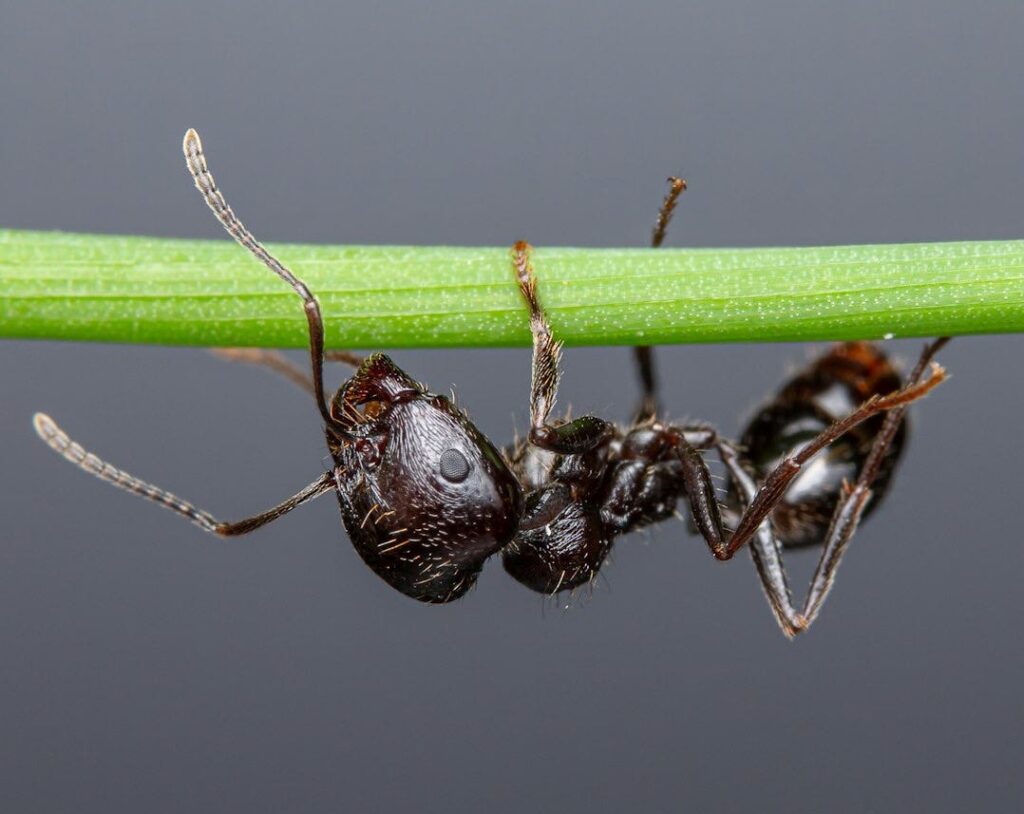
High-tech 3D scans of ants reveal amazing diversity, inside and out
A new study in Nature rendered detailed 3D images of thousands of ants, revealing the insects’ delicate anatomy, both outside and inside their bodies, reports Ari Daniel for the New York Times:
Nearly 2,200 specimens, drawn from museums and personal collections around the world, were X-ray scanned in a single intense week with a synchrotron particle accelerator in southwest Germany. Traditional, smaller-scale methods of making such scans would have typically taken years.
The researchers worked long hours to complete the scans, but the work paid off:
“The diversity is absolutely stunning. There’s very huge ones like the bullet ants with their most painful sting in the insect world,” [Thomas van de Kamp, a biologist at the Karlsruhe Institute of Technology, told Daniel]. “We scanned super tiny ants — specialist predators of spider eggs, for example.”
The benefit of working with insects is that they’re small – specimens arrived from all over the world and were collected by a graduate student in Japan, who then put the vials with the ants into a suitcase and delivered them to Germany, where the high-tech scanner was located. So goes biology field work at times!
It’s already provided new insights into ant biology, Daniel writes. For example, biologists had known before about one type of ant with a special kind of ‘biomineral armor,’ more similar to the shell of mollusks – a group of animals that include mussels, clams and snails – than other ants, but the scans revealed this type of shell to be common in other related ants.
Other researchers have called the work “transformative” – the ability to study the organs of specimens without the need to cut them open could prove invaluable to learn about other animal groups as well.
The antscans are available online at antscan.info.
Orcas may be cannibalizing other orcas, study finds. Or are they?
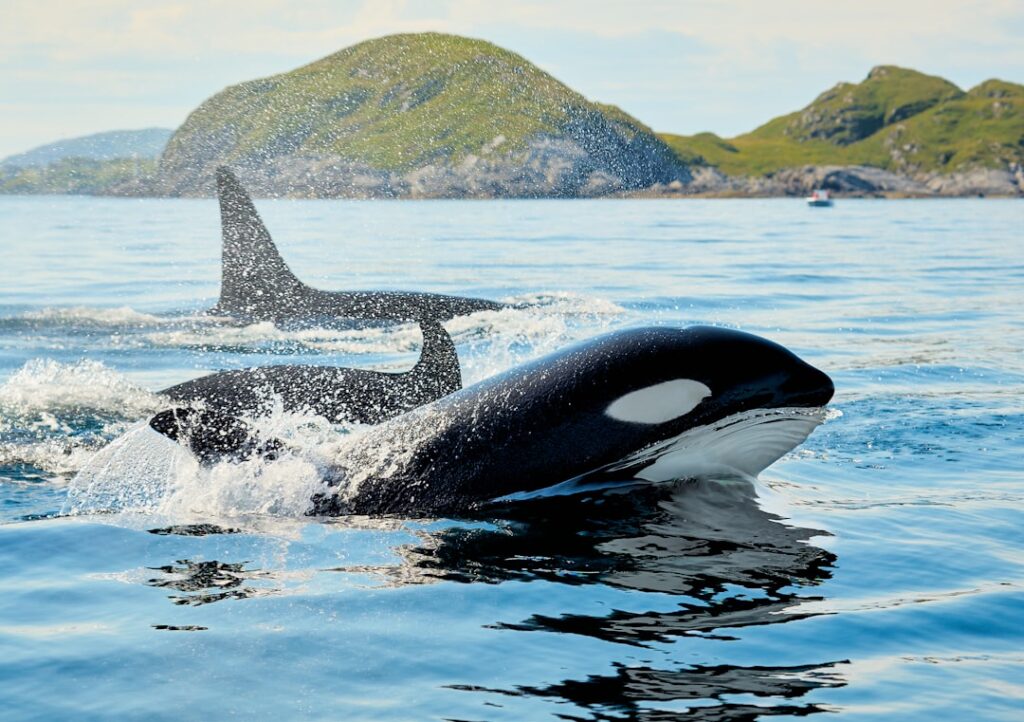
A new study found that some orcas – also called killer whales – may eat orcas from other groups, reports Chris Simms for LiveScience:
Orca fins washing up in the North Pacific are scratched with characteristic tooth marks that suggest killer whales are occasionally cannibals. Scientists say this may explain why some orcas live in large family groups.
Simms explains that Orcas are typically divided into several types or even subspecies. In the North Pacific, two subspecies co-occur: so-called Resident orcas (Orcinus orca ater) and Bigg’s orcas (Orcinus orca rectipinnus). The resident orcas are more social, while Bigg’s orcas tend to hunt other marine mammals and are more solitary.
The discovery was made when one of the paper authors found two orca dorsal fins with the characteristic tooth marks of orcas on a Russian beach. Other dolphins and whales form tight-knit groups to defend against orcas, so the authors suggest that the social structure of Resident orcas could be explained as a defense against the aggressive Bigg’s orcas.
However, not all whale researchers are convinced that two fins constitute a pattern of cannibalism. And since some biologists think the two subspecies should be separated into distinct species, the behavior may not fit the definition of cannibalism at all.
Iconic Appalachian salamander keeps declining while waiting for action under the Endangered Species Act
Hellbenders – ancient aquatic salamanders up to 2 feet long that can live up to 30 years – live primarily in the mountains of the eastern U.S. but are declining in most areas, reports Katie Myers for Grist:
The U.S. Fish and Wildlife Service was expected to designate the hellbender an endangered species by the end of last year, but the decision never came. Instead the salamander, along with other flora and fauna, was moved to a “long-term actions” list. Not a single species has been listed since President Donald Trump began his second term.
The other-worldly looking amphibians are shy, but people in Appalachia are proud of their unique mascot, Myers writes:
In the Blue Ridge Mountains alone, there are beers, breweries, baseball teams, puppets, and festivals named after it; jokes about it being “from hell” abound. Exhaustively documented nicknames include the mudpuppy, snot otter, and mud devil.
They’re also in the clear mountain streams of West Virginia, where I lived for many years. If you’re ever in Davis, WV, be sure to head to “Hellbender Burritos,” a hole-in-the-wall restaurant with humongous burrritos stuffed to bursting with fresh goodies.
Hellbenders do, however, require clean water, and are a sort of canary in the coal mine for water quality, Myers writes:
But after spending 160 million years living quietly in the same waters their ancient ancestors did, pollution, habitat loss, and collection for the illegal pet trade have driven them ever closer to the graveyard of geologic history.
Now 60% of hellbender populations are declining, while only 12% are considered stable. Still, the unique salamander has many surprisingly passionate followers, including residents in Boone, a community in North Carolina. Myers writes:
[Dalton George, Boone’s mayor, told Myers that] the hellbender is more than a beloved animal. It is a symbol of belonging and endurance. Its struggles also seem to reflect a sense of anxiety many residents feel about change in the mountains.
Nature Report is released despite cancellation by Trump
President Trump has stalled or canceled many environmental initiatives and reports since taking office for the second time. We hear regularly about the hampering of climate change research, but conservation and biodiversity measures are suffering similar fates. One assessment that was started under the Biden administration was the National Nature Assessment, intended to be a first-of-its kind assessment of nature across the U.S, which was nearly finished when it was canceled by executive order last year.
But the scientists continued the work without the federal government, renaming it the Nature Record. It was recently released for public comment and and scientific review, reports Catrin Einhorn for the New York Times:
Many of the preliminary findings are grim: Freshwater ecosystems across the country are in crisis, “overdrawn, polluted, fragmented and invaded.” Marine and terrestrial ecosystems are degraded, with reduced biodiversity. An estimated 34 percent of plant species and 40 percent of animal species are at risk of extinction.
However, the researchers also found reasons for hope, Einhorn writes:
“The future is not fixed,” said Phillip Levin, who directed the assessment both under the government and since. “Conservation, restoration and renewed connections between people and nature can improve ecosystem health and strengthen community resilience.”
And you can help with the effort! The scientists invite comments from everyone, not just experts. We’re all stakeholders in nature. Read just one chapter or the full report, then submit your comments by May 30.
Grasslands and Wetlands are gobbled up by agriculture worldwide
We often hear about the destruction of forests by expanding agriculture, but now a new study found that it’s not just forests that are being displaced, reports Georgina Gustin for Inside Climate News:
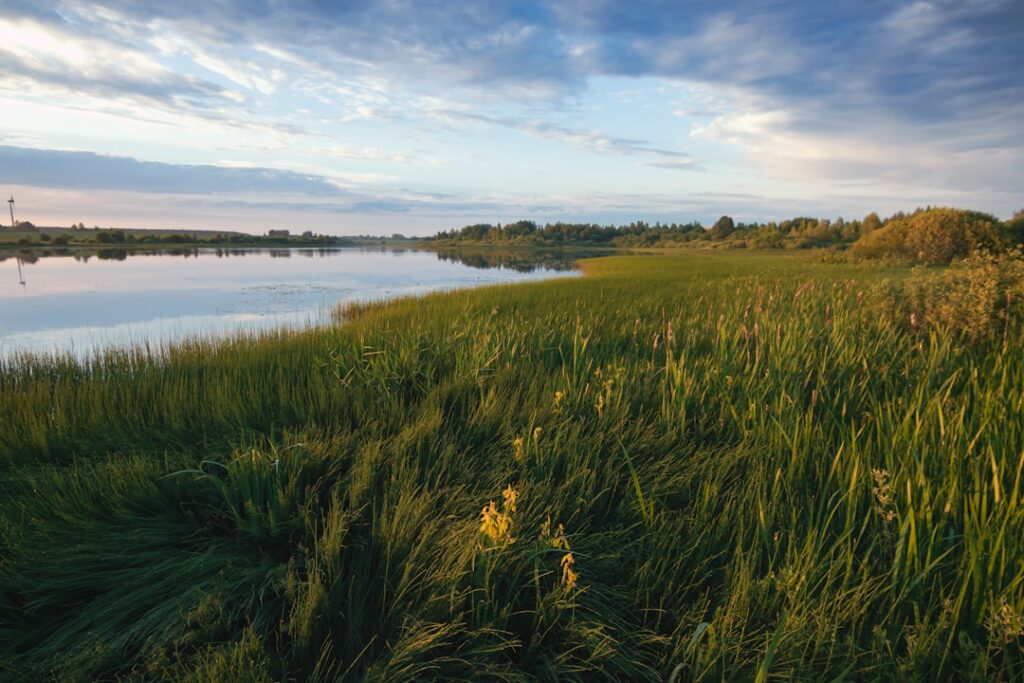
New research published this week finds that non-forest ecosystems—the world’s grasslands, savannas and wetlands—are being devoured for agriculture at nearly four times the rate as forests. As with forests, the primary driver is livestock.
Grasslands are considered one of the most endangered ecosystems on Earth (for example, only about 1% of prairies in North America are left!), yet we don’t hear much about them. Grasslands also store 34% of terrestrial carbon, compared to 39% for forests, Gustin reports.
The paper analyzed the conversion of non-forested habitats to pasture and cropland between 2005 and 2020. Around two-thirds of the natural systems were converted to either pasture or cropland for animal feed, and around a quarter for human food crops.
The report also found that biofuels, including ethanol and biodiesel, were significant contributors to the losses, Gustin writes:
Especially in countries with high demand linked to policy incentives, like the Renewable Fuel Standard in the U.S. So while just over 12 percent of global non-forest land was converted to cropland for biofuels, that percentage rose to 28 percent in the U.S., mostly in the prairies of the upper Midwest.
Pesticides & Pollution:
Experts warn of increasing pollution risks under Trump administration
Former employees of the Environmental Protection Agency warn of widespread toxic exposures as public health and environmental protections are rolled back, reports Liza Gross for Inside Climate News:
In a new report that outlines a dozen high-risk pollutants given new life thanks to weakened, delayed or rescinded regulations, the Environmental Protection Network, a nonprofit, nonpartisan group of hundreds of former Environmental Protection Agency staff, warns that the EPA under President Donald Trump has abandoned the agency’s core mission of protecting people and the environment from preventable toxic exposures.
Marc Boom, EPN’s senior director for public affairs, said at a press briefing that Americans may not realize the extent of their exposure to the chemicals.
“While we may hear about one chemical or one EPA rule being changed,” Boom said, “so much is happening at once that it’s very difficult to see the full picture and connect it to our everyday lives.”
The EPN’s report details Americans’ exposure to the toxic chemicals – such as mercury, pesticides, phthalates, lead, arsenic, and others – as a result of “a politically driven shift away from EPA’s core mission.”
World Health Organization finds that common herbicide is probably carcinogenic
In older but depressing news, Stacy Malkan reports for U.S. Right to Know about another common U.S. herbicide classified as “probably carcinogenic to humans”:
The World Health Organization’s cancer research agency has classified atrazine – the second most widely used herbicide in the United States – as “probably carcinogenic to humans,” adding to growing concerns about toxic exposures in the nation’s farm belt.
While widely used in the U.S. on crops such as corn, it’s banned in the European Union over concerns of drinking water contamination and effects on the endocrine system.
Malkan reports mounting evidence linking pesticides to rising cancer rates in the U.S. corn belt, including a 2025 study that found an increased incidence of childhood cancer after exposure to multiple pesticides, more so than to a single pesticide.
The article was actually published in November 2025, but for some reason I just found it in my feed the other day. So I included it in this week’s roundup as pertinent news for readers!
The International Agency for Research on Cancer (IARC) had also classified the herbicide glyphosate, the active ingredient in popular weed killers such as Roundup, as “probably carcinogenic to humans,” in contrast to other institutions, including the EPA. Glyphosate is the most-used herbicide in the U.S.
So what are we supposed to do with any contrasting assessments – use these herbicides or not? The science is not entirely settled for glyphosate yet, though indications are piling up that it seems to cause cancer. I wrote about the science behind the differing conclusions last week.
I personally minimize any pesticides I use or am exposed to, as much as I can. Besides cancer and disrupting our hormones, recent studies have also found that pesticides can disrupt our gut bugs and promote aging, at least in animals. I often buy organic to minimize pesticide residues in my food.
And that’s it for this week’s updates. Drop a note in the comments if any article resonated with you, or if there’s another biodiversity or other nature-related story you’d like to share with us!
If you’d like to get new posts sent directly to your inbox every week, subscribe to my newsletter via Substack:
It’s free to subscribe, but if you choose the paid option you’d support my work and help keep my articles free for those who can’t afford a paid subscription!
Not ready to subscribe? It takes many hours to research and write each post, so please consider supporting my work by buying me a coffee (or a beer…😄).
Links to articles:
- The Guardian, 3/5/2026, by Adam Morton: Marsupials previously thought extinct for millennia discovered in New Guinea.
- The New York Times, 3/5/2026, by Ari Daniel: You’ve never seen ants like this before.
- LiveScience, 3/4/2026, by Chris Simms: Chewed-up orca fins on Russian beach point to cannibalism, and scientists say it may explain why some pods are so tight-knit.
- Grist, 3/2/2026, by Katie Myers: Appalachia’s iconic salamander was slated for federal protection. It’s still in limbo.
- The New York Times, 3/5/2026, by Catrin Einhorn: Nature report, killed by Trump, is released independently.
- Inside Climate News, 2/25/2026, by Georgina Gustin: Grasslands and Wetlands Are Being Gobbled Up By Agriculture, Mostly Livestock.
- Inside Climate News, 2/27/2026, by Liza Gross: Former EPA staff detail expanding pollution risks under Trump.
- U.S. Right to Know, 11/25/2025, by Stacy Malkan: Atrazine probably causes cancer in humans, WHO cancer agency says.